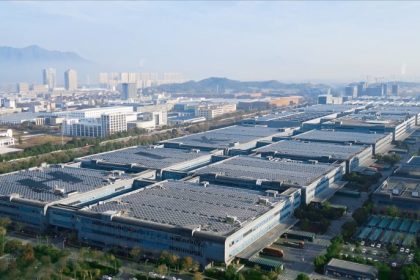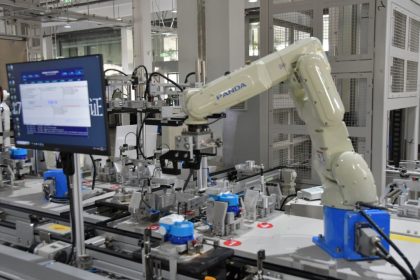
Four out of every ten electronic products worldwide are made by Foxconn. This manufacturing giant with nearly 50 years of experience has long transcended the label of an “electronic contract manufacturer”, and established itself as a benchmark for digital transformation in the manufacturing sector with its cluster of “Lighthouse Factories”. The underlying logic and practical approaches of its transformation are well worth in-depth exploration by entrepreneurs and managers.
I. From Consumer Electronics to Future Industries: Foxconn’s Strategic Evolution
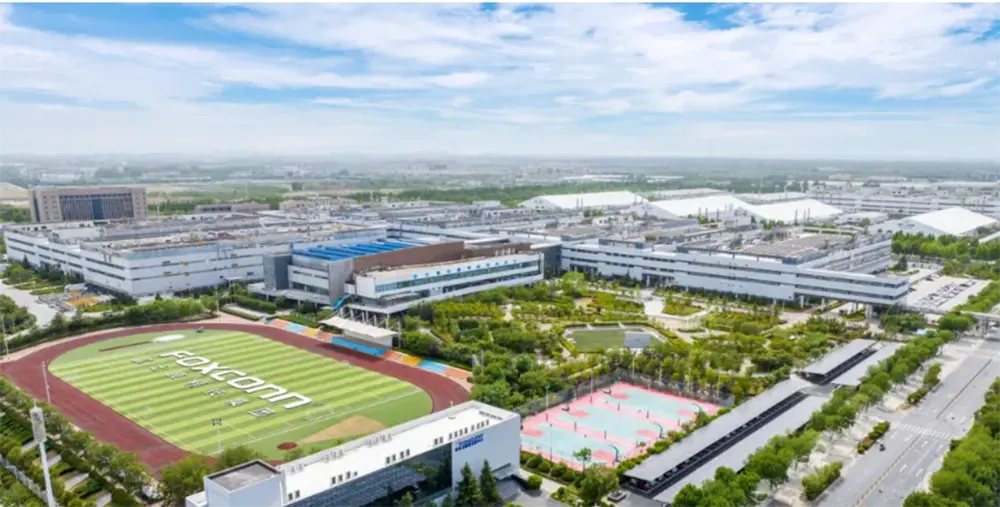
Founded in Taiwan in 1974, Foxconn initially focused on basic electronic manufacturing processes. Today, its business spans four major sectors: consumer electronics, cloud network products, computer terminal products, and core components. With production and service bases in over 20 countries and regions around the world, it has built a robust global manufacturing network.
In response to industrial transformation, Foxconn launched its long-term “3+3” strategy — deeply cultivating three innovative industries (electric vehicles, digital health, and robotics) and forging ahead in three core technology domains (artificial intelligence, semiconductors, and next-generation communications). The strategy has yielded remarkable results so far. Through collaborations with OpenAI and NVIDIA to deploy AI infrastructure, and advancing the mass production of the Zhengzhou Energy Storage Base, among other initiatives, Foxconn has successfully transformed from a traditional manufacturer into a high-tech service provider.
II. Benchmark Strength: A Global “Lighthouse” Leader in Manufacturing
Foxconn’s standing in the industry is underpinned by solid achievements: it has been ranked in the Fortune Global 500 for 16 consecutive years since 2005; it holds over 40% of the global electronic contract manufacturing market share, serving top-tier brands like Apple; it operates more than 40 industrial parks in mainland China; and its annual revenue reached 1.35 trillion RMB in 2021.
What stands out most is its global leading edge in “Lighthouse Factories”. Co-selected by the World Economic Forum (WEF) and McKinsey, Lighthouse Factories represent the highest level of smart manufacturing, characterized by the large-scale application of technologies such as the Internet of Things (IoT) and artificial intelligence (AI). As of December 2022, Foxconn is the only enterprise in the global electronic manufacturing services sector to own 4 WEF-certified Lighthouse Factories, located in Shenzhen, Chengdu and two other cities. By 2025, the group has completed the transformation of 90 internal “Lighthouse Factories”, 26 of which are in Guangdong Province, forming a cluster with significant demonstration effects.
III. The Code to Transformation: Core Practices of Foxconn’s Digital Upgrade
1. Lighthouse Factory Cluster: From Breakthrough at a Single Site to Large-Scale Replication
In 2019, Foxconn’s Shenzhen plant became the first to be listed as a WEF Lighthouse Factory, serving as a “testbed” for transformation. Since then, the group has vigorously promoted the construction of a Lighthouse Factory cluster, replicating proven experience across multiple plants in Chengdu, Zhengzhou and other cities, to scale up the benefits of digital transformation.
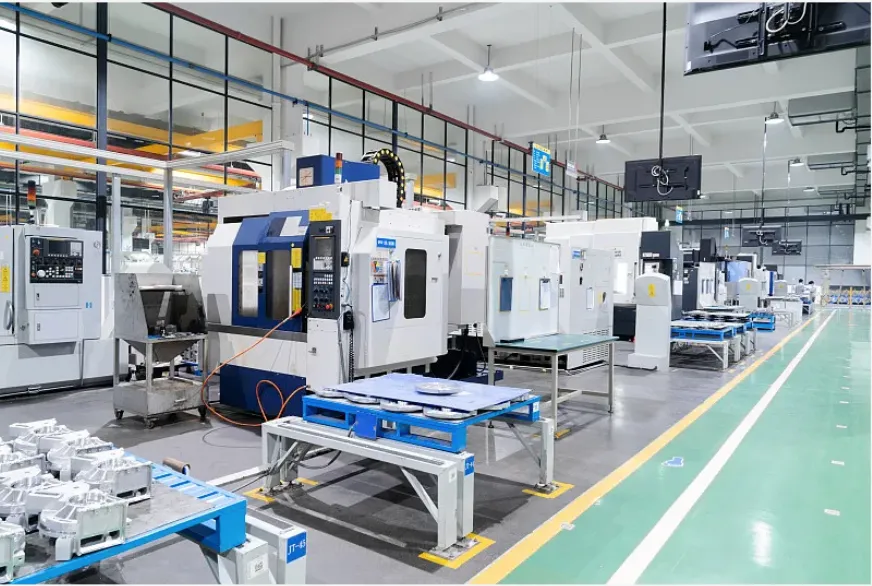
Data bears witness to the transformation outcomes: After digital renovation, the Shenzhen plant reduced its workforce from 338 to 18 employees, improved production efficiency by 30%, and shortened inventory turnover cycle by 15%. By adopting flexible automation, the Zhengzhou plant boosted productivity by 102%; leveraging digital and AI technologies, it cut quality defects by 38% and increased overall equipment effectiveness (OEE) by 27%, achieving “lights-out production by shifts”. Integrating mixed reality and other technologies, the Chengdu plant saw a staggering 200% surge in production efficiency and a 17% improvement in OEE. The Smart Warehouse Base in Zhengzhou’s Area M has realized fully unmanned operations throughout the entire workflow, setting a benchmark for smart logistics.
2. Dual Spiral Model: Synergistic Evolution of Lean and Intelligent Manufacturing
The “Lean and Intelligent Dual Spiral Model” proposed by Lin Jianquan, head of Foxconn’s digitalization project, reveals the core logic of transformation: Future smart factories will develop in a spiral upward trajectory. By optimizing processes with lean thinking, empowering production with digital technologies, and driving innovation through AI, they will form a synergistic effect of “lean as the foundation, intelligence as the enabler”.
Behind this model lies a clear three-stage transformation path: starting from labor-intensive traditional manufacturing, moving to an upgraded phase that combines lean production with precision manufacturing technologies, and ultimately advancing to technology-intensive smart manufacturing — realizing a fundamental shift from “labor-driven” to “technology-driven” production.
3. Management Essence: In-Depth Application of Data-Driven Decision-Making and Digital Twins
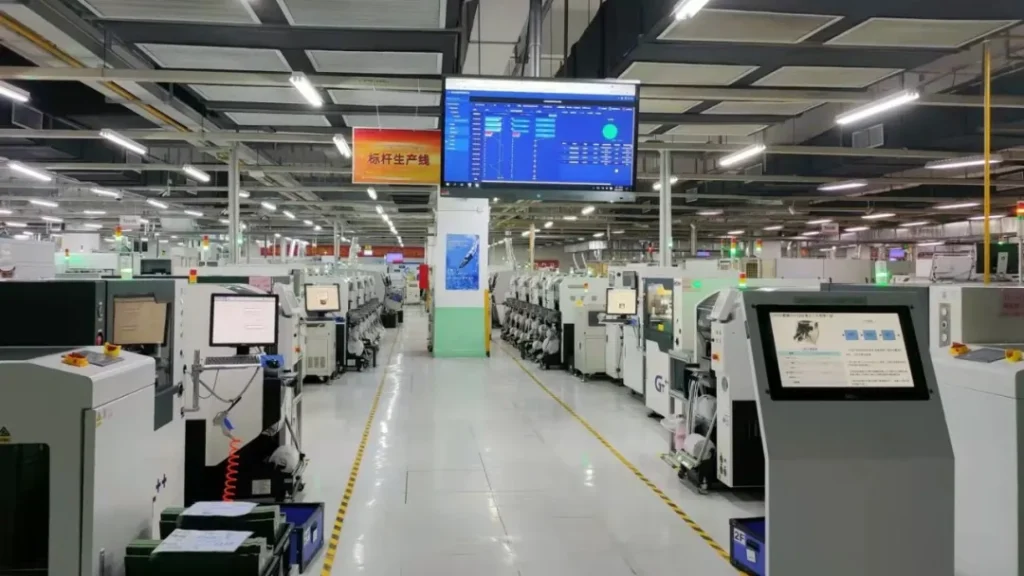
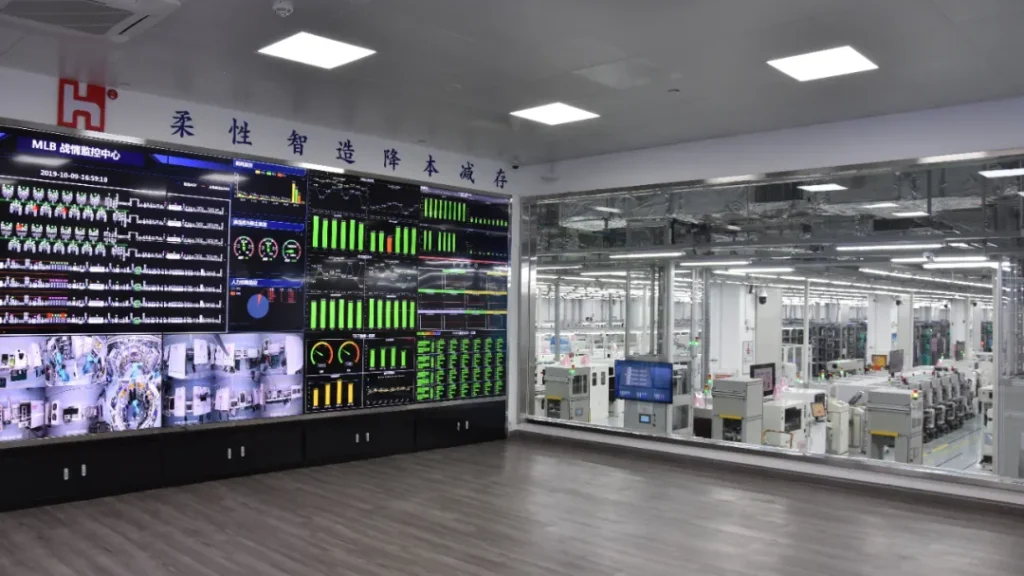
In Foxconn’s Lighthouse Factories, data serves as a core production factor. Its data-driven decision-making system is built on seamless data connectivity, focusing on orders and products to drive digital management decisions and enhance operational efficiency.
The order-focused workflow conducts demand planning analysis to reduce the frequency of rush orders and supplementary orders, while enabling effective supplier management and control, real-time production monitoring, intelligent production scheduling, and inventory optimization. The product R&D-focused workflow emphasizes “speed” — quickly translating customer needs into finished products. The full-life-cycle project R&D management system has broken down information silos between various R&D modules within Foxconn.
Industrial simulation and digital twin technologies have elevated smart manufacturing to a new level. Foxconn identified simulation technology as a key priority in 2024, committed to building a highly real-time and flexible digital twin factory through four steps:
- Collecting diverse data to establish simulation models for the factory, all equipment, and logistics operations
- Empowering models with data to form a closed-loop digital twin system
- Achieving dynamic virtual-real mapping to realize a true digital twin
- Integrating AI applications to equip the digital twin factory with stronger data insight, predictive capabilities, and intelligent decision-making functions
4. Evolution of Automation: From Labor Saving to “Lights-Out Factories”
Foxconn’s automation journey epitomizes the technological upgrading of the manufacturing industry:
- In 2008, it introduced fixtures in polishing production lines to achieve labor saving
- In 2010, it implemented workstation automation, replacing manual labor with semi-automated polishing equipment
- Between 2012 and 2013, it achieved full-process unmanned or minimal-manpower operations in CNC machining, molding, polishing and other processes, deploying robots for fully automated production lines
- In 2019, the Shenzhen “Lights-Out Factory” was listed as a WEF Lighthouse Factory, marking Foxconn’s automation technology reaching world-leading standards
Today, this automation experience has been extended to new business areas such as new energy and energy storage.
IV. Insights from the Visit: Four Core Understandings for Digital Transformation in Manufacturing
1. Transformation is Not a Choice, but a Survival Imperative
Cui Zhicheng, head of Foxconn’s mainland China headquarters, emphasized: “Digital transformation is not a choice, but an inevitable trend. Only companies that proactively embrace digital transformation can maintain their leading position in the industry in the future.” In the Industry 4.0 era, digitalization has become the core of enterprise competitiveness; proactive transformation is the only way to navigate industry cycles.
2. Standardized Systems are the Key to Replicating Success
Shi Zhe, Chief Digital Officer of Foxconn Group, stated that being recognized as a Lighthouse Factory multiple times indicates that the group has developed a replicable standardized transformation system. This system enables the rapid rollout of successful experience across all plants, realizing the leap from “a single benchmark site” to “cluster advantages” — a core principle for the transformation of large manufacturing enterprises.
3. Organizational Culture is the Internal Driving Force for Transformation
The core of digital transformation is the “transformation of people”. Foxconn has established a talent development mechanism for digital transformation, fostering a cohort of digital craftsmen. It has set up the “Hongyan Award” to recognize pioneers, aiming to build a collaborative team culture through mentorship. By 2025, the group has trained nearly 10,000 professionals for its smart manufacturing teams, providing solid talent support for its transformation.
4. Industrial Chain Collaboration is Essential for Ecological Win-Win
Foxconn’s transformation not only focuses on its own development but also prioritizes the collaborative development of the entire industrial chain. By building standardized production management platforms and technology verification and adoption platforms, implementing standardized evaluation index systems and technology service ecosystems, Foxconn has connected upstream enterprises to a unified platform system, improving collaboration efficiency across the board. It has evolved from a “Lighthouse Factory cluster” to a “Lighthouse Industry ecosystem”, driving the growth of over 200 upstream and downstream enterprises.
Conclusion: Guiding the Transformation of Chinese Manufacturing with the Light of Lighthouses
Foxconn’s path to digital transformation provides valuable, replicable experience for Chinese manufacturing. Its dual spiral model, data-driven management system, standardized replication mechanism, and industrial chain collaboration mindset are not only the core of its own success but also key guidelines for high-quality development.
In the era of Industry 4.0, Foxconn’s practice proves that digital transformation is not an option, but a compulsory course for the survival and development of the manufacturing industry. Only by taking innovation as the sail, technology as the oar, and collaboration as the rudder, can enterprises ride the tide of transformation and sail toward a new voyage of high-quality development.