Original Report | Shenzhen TV News
Released: April 12, 2026
Location: Guangdong
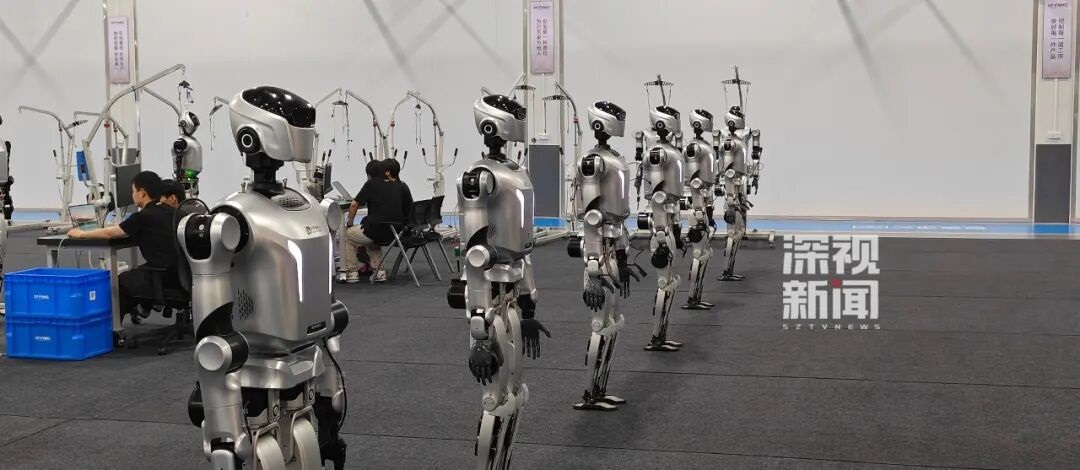
On April 12, the pilot production line of Agile Robots officially went into operation in Longhua, Shenzhen, greatly accelerating the product iteration of humanoid robots.
Meanwhile, the country’s first 10,000-unit-level automated production line for humanoid robots has recently been put into use in Foshan. Follow our reporter to explore the production lines.
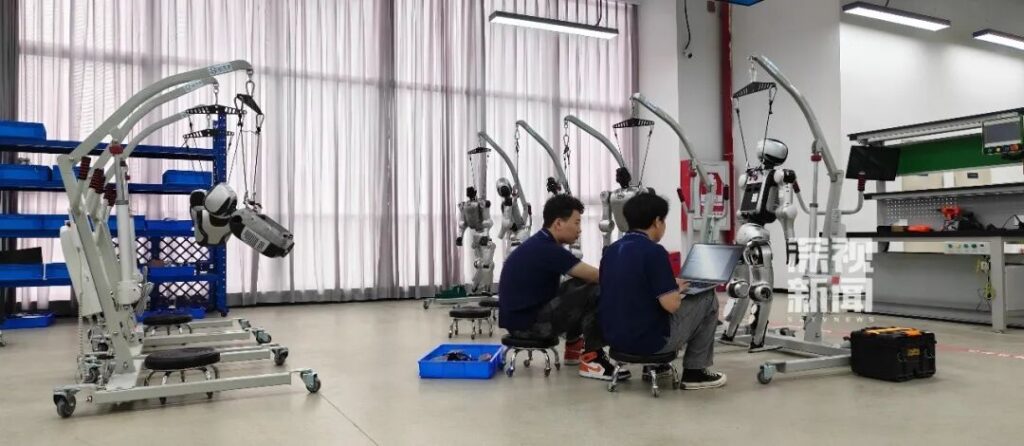
Pilot Line Accelerates Mass Production
At the Longhua pilot base, engineers work alongside flexible production lines, where the Roban 2 humanoid robot is now in small-batch trial production.
Cao Yu, Assistant Vice President of Agile Intelligence (Shenzhen) Co., Ltd., explained that the pilot production line acts as a buffer and validator between R&D and formal mass production, formulating standardized operating procedures for future large-scale manufacturing.
“The development of a robot goes through a process from 0 to 1, then from 1 to 10,000,” Cao noted. “The pilot phase covers the stage from 1 to 100. It verifies process stability and reliability, avoiding problems such as insufficient output, unstable quality and excessive costs in subsequent mass production.”
Roban 2 has completed two major version iterations and over 170 process optimizations on the pilot line, refining every link ready for batch production. Previously, the Kuafu 5 robot was polished on the same pilot line for 4 to 5 months before official mass production.
The Longhua base adopts an MES digital management system to record assembly data throughout the process, enabling traceable quality, reproducible craftsmanship, and the gradual accumulation of industry knowledge reserves.
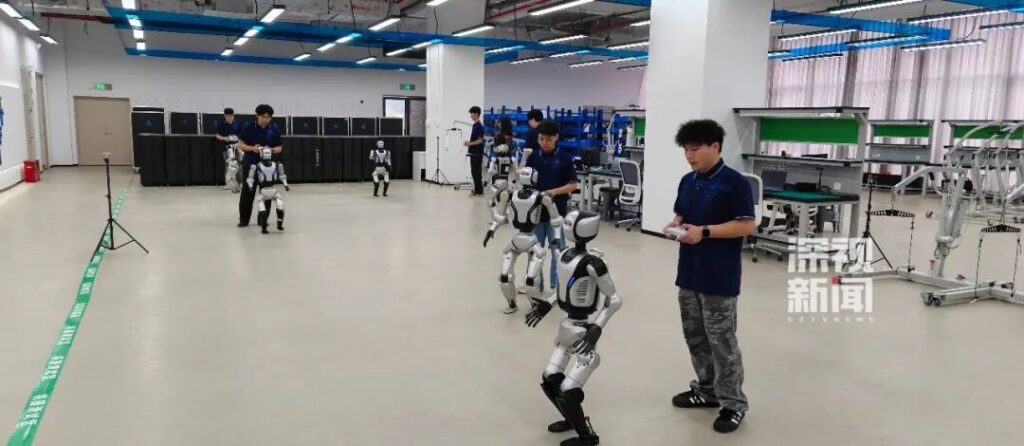
Annual Output Over 10,000; One Robot Every 30 Minutes
The reporter then visited the automated production line in Foshan. Humanoid robots validated at Shenzhen’s pilot base will be sent here for formal mass production.
As the nation’s first 10,000-unit-level automated production line for humanoid robots, it can roll out one finished robot every 30 minutes.
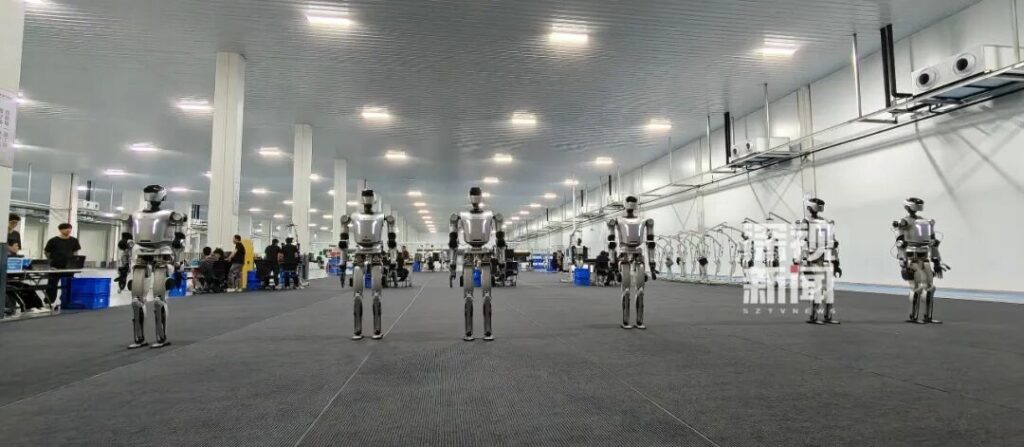
The production line covers 24 precision assembly procedures and 77 comprehensive inspection items with full digital control, boosting production efficiency by 50% compared with traditional models. Before delivery, each robot undergoes 41 working condition simulation tests to ensure consistent quality and reliability.
From Shenzhen to Foshan, the Guangdong-Hong Kong-Macao Greater Bay Area has formed a complete manufacturing closed loop for humanoid robots, covering R&D, pilot trial and mass production.
Guangdong now has more than 160,000 robotics-related enterprises, supporting a complete industrial supply chain from core components to whole-machine assembly.
“In the past, the domestic industrial chain was far less complete,” Cao Yu said. “Today the Greater Bay Area can realize a full manufacturing closed loop for humanoid robots. The localization rate of the Kuafu robot has exceeded 95%.”
Morgan Stanley forecasts that the global humanoid robot market will reach 5 trillion US dollars by 2050.
According to the 2026 Action Plan for the Integrated Development of Manufacturing and Service Industries in Guangdong Province, the province aims to build more than 200 smart factories and intelligent agent factories by the end of 2026.
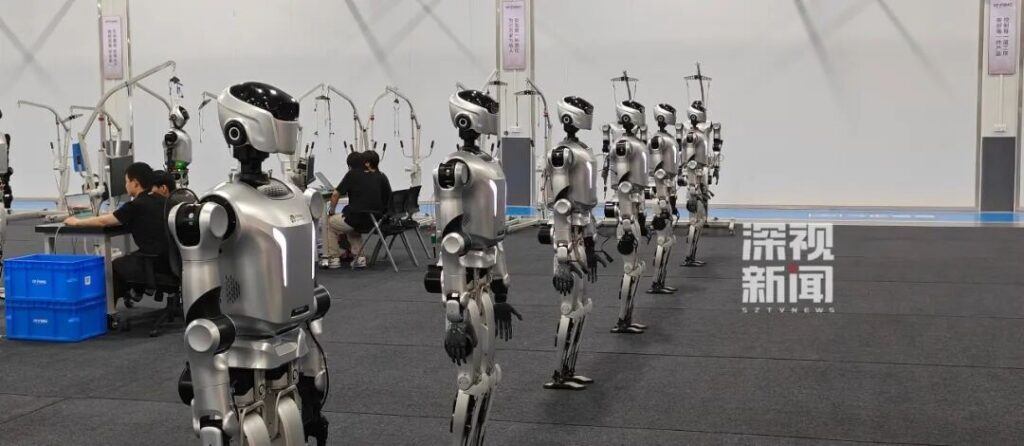
Driven by huge market demand, the humanoid robot industry will continue to expand its industrial layout. Moving forward, integrating manufacturing systems, crossing the mass production threshold and lowering overall costs will become key development priorities for the industry.