Image | Source: Internet Original Compilation | TOP Innovation Zone Research Institute, FTA Group Please cite the source for reprinting. The content is for exchange and learning only, not for commercial use, and does not constitute investment advice. Please contact us for removal if there is any infringement.
Today we dissect a naturally evolving operating system that grows wildly.
In the Silicon Valley narrative, the formula for hardware innovation usually reads: A genius idea + a garage + millions of US dollars in venture capital (VC) = a world-changing product.
From Apple to Nest and Oculus, this VC-driven model has dominated our imagination of high-tech entrepreneurship.
Yet on the other side of the globe, on a 1.45-square-kilometer plot in Futian District, Shenzhen, a completely different logic is at work.
There are barely any business plans, no Series A or Series B financing launches, and few valuation bubbles fueled by speculative price-to-earnings ratios. Here, there are only shop counters, cash, inventory and transfer records.
Still, this place dismissed by elite perspectives as “low-end” or “chaotic” has churned out MP3 players, feature phone knockoffs, self-balancing scooters, e-cigarettes, TWS earbuds and all kinds of unnamed IoT devices at staggering speed over the past three decades.
A question arises: Why is it only Huaqiangbei that keeps generating hardware innovation with almost no venture capital involvement?
Today we dig into the essence of Huaqiangbei, unpacking this one-of-a-kind global commercial miracle from four dimensions: the smallest operational unit, financial logic, evolutionary mechanism and ecosystem boundaries.

The Smallest Unit of the System
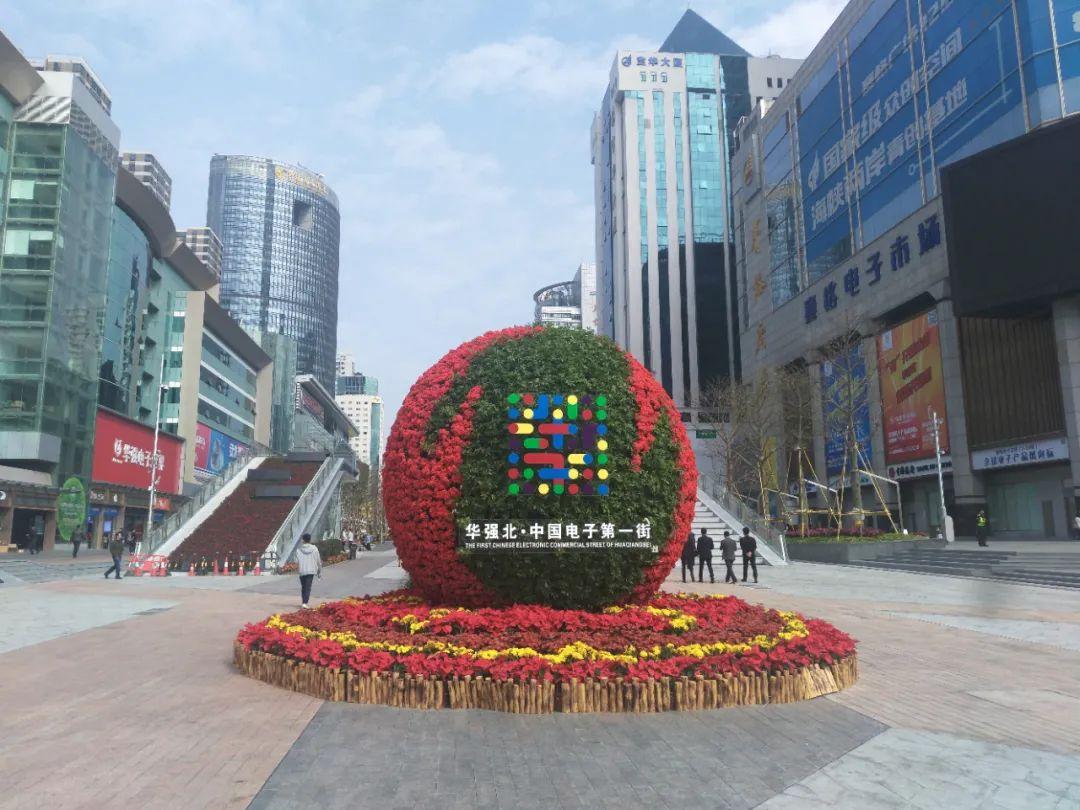
Huaqiangbei is often hailed as “China’s No.1 Electronics Street.” Tourists see rows of dazzling counters, but insiders see a massive collection of API interfaces.
What does that mean?
Meet Lao Zhang. Lao Zhang is no tech guru; he only holds a college diploma. After 15 years navigating Huaqiangbei, he works as a solution provider. Back in 2014, he added a physical shutter button to an off-the-shelf Bluetooth solution and rolled out a low-cost selfie stick design. That summer he earned enough to buy his first Porsche.
Right now, Lao Zhang has two Bluetooth chips from Zhuhai Jieli and is figuring out how to embed the ChatGPT API into a plush toy costing no more than 15 yuan, for Christmas buyers from Yiwu.
Lao Zhang is the epitome of Huaqiangbei.
Here, the smallest unit = sharp traders (frontend) + solution companies (middleware) + supporting factories (backend) + an acquaintance credit network (bus protocol).
Breaking down this formula reveals a “Lego-style” survival philosophy:
- Spot goods as APIs: The physical distance across Huaqiangbei’s supply chain is compressed to the extreme. Resistors, capacitors, connectors and generic housings function like plug-and-play “spot APIs.” If you want to build a smart speaker, you only need to walk downstairs and assemble modules including the solution board, casing and speaker. This “physical open source” lowers the threshold for hardware development from an industrial level to something as simple as building with Lego.
- Depersonalized engineers: Solution providers like Lao Zhang form the technical backbone of this system. Take the classic MediaTek (MTK) turnkey solution as an example. Solution providers package complex chip design into user-friendly PCBA boards. Counter owners do not need to understand circuit design — they only need to understand the market.
This black-boxing of technology allows the frontend nodes (merchants) to expand endlessly without being limited by shortages of technical talent.
Remove the “spot inventory” element, and if Lao Zhang has to place orders through formal channels, logistics delays alone will sink him. Remove the “solution provider”, and ask counter staff to do R&D, and the whole system collapses at once.
One more critical piece: acquaintance trust. Transactions in Huaqiangbei rely heavily on recognition and reputation.
Why VC Fails Here
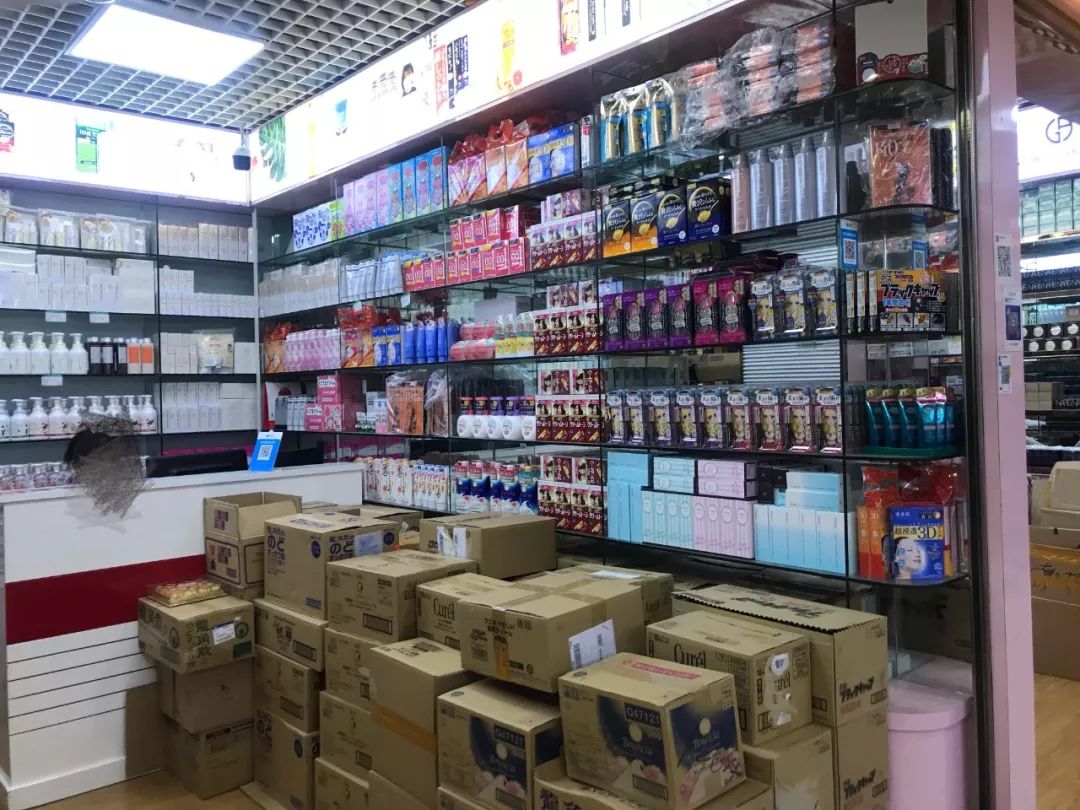
Back to the core question: why can Huaqiangbei sustain hardware innovation with almost no venture capital? Because businesses here are genetically incompatible with VC logic.
The Silicon Valley model centers on equity financing. Huaqiangbei operates very differently.
First, they have different return cycles and exit mechanisms.
VCs chase unicorns: ventures that can deliver 100x returns via IPO or acquisition, and they are willing to tolerate five years of losses. Huaqiangbei business owners chase cash cows: open the mold today, ship goods next week, and collect payment the following month.
Most Huaqiangbei projects have an extremely short lifecycle: fidget spinners boom for three months, mining hardware for half a year. These fast, pulsed business cycles generate little long-term compound growth, cannot support high valuations, and naturally fail to attract VCs seeking long-term equity appreciation.
If there is no VC, where does the hundreds of millions of yuan for R&D and stock preparation in Huaqiangbei come from? The answer lies in yellowed supplier IOUs and WeChat transfer records.
Huaqiangbei has built a decentralized financial system built on acquaintance credit:
- Upstream “angel funding” is credit on account: If Lao Zhang wants 50,000 chips but lacks cash, upstream agents may supply the goods based purely on his reputation in the circle. In essence, suppliers take an equity-like stake through goods and act as Lao Zhang’s angel investors.
- Downstream “crowdfunding” is deposits: When the product is still in the design phase, Lao Zhang sends renderings to clients in the Middle East. Clients pay a 30% deposit, and Lao Zhang uses that money to open molds. This is customer-led crowdfunding.
This model of leveraging both upstream and downstream resources lets Huaqiangbei entrepreneurs mobilize massive manufacturing resources with very little self-owned capital, at high speed and efficiency. VC due diligence takes three months; Huaqiangbei’s reputation-based trust can be established over a single cigarette.
It is also brutally unforgiving. Failure in Huaqiangbei means a broken reputation, social exile from the circle, and even disappearance from the district.
Risk-sharing is also decentralized: Under the VC model, investors write off losses from failed projects. In Huaqiangbei, risk is sliced and distributed.
When a hit product such as selfie sticks falls out of demand, inventory risks are not borne by one single company. They are spread across mold factories, solution board vendors, counter stockists and resellers. Each node absorbs a small loss instead of facing total collapse. This distributed risk defense mechanism grants Huaqiangbei strong anti-fragility as a whole.
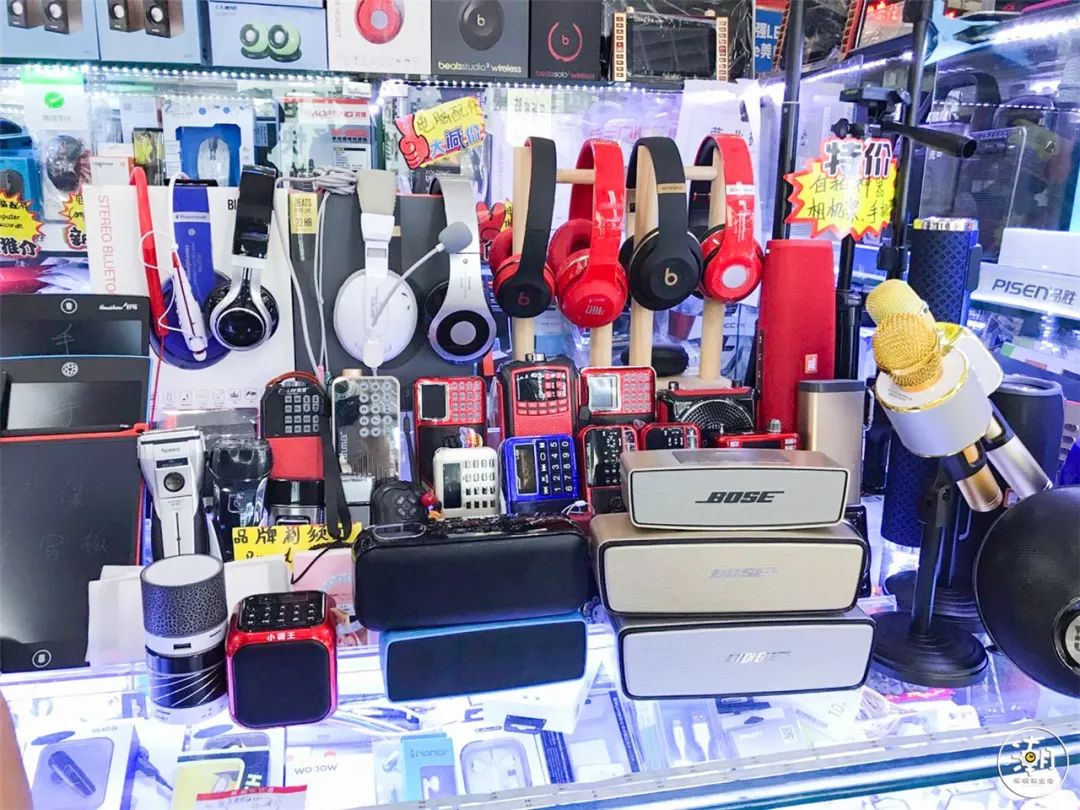
The Harsh Truth of the Innovation Funnel: The Aesthetic of Raw Volume-Based Selection
Critics often dismiss Huaqiangbei: “This is copying, not innovation.” That accusation is arrogant and superficial.
Huaqiangbei’s innovation logic follows natural selection: survival of the fittest.
Imagine it as a giant biological evolution laboratory. Low barriers mean thousands of small business owners like Lao Zhang launch all kinds of quirky “variants” guided by market intuition: speakers with marquee lights, power banks with built-in shavers, dual-SIM phones that look like Apple devices. One of Lao Zhang’s core strengths is extreme sensitivity to long-tail demand, serving niche markets ignored by large corporations.
In 2008, the China Electronics Industry Association awarded Huaqiangbei the title “China’s No.1 Electronics Street.”
Once products are released, the market is the sole judge. With no VC safety net, any product that fails to sell within two weeks is halted immediately to cut losses. The feedback loop is extremely short. Typically, 95% of products are eliminated, only 5% survive, and roughly 1% become viral hits. The whole Huaqiangbei ecosystem rushes in en masse, generic molds spread instantly, and costs crash within a week.
Fewer than 0.1% of products grow into brands like DJI, Anker, Transsion and Insta360 — and that requires a perfect alignment of timing, location and people.
Silicon Valley reduces uncertainty through laboratory validation. Huaqiangbei eliminates uncertainty through countless failed market attempts.
To frame Huaqiangbei clearly, we use a comparison matrix against other global innovation hubs:
表格
| Dimension | Silicon Valley | Huaqiangbei | German / Japanese Hidden Champions |
|---|---|---|---|
| Driving Force | Tech + VC | Trade + Supply Chain | Craftsmanship + Heritage |
| Innovation Model | Original Disruption (0 -> 1) | Combinatorial Iteration (1 -> N) | Continuous Refinement |
| Core Assets | Intellectual Property (IP) | Spot Inventory & Channels | Specialized Know-how |
| Outcome of Failure | Investors absorb losses, experience accumulates | Personal financial ruin, restart from scratch | Low risk appetite, steady operation |
| Role of Engineers | Star Creators | Module Assemblers / Implementers | Artisans |
Chaos is a ladder
Another common criticism of Huaqiangbei is counterfeiting.
From early knockoff mobile phones to today’s copycat or borderline products, Huaqiangbei has long operated on the edge of compliance. Mainstream views see this as a stain that must be eradicated. Yet Huaqiangbei’s vitality stems precisely from this chaotic, semi-regulated space.
Excessively rigid order often suffocates innovation. If every minor innovative product had to go through lengthy patent searches before launch, or strict approvals like medical devices, grassroots entrepreneurs such as Lao Zhang could not survive a single day.
Huaqiangbei offers a haven with low compliance costs. If you have a good idea, you can build it and sell it first. If it blows up, you sort out compliance afterward. If it fails, you abandon it.
This wild-growth environment has objectively created a huge pool of technology spillover.
The fierce knockoff phone wars of the past had a poor reputation, yet they cultivated the world’s most mature mobile phone supply chain engineers, skilled factory workers and complete supporting manufacturers in China. Today’s global dominance of Chinese phone brands owes no small part to Huaqiangbei’s controversial history.
As the line from Game of Thrones goes: Chaos is a ladder.
If every grey zone is fully regulated, and every street becomes as neat and orderly as a CBD, Huaqiangbei will lose its identity as a hardware rainforest. It will turn into an ordinary electronics component supermarket, stripped of creative power.
Zooming out to the global geopolitical landscape today, Huaqiangbei carries profound strategic value. Western attempts to decouple and break supply chains with China allow targeted sanctions on single giants or high-tech industrial parks.
But who can sanction one hundred thousand ants?
Huaqiangbei is a decentralized, headless, highly resilient distributed network. There is no headquarters, no CEO, not even a complete organizational chart. Every counter is an independent node, and tens of thousands of nodes create massive redundancy.
While large tech firms face tech blockades and trade barriers on the front lines, Huaqiangbei’s “guerrilla network” channels Chinese hardware manufacturing capacity to every corner of the globe through capillary-like distribution channels — from villages in Africa to markets in South America, and maker labs in the West.
It may not produce cutting-edge high-end tech, but it is extraordinarily resilient. It is the dark matter of China’s manufacturing industry: you cannot see its full shape, yet it supplies the massive force that keeps the whole ecosystem running.
A Perilous Future: The Double Pressure from Standardization and AI
Looking ahead to 2026, Huaqiangbei faces an existential crisis brought by a shift in technology paradigms.
First, hollowing-out of hardware: With the rise of large AI models, the value of smart hardware is rapidly shifting from end devices to the cloud. Future hardware may be nothing more than sensors plus screens, with all computing and intelligence handled remotely. If hardware becomes standardized like water pipes, Huaqiangbei’s signature board-level innovation will lose its purpose. When hardware becomes an accessory to software, where will Huaqiangbei’s hardware tinkerers go?
Second, disruption from digital supply chain platforms: As digital supply chain platforms such as Alibaba Cloud and LCSC emerge, components can be purchased online at transparent prices. When AI automatically designs PCBs and connects directly to factories, will Huaqiangbei’s role as an information and trust intermediary be hollowed out? Will physical counters lose value, and will the acquaintance trust network collapse?
Crises are inevitable, but do not underestimate Huaqiangbei’s capacity to evolve.
We already see some Huaqiangbei players transforming into supply chain stewards for global hardware makers. Many cool hardware projects you find on Kickstarter from San Francisco are likely backed by a Huaqiangbei “Lao Zhang” delivering full ODM services. Viral stress-relief toys trending on TikTok may ship from a stall in SEG Plaza.
Huaqiangbei is shifting from a place that sells products to a place that sells capabilities. It is becoming a cloud factory for global hardware innovation.
The legend of Huaqiangbei is essentially a specimen of how market economy can survive and thrive without abundant capital lubrication.
It proves that beyond the spotlight of elitism and capitalism, there exists another bottom-up, rough yet vibrant innovation paradigm. There is no reality distortion field of Steve Jobs here, only survival wisdom forged by countless small business owners fighting to stay alive.
Huaqiangbei may never produce the next Apple or Tesla, for it lacks the capital buffer and core technology required for long-haul competition. But as long as humanity has diverse, fragmented demand for physical hardware, this distributed operating system will keep running.
It may transform, it may shrink, yet its wild, untamed energy is already embedded in the DNA of China’s manufacturing sector — deserving of our respect.