
Anyone with a passing interest in electronics has likely heard of the legendary Huaqiangbei. As China’s largest electronics distribution market, it’s a paradise for seasoned bargain hunters, yet its information asymmetry can be intimidating for newcomers. Today, this district—blending street-level vibrancy with cutting-edge technology—has become a “traffic magnet” for foreign YouTubers. Every corner is captured on camera, sparking heated discussions among global audiences. Beyond its viral fame, Huaqiangbei stands as a pivotal hub supporting global electronics trade, sustained by its robust supply chain and flexible business models.
A Traffic Feast for Foreign YouTubers
Immersive Bargain Hunting and Dramatic Twists
The Huaqiangbei adventure of renowned foreign tech YouTuber Linus Tech Tips (affectionately called “Linus” by fans) was full of surprises. For the sake of content, he deliberately played the role of a clueless beginner who “knows nothing about hardware and can’t speak Chinese,” readily agreeing to the computer configuration recommended by the seller to see how much he’d be overcharged.
From a professional builder’s perspective, the 8,000-yuan setup was far from ideal: opting for single-channel DDR4 RAM instead of the more cost-effective dual-channel option, splurging 400 yuan on a case while cutting corners drastically on the power supply and SSD—classic tactics for sellers to clear inventory. Yet unexpectedly, due to the subsequent surge in RAM prices, the configuration actually turned out to be a “minor steal.” All hardware was genuine products from major brands, priced similarly to e-commerce platforms. The combination of a 14600KF processor and 5060Ti graphics card could handle most gaming needs, even cheaper than equivalent setups on North American e-commerce sites, with no issues like misrepresented products or hardware swaps. This intriguing outcome sparked intense viewer debates and drove massive engagement for the video.
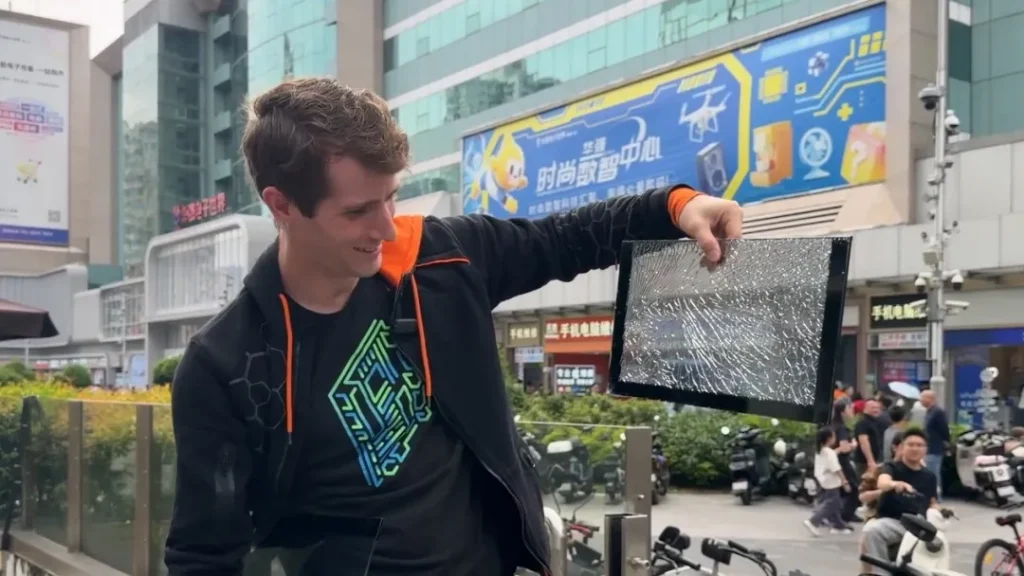
Linus even attempted on-the-spot PC assembly on Huaqiangbei’s streets. Despite the lack of onlookers—testament to Huaqiangbei’s internationalization—data from Shenzhen Special Zone Daily reveals that in 2025, Huaqiangbei welcomed over 7,000 foreign visitors daily. The 144-hour visa-free policy has made it a must-visit for foreign travel YouTubers, with countless exploration videos circulating on overseas social media.
Story-Driven Content and “Tech Wizardry”
Another hardware YouTuber, Gamers Nexus (GN for short), transformed Huaqiangbei into a more narrative-driven “traffic IP.” His video opened with the hook of “a grassroots black market bypassing U.S. AI bans,” documenting the entire process of finding intermediaries, negotiating with a mysterious “boss,” and ultimately purchasing the U.S.-banned RTX 5090 graphics card. The handheld camera footage and the “boss’s” refusal to appear on camera lent intense suspense to the transaction. Even at over 3 hours long and temporarily taken down by Bloomberg due to copyright issues, the reuploaded video still racked up 1.7 million views, prompting the channel to launch related merchandise.
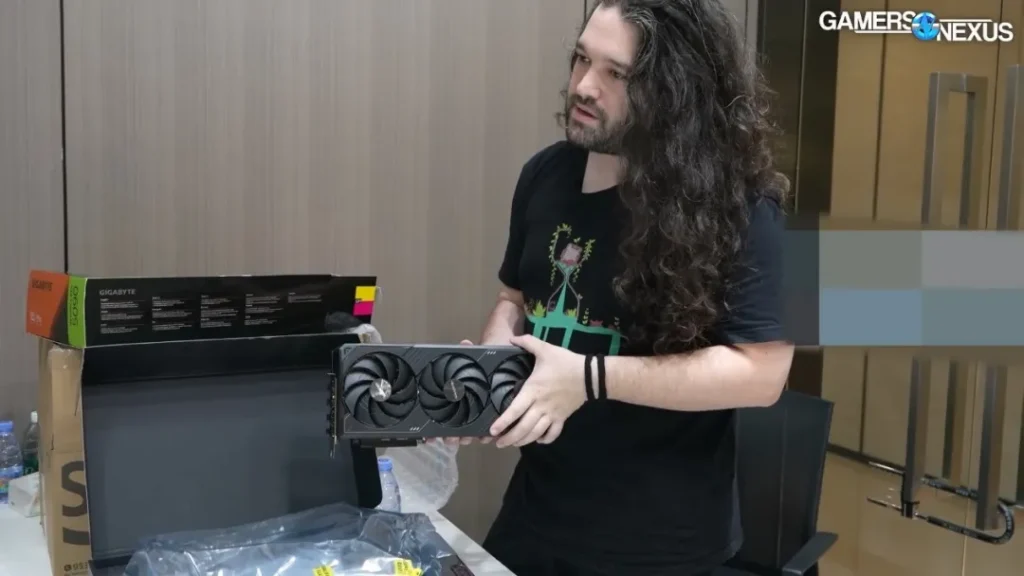
The video also showcased Huaqiangbei’s “tech wizardry”: the “modded RTX 4090.” To meet the high VRAM demands of AI training, local technicians design custom high-VRAM PCBs and bridge RTX 4090 chips, doubling VRAM while preserving computing power. Interestingly, out of respect among content creators, GN chose not to film the modding process in Huaqiangbei, instead traveling to Zhengzhou, Henan, to collaborate with Bilibili UP main “Brother Zhang the PC Repairman.” When asked if a “48GB VRAM RTX 4090” existed, Brother Zhang confidently replied, “We can build it on the spot.”
The Secret to Viral Videos
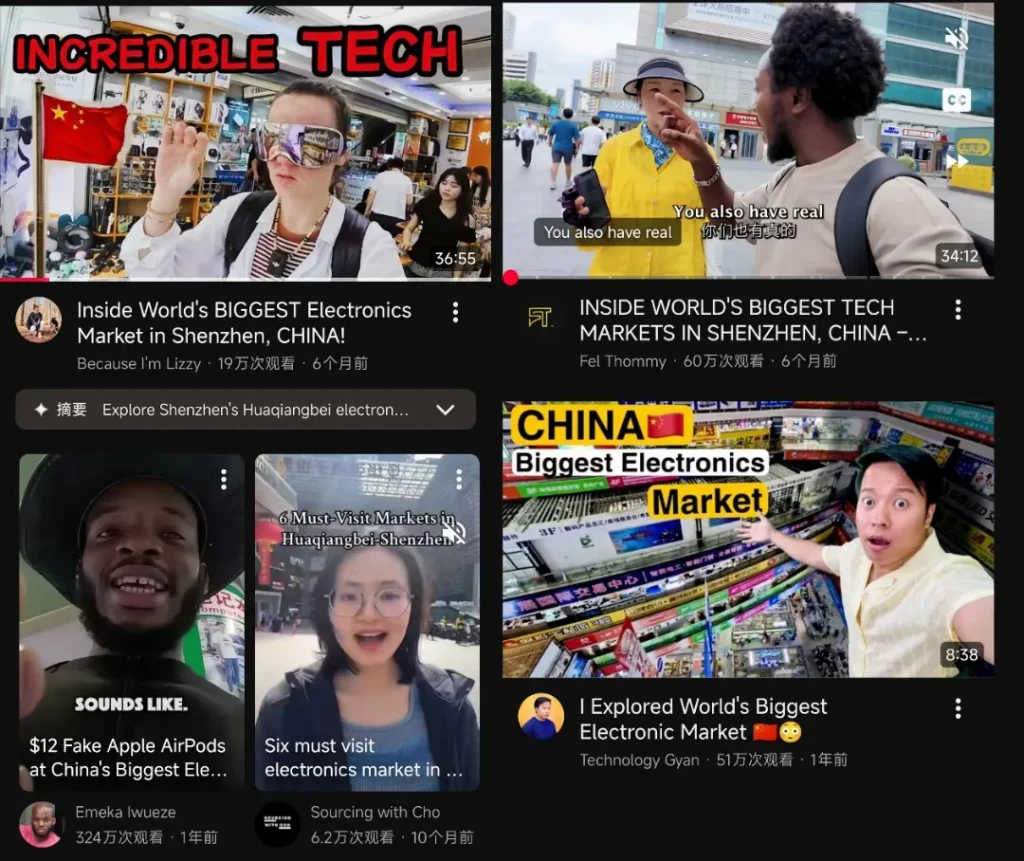
Foreign YouTubers’ Huaqiangbei-related content has achieved impressive view counts. Lizzy’s “Exploring Shenzhen’s Huaqiangbei Electronics Market” garnered 190,000 views, Fel Thommy’s related video reached 600,000 views, Technology Gyan’s clip earned 510,000 views, and Emeka Iwueze’s video “Buying Fake Apple AirPods in Huaqiangbei” amassed a staggering 3.24 million views. These videos—focusing on market scale or showcasing unique products—cater to overseas audiences’ curiosity about China’s electronics market through a curious lens, further boosting Huaqiangbei’s global reputation.
Huaqiangbei’s Core Competitiveness and True Ecosystem
An Irreplaceable Industrial Hub
As early as 2008, Huaqiangbei was hailed as “China’s No.1 Electronics Street.” With the rise of Shenzhen’s electronics manufacturing industry, it naturally became the core distribution center of the industrial chain—offering easy access to components, supplies, and domestic/international distributors. Even without Huaqiangbei, a similar industrial hub would have emerged elsewhere.
Its core competitiveness lies in its comprehensive supply chain: replacement parts for phone repairs are available upstairs, and all components needed for “modding” and other technical projects can be sourced locally. Covering everything from components to finished products, repair tools to accessories, it spans the entire electronics industry chain. Many renowned “Made in China” brands, such as TP-LINK and Ugreen, began their journey as small vendors in Huaqiangbei.
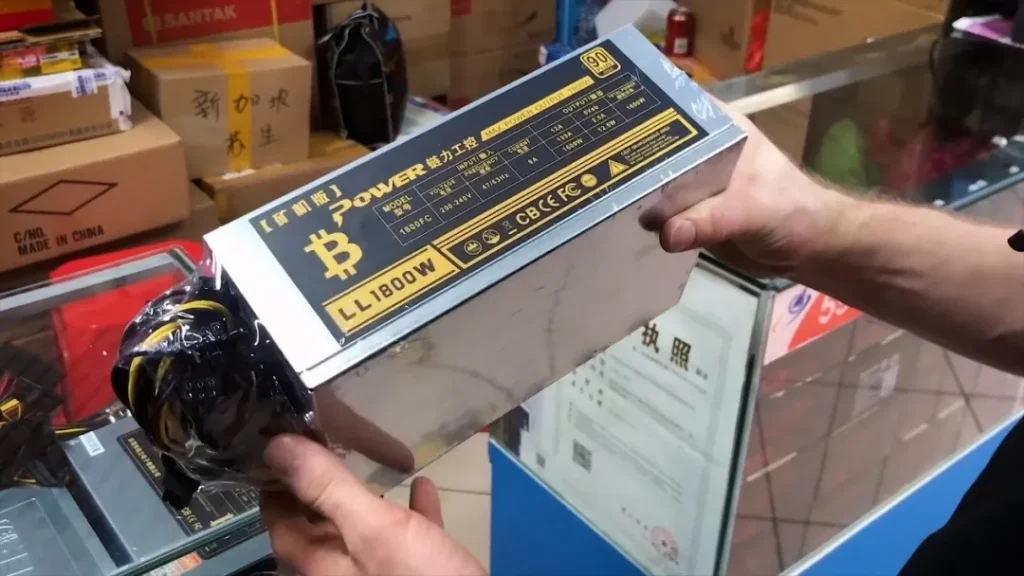
Additionally, Huaqiangbei serves as an industry “trendsetter.” Six or seven years ago, high-power power supplies and various mining cards dominated shelves; today, AI-related hardware takes center stage. This ability to evolve with technological trends reflects its dynamic vitality and continues to attract content creators and industry professionals alike.
A Vast Global Trade Network
Huaqiangbei’s trade scale is staggering: it ships over 1 billion packages annually, averaging more than 3 million per day—equivalent to the daily package volume of a provincial-level administrative region in mainland China. Covering 183 countries and regions, the total value of goods exceeds 100 billion yuan, with imports and exports surpassing 40 billion yuan.
Domestically, 60% of packages are sent to the Pearl River Delta, Yangtze River Delta, and Beijing-Tianjin-Hebei regions. Internationally, overseas shipments form a diversified layout across “North America, ASEAN, the Middle East, Europe, and Latin America,” achieving delivery times of “90 minutes within Shenzhen, 2 days nationwide, 3 days to neighboring countries, and 7 days to major global cities.”
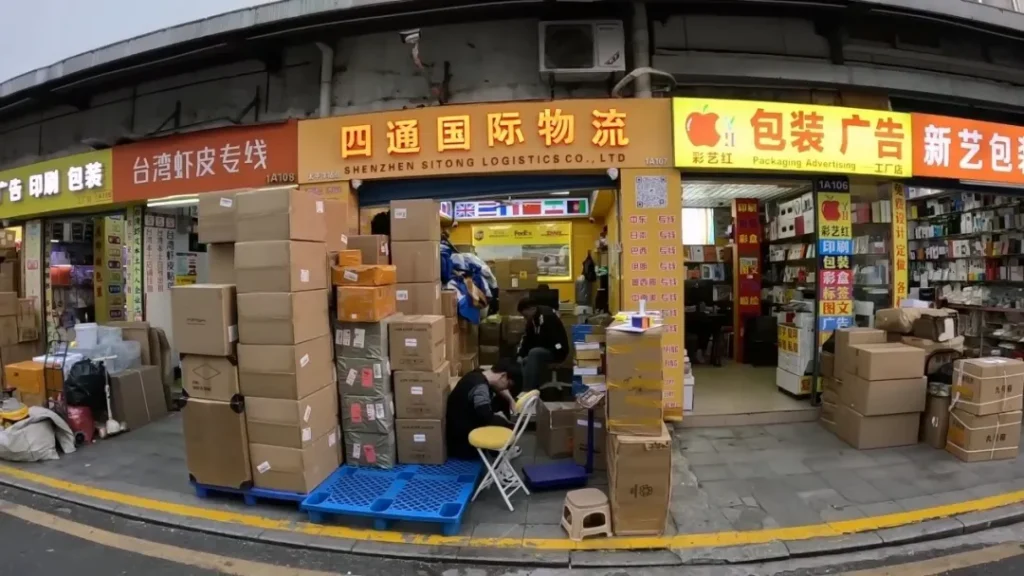
Traditional mobile phones and accessories account for half of all package orders. With the rise of AI applications, drones, TWS earbuds, and AI glasses have become global “hard currencies.” In the alleyways surrounding the commercial district, unassuming logistics and packaging stores are stacked with mountains of parcels, while walls adorned with global locations—from the Middle East to Brazil and Iran—quietly attest to its trade scale. Many overseas resellers source goods here, repackage them with custom branding, and resell locally—a model that has made countless Huaqiangbei bosses wealthy.
The Unseen Reality Behind the Cameras
The “magical Huaqiangbei” portrayed in videos is not the full picture. Many foreign tourists who visit out of curiosity are disappointed to find that products on store shelves are often cheaper on Taobao. Chinese audiences also admit, “We wouldn’t specifically go to Huaqiangbei to shop.” As one netizen commented, “The variety of goods isn’t as rich as it was a decade ago—Taobao offers far more choices,” while another noted, “It’s great to touch and test products before buying online, especially since Taobao images are often heavily retouched.”
This discrepancy stems from Huaqiangbei’s core business: wholesale, not retail. Merchants primarily cater to small and medium-sized bulk buyers, profiting from high sales volume. As the graphics card dealer in GN’s video asked, “Are you a trading company?”—retail customers are not their target market.
Furthermore, GN’s quest to uncover “how Chinese companies obtain AI graphics cards” only scratched the surface. The RTX 5090 available in Huaqiangbei is merely a top-tier consumer-grade graphics card; enterprise-level AI deployments require tens of thousands of cards, a demand far beyond the limited supply of 5090s on the market. Larger enterprises typically bypass Huaqiangbei to cooperate directly with manufacturers, and sensitive professional AI cards like the H100 and A100 rarely appear on store counters.
The true reflection of Huaqiangbei’s commercial ecosystem lies in the “unexciting” 30-second live-streaming clips on TikTok: store owners awkwardly announce product details in broken English, while comment sections are flooded with direct inquiries like “Do you have stock?” “How to ship?” and “What’s the price?”
Conclusion
To foreign YouTubers, Huaqiangbei is a study in contrasting aesthetics—blending street-level charm with cutting-edge technology—and a stage for dramatic storytelling. Different audiences see different facets: cyberpunk enthusiasts are captivated by its unique atmosphere, China watchers witness the evolution of “Made in China,” business professionals seek opportunities, and tech enthusiasts track the latest product trends.
Yet behind the viral hype lies Huaqiangbei’s irreplaceable value as a global electronics distribution hub. Its comprehensive supply chain, flexible business models, and acute sensitivity to technological trends are the true pillars of its competitiveness and the root cause of its enduring global appeal. When the camera lights fade, Huaqiangbei remains a vital hub of China’s electronics industry, brimming with sustained technological vitality. Who knows—when Linus visits again, the shelves may already be dominated by the next generation of tech products.

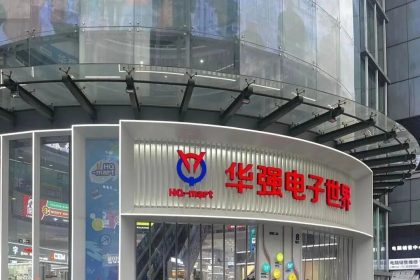
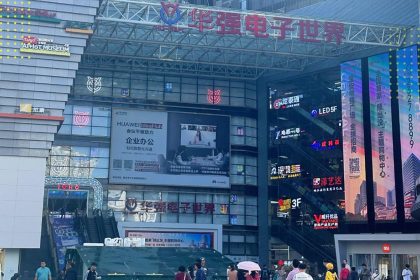


How to Visit Huaqiangbei for the First Time: A Guide to Avoiding Pitfalls
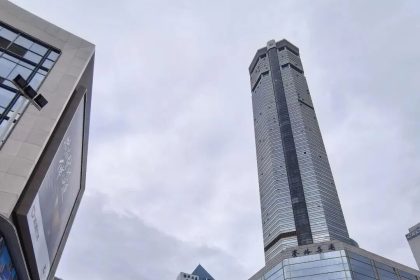
If you want to buy electronic products like an Apple Watch, you can head straight to SEG Market. The first floor is filled with Apple products, Dyson series, and other electronics. Be sure to check out multiple stores—don’t ask for prices at the shops near the entrance; walk further inside, and you’ll get better deals. Remember, instead of saying “How much is this?” directly ask “How do you wholesale this?” to get an even lower price.
The second floor of SEG Plaza mainly sells watch straps—you can buy a watch first and then get a new strap there. The third floor has phone cases and similar accessories, but I personally think they’re just so-so. Above the second floor of Huaqiangbei Electronics Market, you can also find electronic products like live-streaming equipment, used computers, and mobile phones—worth browsing around. Modern Window Market specializes in second-hand CCD cameras. I tried a Canon one, and the photo quality was good, but since it was used and cost over 1,000 yuan, I didn’t buy it.
Tongtiandi Communication City focuses on used mobile phones and computers. It’s better to go in the afternoon, as many stores don’t close until 7 or 8 PM. Overall, these markets are really worth visiting—things are cheap and cost-effective, and girls will especially love them.