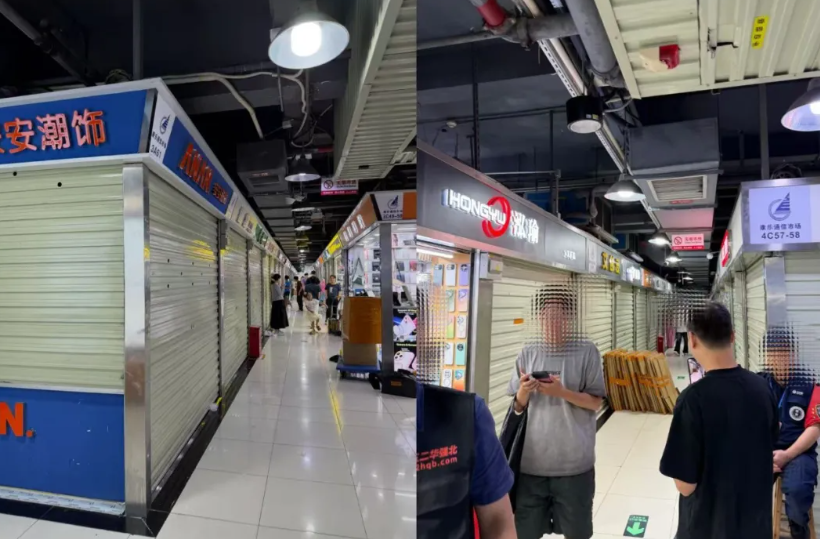
A major law enforcement crackdown in Huaqiangbei has sent shockwaves through the digital trading circle. Many stall owners have been taken in for investigation. For many practitioners, it has hit home hard: business practices long viewed as an unspoken industry norm are no longer just punishable by fines and seizures — they are criminal offences under Chinese law.
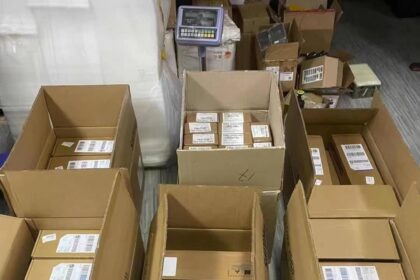
Parallel-import phones have been entrenched in Huaqiangbei for more than two decades. Starting with Nokia Hong Kong versions in the early days, followed by US and Japanese iPhones, and niche devices such as Google Pixels, countless mobile shops across county-level China sourced their stock here. This parallel-import trade nurtured a massive surrounding ecosystem: spare parts wholesale, repair services, used-phone refurbishment and component teardown, supporting the livelihoods of upstream and downstream players.
Previously, regulation mostly relied on administrative penalties: inspecting stalls, seizing goods and issuing fines. Merchants could resume operations after rectification. Many stall operators therefore formed the impression that parallel imports were merely a gray business with limited risk. This round of enforcement, however, marks a fundamental shift. Cases have moved from administrative sanctions to criminal prosecution with full-chain crackdowns, centering on two charges: crime of counterfeiting registered trademarks and crime of smuggling ordinary goods and articles.
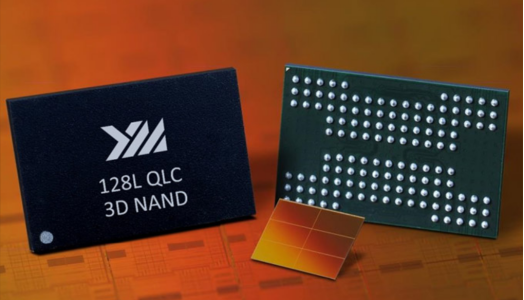
First, the crime of counterfeiting registered trademarks mainly targets the refurbished-phone supply chain. Used-phone teardown for chips can be lawful in certain scenarios. Recycled old phones are dismantled to retrieve memory chips from mainboards. After cleaning and reballing, these chips are supplied to automotive electronics, IoT hardware or legitimate overseas component markets. At the peak of this trend, daily processing volumes of used phones nationwide surged from roughly 200,000 units to nearly 1.5 million units.
Still, many workshops took illegal shortcuts. Faulty handsets can be acquired cheaply. A model officially priced at over 6,000 RMB may cost only around 1,000 RMB as a broken unit. With extra costs for replacement screens, housings and batteries, total refurbishment costs may stay below 2,000 RMB, creating tempting profit margins. Some operators removed genuine screens and back covers and fitted counterfeit or low-quality replacements. The devices were repackaged and passed off as brand-new originals, sold to offline customers and also listed on cross-border e-commerce platforms and online stores. This constitutes trademark counterfeiting.
Multiple verdicts have already been handed down in such cases:
- A Shenzhen firm purchased refurbished Apple and Huawei phones from Huaqiangbei, fitted them with new casings and packaging, and sold them overseas via AliExpress. With sales reaching 67.44 million RMB, the principal defendant was sentenced to six and a half years in prison plus a fine of 32.1 million RMB.
- Another defendant bought second-hand phones, added new screen protectors, fake anti-counterfeit labels and sealing films, then sold them online as brand-new devices. With an involved value of over 1.92 million RMB, the defendant was convicted of trademark counterfeiting and given a prison term and fine.
- Zhou, a mobile repair practitioner in Huaqiangbei, abandoned legal operations for illicit gains. He rented stalls, hired staff and built an illegal pipeline covering collection, refurbishment, fake labeling and resale. The court ruled he committed trademark counterfeiting with aggravated circumstances, sentencing him to three and a half years in prison and a 1 million RMB fine.
The second major offence is smuggling ordinary goods and articles — the so-called parallel imports. Many foreign-spec phones were shipped from Hong Kong via water routes or carried by individual runners without customs declaration. No tariffs or VAT were paid. Long treated as “parallel imports” within the trade, bulk sales of undeclared imported goods legally amount to smuggling.
Why has enforcement become so stringent now? The domestic smartphone market is fiercely competitive. Every duty-free imported foreign-spec phone eats into the market share of official domestic models and squeezes legitimate distributors, while directly causing losses of national tariff and VAT revenue. A single stall can hold stock worth over 10 million RMB. The total value of goods and funds linked to these cases reaches an astronomical figure. This is not selective targeting of a handful of small shops; it is a cleanup of the entire gray supply chain.
More importantly, the underlying rules of the industry have changed. The era of profiting from information gaps and regulatory loopholes is over. Slogans about integrity on Huaqiangbei streets are no longer empty rhetoric — they represent hard legal boundaries.
For digital traders and resellers, this sends a clear signal: the industry has entered a long phase of compliance and thin profit margins. Used digital goods, harvested components and spare parts can still be traded legally, but lines must be respected: lawful recycling, clear labeling of used/refurbished status, formal customs declaration and tax payment, and no misrepresentation of refurbished goods as brand-new. No operator can afford to rely on the excuse “everyone else is doing it”. Those who take chances will face severe consequences.
Windfalls from gray channels are gone. Moving forward, competition will hinge on compliance, stable supply chains and refined profit management.