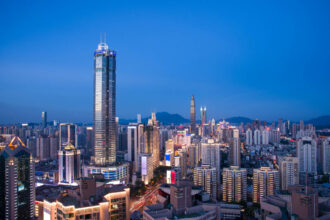
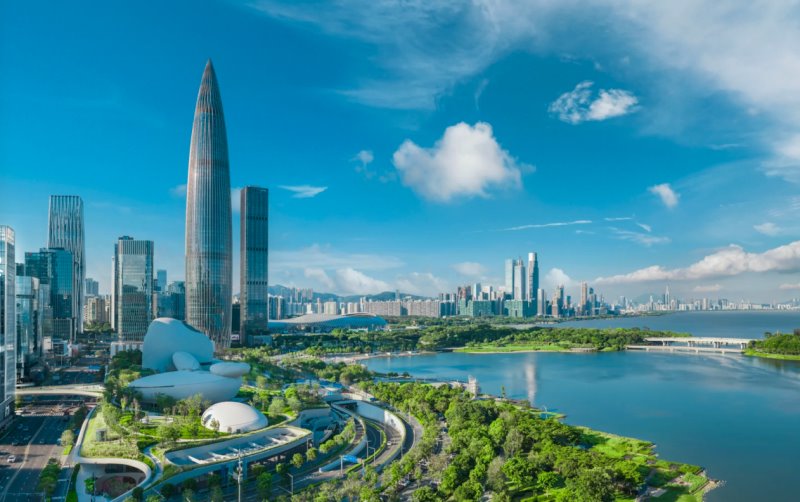
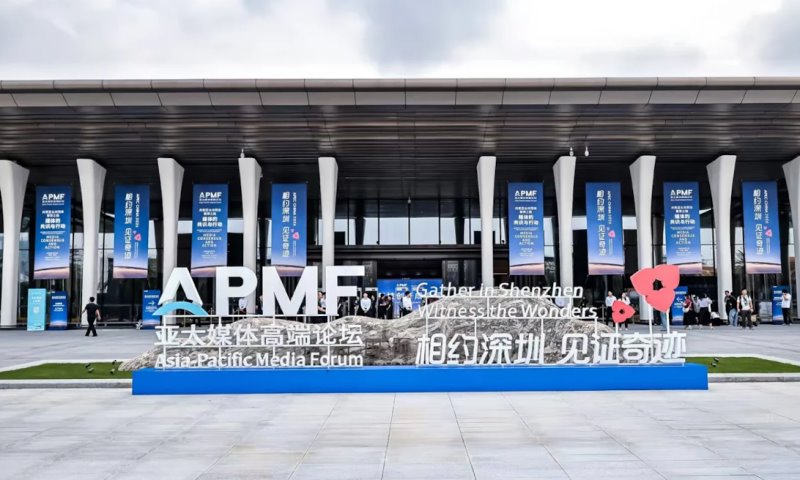
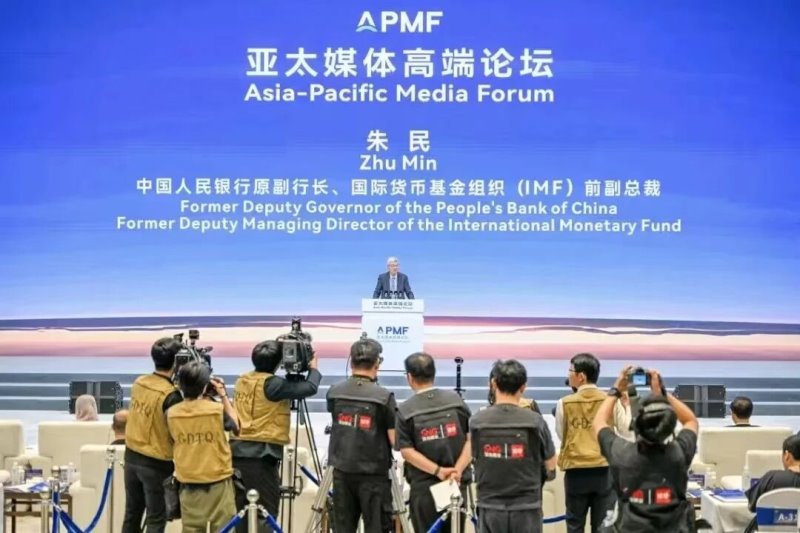
In 2026, Shenzhen is stepping onto the global spotlight. The Asia-Pacific Media Summit kicked off here in September. In November, the 33rd APEC Economic Leaders’ Meeting will be held in this city.
It is quite an interesting story. Back in 1994, Window of the World opened in Shenzhen. At that time, if Chinese people wanted to see the world, they would buy a ticket and walk into the park, viewing miniature replicas of the Eiffel Tower, the Pyramids and Angkor Wat, touring across five continents within one day.
Thirty-two years have passed. Shenzhen itself has become that window. No more miniature models — the real world is coming to it.
Yet if you simply frame Shenzhen’s story as “an economic miracle brought by reform and opening-up”, you have not fully understood it. Many Chinese cities have reaped the dividends of opening-up. Plenty boast favorable geographic locations, supportive policies and large populations.
So why Shenzhen? Why here did Huawei, Tencent, BYD and DJI emerge? Why Huaqiang North and the Robot Valley?
After long reflection, I believe the answer lies not in its speed of growth. Shenzhen’s unique strength is its extraordinary ability to rapidly bring together strangers, unfamiliar technologies, global capital and emerging industries.
Simply put: Shenzhen is not a city that gives you ready-made answers. It is a city that helps you find answers.
01 Shenzhen Never Sees Itself as the Final Destination
Shenzhen understood early on that it had no inherent advantages to rest on. When the Special Economic Zone was founded in 1980, it was nothing more than a remote border town, with a GDP of only $37 million. By 2025, this figure had surged to $536 billion.
Over 45 years, its GDP multiplied more than 10,000 times. Calculated at constant prices, the average annual growth rate hit 18.8%. Its exports have ranked No.1 among large and medium-sized cities in Chinese mainland for 33 consecutive years.
These numbers are staggering. But behind the statistics lies a more profound truth: Shenzhen never defines growth as merely expanding itself. It keeps connecting itself to a larger global system.
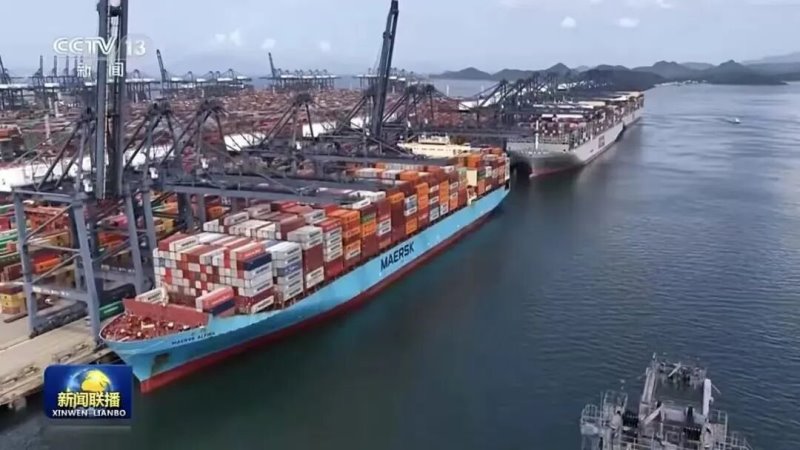
This mindset has deep historical roots. As early as 1581, records show that the area around present-day Nanshan in Shenzhen was “the entry and exit point for Western vessels”. More than four centuries later, sailing ships have been replaced by cargo vessels, simple docks by world-class ports. Yet the core logic remains unchanged: connection.
In 2025, Shenzhen’s total import and export volume of goods reached $630 billion. In the first half of 2026, the number hit $400 billion, a year-on-year increase of 33%.
It is far more than just an export city. Shenzhen functions like a massive global power strip. Products flow out; capital flows in. Talents gather here; technologies collide. Global market demands feed back into its ecosystem.
A self-reinforcing cycle takes shape: The world sends market demands to Shenzhen; Shenzhen delivers products to the world. The world brings technologies; Shenzhen turns them into market-ready goods. The world brings fierce competition; competition forces Shenzhen to continuously upgrade.
Shenzhen rarely gets to “win effortlessly”. Constant connection brings constant competition; competition drives iteration; iteration cannot stop. What makes Shenzhen formidable is not its outstanding performance in any single year. It is its ability to consistently push itself into the next development cycle.
02 What Drives Shenzhen: Not Giants, But Market Counters
When talking about Shenzhen, people immediately name Huawei, Tencent, BYD and DJI. But if you only focus on these corporate giants, you will miss its most essential foundation.
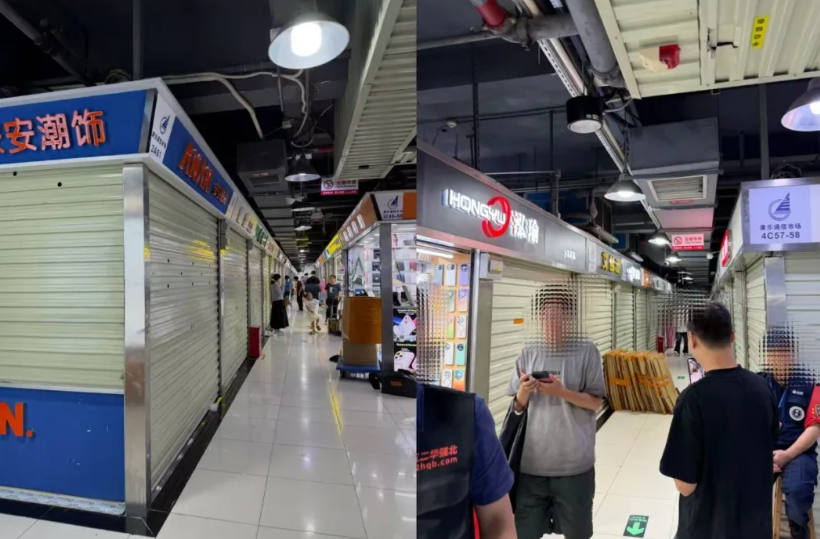
Shenzhen’s backbone lies in an unremarkable place: Huaqiang North. Within 1.45 square kilometers sit 115,000 market entities and 35 specialized wholesale markets. Some call it a huge electronics supermarket. That is inaccurate. Huaqiang North is an open-air laboratory.
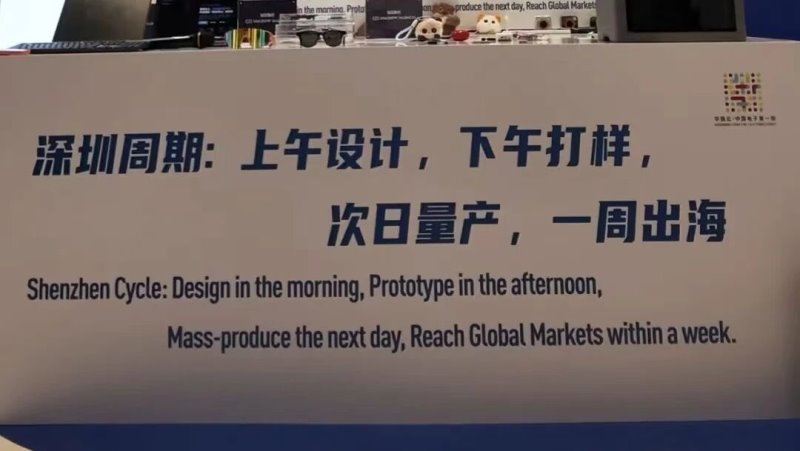
A young innovator with an idea can finish drawings in the morning, source electronic components in the afternoon, finish prototyping overnight, revise the design the next day, and launch mass production within days.
Elsewhere, developing a product requires crossing multiple silos: R&D, procurement, manufacturing, logistics and sales. In Huaqiang North, all these resources are hundreds of meters away, reachable on foot.
A recent report tells the story of Noah, an American innovator building smart glasses here. He put it plainly: “When you have an idea, you can source, disassemble, recombine and test right away.”
This quote captures the essence of Shenzhen. A city’s innovation capacity is not measured by how many big companies it hosts. It hinges on one question: Can an ordinary person turn an idea into a physical product quickly? If yes, innovation becomes meaningful.
The true value of Huaqiang North is not its annual transaction volume. It crushes the cost of innovation. One failed attempt will not ruin an entrepreneur. Swap components, adjust designs, target new markets and try again. Entrepreneurs gain something precious: the right to experiment and fail.
When a city allows ordinary people low-cost trial and error, opportunities grow naturally. A small merchant selling electronic parts today may design products tomorrow and grow into a tech company the day after tomorrow. This is not a fairy tale in Shenzhen; it is everyday reality.
Shenzhen’s innovation lives not only in high-end labs. It thrives in street stalls. It relies not only on PhD researchers, but also shop owners. It is powered not only by large corporations, but also delivery riders and creators burning midnight oil refining new products. This is the real Shenzhen.
Market counters enable trial and error. But after experiments, there needs to be an ecosystem to scale successful ideas.
03 Why Shenzhen Keeps Birthing New Industries
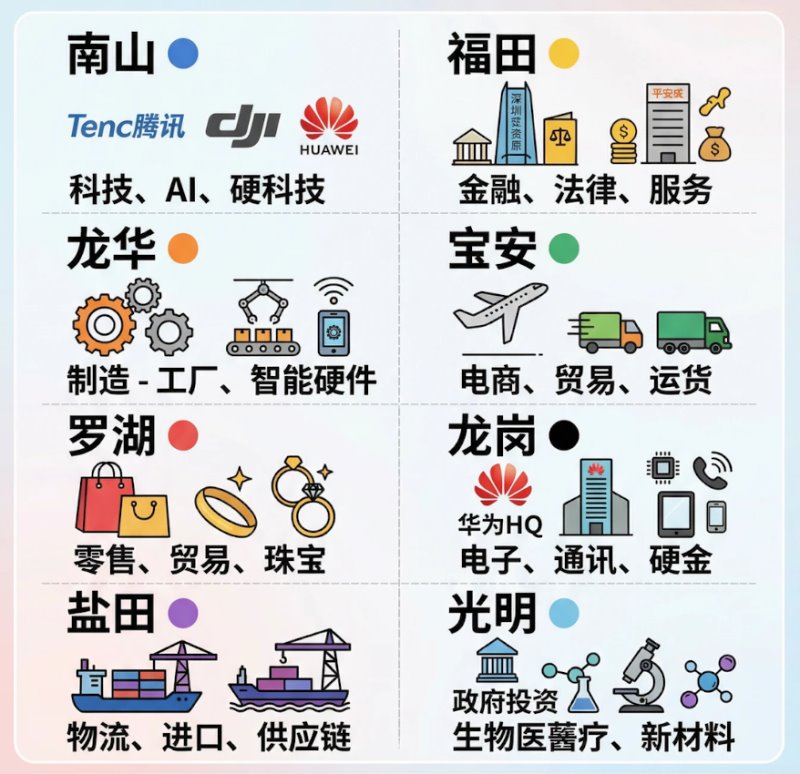
Huawei, Tencent and DJI are based here, alongside countless startups. In Nanshan, Robot Valley hosts over 200 robotics firms. The whole supply chain — precision machining, motors, sensors and final assembly — clusters together. No drive between companies takes longer than half an hour.
There is a simple rule here: For industries, density beats sheer scale.
Innovation happens through collisions. Engineers meet suppliers; suppliers meet founders; founders meet investors; investors meet universities; universities feed back into big enterprises. Shorter distances mean cheaper, faster communication. Faster communication speeds up trials. Faster trials accelerate new product launches. Faster launches bring quicker market feedback, which fuels further upgrades.
The chain works like this: Industrial Density → Communication Efficiency → Speed of Innovation → Market Feedback → Industrial Upgrade Shenzhen has perfected this loop.
Another striking feature: big firms and small businesses do not fight a zero-sum game. Very often, they thrive together. Huawei’s supply network is filled with small and medium-sized enterprises. Some started as humble suppliers. After cracking tough technical challenges, they joined Huawei’s supply chain and grew step by step.
The same applies to DJI. Once a leading company scales up, its technology, talent, supply chains and management expertise spill over, spawning many new ventures nearby. Tencent’s ecosystem follows the same logic, nurturing game studios, enterprise service providers, digital content creators and ad businesses across its value chain.
Shenzhen’s industrial landscape is not a forest of towering giants only. It resembles a tropical rainforest. Tall trees offer shelter. Shrubs grow in the mid-layer. Grass finds its own niche. Even a tiny sprout may one day grow into the next giant tree.
Shenzhen continuously breeds new companies because it does not demand you become an industry leader from day one. It lets you start small and grow gradually.
Still, dense industrial clusters carry a risk: stagnation and clinging to old businesses. Shenzhen avoids this trap.
04 Shenzhen’s Smartest Trait: It Is Not Afraid of the “Old Shenzhen” Fading Away
Many cities, once successful, defend their past advantages fiercely. They stick to whatever brought them wealth, clinging to old strengths until the market leaves them behind.
Shenzhen chooses the opposite path. Huaqiang North is a perfect example. It first traded electronic components, then mobile phones, then smart hardware. Today, AI glasses, robots, drones and 3D printers dominate its stalls, evolving wave after wave.
When markets shift, market stalls shift. When demand changes, industries change. When technology advances, companies adapt. Behind this lies a quintessentially Shenzhen mindset: We may cherish yesterday, but we cannot live on yesterday’s glory.
This explains its decades-long transformation. From “processing supplied materials” to electronics manufacturing, to telecom equipment, internet business, new energy, and now AI, robotics and biomedicine.
At every stage, people questioned whether Shenzhen had hit its ceiling. Yet Shenzhen never rests on its past wins. While building manufacturing capacity, it develops smart manufacturing. While making smartphones, it tackles chips, operating systems and AI terminals. While making electric vehicles, it pushes new energy and autonomous driving.
Shenzhen’s greatest asset is not any single flagship industry. It is its capacity to switch industries. That matters far more than holding onto one golden sector. Industries have lifecycles, but cities can renew themselves endlessly.
This same logic defines Shenzhen’s evolving ties with the world. In 1994, Window of the World was merely an attraction, bringing scaled replicas of global landmarks so visitors could see the whole world in one day. Back then, China needed a window to look outward.
Today the contrast is stark. Shenzhen no longer needs miniatures of the world. The world comes to it. In 2026, Germany’s Merck opened its Greater Bay Area Innovation and Cooperation Center in Shenzhen. AMD set up its Ecosystem Innovation Center here. Multinational corporations are moving R&D and global innovation partnerships to this city.
This shift marks three major phases in Shenzhen’s global relationship: Phase 1: I sell goods to the world. Phase 2: The world comes to Shenzhen for supply chains. Phase 3: The world innovates and builds products jointly with Shenzhen.
It may look like business model evolution, but it represents a leap in the city’s internationalization. First, export commodities. Second, export industrial supply chains. Third, integrate into the global innovation network. This is Shenzhen’s most valuable transformation, and the upcoming APEC meeting will put it to the test.
05 What APEC Guests Will See: Not Skyscrapers
When APEC convenes in November, many wonder what Shenzhen will showcase. Light shows? High-rises? Drone performances? Tech gadgets? None of these are the main point.
What the world truly wants to witness is Shenzhen’s unique way of getting things done. If a foreign enterprise lands in Shenzhen, can it quickly find suppliers, hire talent, hire lawyers, accountants and logistics providers, secure funding, register its business, turn ideas into products, and then enter global markets?
When all these can be resolved rapidly, the city becomes a genuine global interface. That is Shenzhen’s core mission.
This is why the APEC SME Summit first came to Shenzhen in 2018, and permanently settled in Bao’an in 2022. It is more than a conference. Entrepreneurs, investors and institutions converge. Rules align, information flows, opportunities rearrange themselves. The end result is not just a one-off event, but an ever-expanding network.
Shenzhen’s superpower is turning that network into tangible industries. This urban logic also holds lessons for individuals.
Why do some people unlock new career opportunities after moving cities? Why do some seize chances within a few years in a new industry, while others work tirelessly yet stay stuck?
Much of the difference comes down to the network you are connected to. Shenzhen does not produce legions of geniuses. But it surrounds ordinary people with accessible resources. Need engineers for tech? You find them. Need supply chains? Head to Huaqiang North. Need market channels? They are ready. Need capital? Venture capitalists are nearby. Need talent? Industries and universities are within reach. Want to go global? Export channels are open.
Shenzhen transforms individual capability into collaborative productivity among groups. This is its real productive power.
Individuals can learn from Shenzhen’s playbook. Stop trying to master every skill by yourself. A more important question: Can you become a good interface? Who do you know? Who can you connect with? What problems can you solve? Why would others seek you out? Can you bring different people, resources and opportunities together?
This set of capabilities becomes especially valuable in the AI era. AI devalues many standalone skills fast. Being able to write code or make slides is no longer rare. What remains scarce is the ability to spot problems, connect resources, organize collaboration, run fast trials, and turn plans into real deliverables. That is exactly what Shenzhen has practiced for decades.
06 Final Thoughts
Shenzhen’s most touching stories are not about corporate giants rising overnight. They are about countless ordinary people arriving here. They arrived without connections, wealth or impressive resumes, bringing savings, practical skills or half-baked ideas. Some worked in factories, some ran stalls, some did sales, some wrote code, some rented counters in Huaqiang North. They slept in cramped rental rooms by night and chased suppliers by day. If they failed, they tried again. Switched industries and tried again. Switched products and tried again.
Shenzhen stands out from many cities for its high tolerance for fresh starts. A personal setback does not mean the end of a career. A failed company does not mark the end of entrepreneurship. A declining industry does not mean the city has no future. Shenzhen keeps changing, and change itself creates opportunities.
That is Shenzhen’s most precious asset built over 46 years. From $37 million to $536 billion in GDP is merely the outcome. The real miracle: a remote border town with no natural advantages has grown, over 46 years, into a massive opportunity generator.
It continuously connects, experiments and iterates. It draws in new people, technologies, capital and industries from across the globe, letting all these elements collide. Out of collisions emerge new companies, new products, new industries and new ways of living.
In 1994, Window of the World showed Chinese people how big the world is. Today, Shenzhen shows the world what China can innovate.
From observing the world, to co-building the world. From Window of the World, to the World Interface. This is Shenzhen’s most profound transformation in 46 years.
Where will its next transformation start? Perhaps inside a microchip in Huaqiang North, in a line of code in Nanshan, inside a robot in Pingshan or Longgang, or hidden inside an immature idea from a young innovator.
The most fascinating thing about Shenzhen is that no one can predict where the next breakthrough will come from.