
Over the past two decades, the global tech industry has followed a linear development sequence: Internet → Mobile Internet → Cloud Computing → Artificial Intelligence. Each technological wave fades before the next rises to take its place.
However, a historic transformation will unfold across 2026 to 2029. Seven core tech verticals will simultaneously approach commercialization thresholds. Instead of isolated breakthroughs in single sectors, cross-industry, all-dimensional technological expansion will take place.
2027 will emerge as the super inflection year for the global technology industry. AI agents will evolve into digital laborers, humanoid robots will be mass-deployed in factories, in-vivo CRISPR gene editing will officially launch commercially, solid-state batteries will kick off mass production, and Starship will deliver full global satellite internet coverage. These cutting-edge technologies are no longer mere lab concepts but tangible industrial assets ready for monetization.
This article comprehensively unpacks the breakthrough timelines, commercialization milestones and industrial opportunities across the seven major tech tracks over the next three years, and thoroughly analyzes the underlying logic driving this new technological revolution.
1. AI Agents: From Assistant Tools to Full-Time Digital Workforce
Core Verdict (High Confidence): 2026 marks the breakout year for AI agents. A paradigm shift will occur between 2027 and 2028, transforming AI from “Copilot auxiliary tools” into independent Agent laborers and completely reshaping human-AI collaboration frameworks.
Sequoia Capital released a disruptive judgment in early 2026: Long-duration AI agents deliver functionally AGI-equivalent capabilities and will roll out for commercial use in 2026. AI capabilities originally forecasted to arrive in 2030 will be mainstream four years ahead of schedule.
Three-Year Capability Evolution Roadmap for AI Agents
- 2026: Independently complete complex tasks lasting up to 2 hours, including full-stack code debugging and in-depth financial analysis. AI inference costs drop by over 95% compared to 2024 levels.
- 2027: Master full-day autonomous workflows, capable of end-to-end work such as full software module development and bulk talent screening. Agent-4, a superhuman AI research assistant, will launch.
- 2028: Sustain reliable multi-day work cycles. OpenAI’s fully automated multi-agent system will launch, widely replacing repetitive cognitive labor.
- Long-term Outlook (2034): AI agents will reliably execute year-long continuous work and penetrate core workflows across all industries.
Industry metrics show the reliable task execution window of AI agents doubles every 7 months, with iteration speeds accelerating to a 4-month cycle between 2024 and 2025—far exceeding industry forecasts.
AI agents have already landed commercial use across seven vertical sectors: software programming, legal services, healthcare, cybersecurity, sales, chip design and mathematical research, with benchmark products including Harvey, OpenEvidence, XBOW and Ricursive.
Core Transformation: Human job roles are fundamentally restructured from task executors to AI team supervisors, with human value concentrated in decision-making, innovation and resource coordination.
2. Advanced Semiconductor Packaging: The New Wafer Foundry of the AI Era
Core Verdict (High Confidence): Advanced packaging, rather than chip manufacturing processes, has become the primary bottleneck restricting AI chip performance and output. CoWoS packaging capacity, instead of wafer fabrication capacity, is the scarcest resource in the AI sector, driving 30% annual compound industry growth.
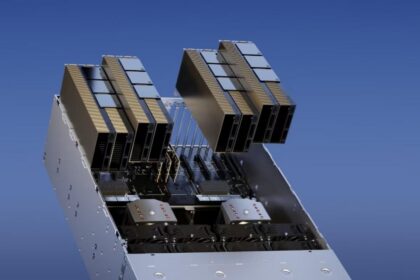
A widespread market misconception persists: The main factor limiting shipments of NVIDIA’s high-end chips is not TSMC’s 3nm/2nm advanced process capacity, but insufficient CoWoS advanced packaging output. The semiconductor industry is undergoing a structural revolution shifting from round wafers to rectangular panels.
Technical Layout & 2027 Capacity Plans of Leading Manufacturers
- TSMC: Iterates CoWoS to CoPoS panel-level packaging, targeting an annual capacity of 2 million wafers by 2027. Primary clients include NVIDIA, AMD and Apple; NVIDIA accounts for 63% of all CoWoS capacity allocation.
- Intel: Deploys EMIB technology paired with glass substrates. The Xeon 6+ series will be the first mass-produced chips built on glass core substrates, supporting both internal consumption and third-party supply.
- Samsung: Advances SoP panel-level system packaging alongside SAINT-D technology to enable direct HBM GPU stacking, drastically boosting AI chip computing density to meet Tesla AI6 chip requirements.
Per industry reports from Lam Research and IDTechEx: When photolithography reticle sizes reach 4,500–7,700 mm², rectangular panel-level packaging will hit its cost inflection point. It will fully replace traditional round wafer packaging between 2027 and 2030, with NVIDIA’s CoPoS-packaged chips slated for mass production by late 2028.
3. New Energy Technology: Converging Breakthroughs in Solid-State Batteries, SMRs & Nuclear Fusion
Over the next three years, the new energy sector will move beyond single-technology iteration, delivering simultaneous breakthroughs across energy storage, small modular nuclear reactors and nuclear fusion to build a brand-new clean energy supply ecosystem.
3.1 Solid-State Batteries: The Onset of Small-Scale Mass Production in 2027
Core Verdict (High Confidence): 2027–2028 serves as the pilot commercialization window for solid-state batteries, with leading manufacturers launching small-batch production lines. Cost parity and mass mainstream adoption will arrive post-2030.
Semi-solid batteries act as the near-term transitional solution and will be installed in mass-market vehicles from 2026 to 2027, while all-solid-state batteries enter industrial preparation phases. Global all-solid-state battery shipments are projected to hit 13.5 GWh in 2028—representing a hundredfold increase from the 0.1% market penetration recorded in 2025, with penetration expected to exceed 4% by 2030.
Mass Production Timelines of Leading OEMs & Battery Makers
- Toyota: Launch electric vehicles equipped with all-solid-state batteries between 2027 and 2028
- BYD: Initiate small-batch manufacturing of sulfide all-solid-state batteries in 2027
- CATL: Complete construction of small-scale all-solid-state battery production lines in 2027
- BMW + Solid Power: Scale all-solid-state battery manufacturing in 2028
- Nissan: Deploy semi-solid batteries as a transitional technology to drive commercial rollout in 2028
3.2 Small Modular Reactors (SMRs) + Nuclear Fusion: The Next Clean Energy Revolution
Core Verdict (Medium Confidence): Multiple SMR small nuclear reactor projects target commercial operation from 2027 to 2029, while nuclear fusion technology reaches critical verification milestones, kicking off the era of unlimited clean energy.
The industry exhibits stark polarization: Tech giants including Amazon, Google and Equinix have signed large-scale SMR power purchase agreements at rates of $107–130/MWh. However, headwinds in project delivery led to the cancellation of NuScale’s flagship plant, and most industry analysts push widespread SMR commercial operation out to 2030–2035.
Groundbreaking progress unfolds in fusion energy: SPARC, developed by MIT spin-off Commonwealth Fusion Systems, will achieve Q>1 net energy gain between late 2026 and early 2027. Helion’s 50MW Orion power station is already under construction, with plans to supply electricity to Microsoft in 2028 as the world’s first commercially operational fusion power facility.
4. Biotechnology: Three Historic Breakthroughs Usher in a New Life Sciences Era
Between 2027 and 2028, biotechnology will transition from laboratory research to clinical commercialization. Three landmark advances—in-vivo CRISPR gene editing, AI drug discovery and expanded GLP-1 therapeutic applications—will completely reshape the healthcare industry landscape.
4.1 In-Vivo CRISPR Gene Editing: The “One-Shot Cure”
Core Verdict (High Confidence): Intellia’s lonvo-z in-vivo CRISPR therapy is projected to receive FDA approval in Q1–Q2 2027 as the world’s first intravenously administered in-vivo gene editing drug, launching a new age of gene therapy.
Unlike the previously approved ex-vivo editing therapy Casgevy, lonvo-z eliminates the need to extract, edit and reintroduce patient cells. A single intravenous infusion permanently disables disease-causing genes inside the human body, delivering a genuine one-shot curative solution.
Clinical trial results are transformative: For hereditary angioedema (HAE), the drug cuts monthly flare-ups by 87% and severe attacks by 91%. 62% of patients experience zero recurring symptoms and discontinue all preventive medications. The launch of this therapy confirms in-vivo gene editing meets global regulatory safety and efficacy standards, paving the way for rapid adaptation to treat a wide spectrum of genetic disorders.
4.2 AI-Driven Drug Discovery: The First AI-Originated Drug Nears Regulatory Approval
Core Verdict (Medium-High Confidence): Between 2027 and 2028, the world’s first fully AI-discovered and developed drug will complete regulatory clearance, marking the mainstream industrial rollout of AI for Science in core medical workflows.
Over 200 AI-developed drug candidates entered clinical trials globally by 2026, with several leading assets advancing rapidly: Insilico Medicine’s rentosertib completed Phase IIa trials with meaningful therapeutic signals for idiopathic pulmonary fibrosis; Relay Therapeutics’ RLY-2608 entered Phase III trials for breast cancer.
A disruptive technical leap occurred in June 2026: Research teams successfully predicted dynamic protein structural motion, enabling precise identification of cryptic binding pockets that only open as proteins shift shape—solving a core pain point of traditional pharmaceutical R&D. DeepMind spin-off Isomorphic Labs secured partnerships worth over $3 billion with Novartis, Eli Lilly and Johnson & Johnson using this breakthrough technology.
4.3 GLP-1 Therapeutics: Constantly Expanding Treatment Boundaries
GLP-1 drugs such as semaglutide generated over $500 billion in global market revenue from 2025 to 2026, with substantial untapped growth potential remaining. The SELECT clinical trial confirmed these therapies reduce major cardiovascular adverse events by 20%.
Multiple ongoing clinical trials are testing GLP-1 compounds as treatments for alcohol addiction, Alzheimer’s disease, non-alcoholic steatohepatitis (NASH) and obstructive sleep apnea. Approval for any new therapeutic indication will drastically expand the market ceiling, creating another trillion-dollar pharmaceutical segment.
5. Robotics & Autonomous Driving: Mass Industrial Deployment in 2027
Over the next three years, humanoid robots will exit labs for mass factory production, while Level 4 autonomous driving moves beyond pilot testing to deliver commercial profitability, emerging as core productivity tools for smart manufacturing and autonomous mobility.
5.1 Humanoid Robots: From Pilot Trials to Large-Scale Industrial Deployment
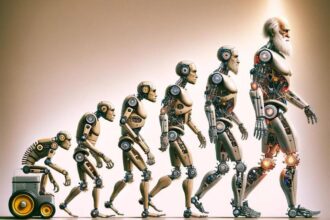
Core Verdict (High Confidence): 2027–2028 marks the inflection point for the humanoid robot industry, shifting from limited pilots to mass commercial rollout and replacing repetitive manual factory labor at scale.
Industry data forecasts global humanoid robot demand to hit 30,000 units in 2026, with explosive growth starting in 2027.
- Tesla Optimus: Over 1,000 Gen 3 units are already deployed inside Tesla factories for material handling and picking tasks. Industrial customer sales launch by late 2026, with a consumer-grade variant priced at $20,000–$30,000 set to release by late 2027.
- Figure AI: The Figure 02 model has operated reliably on BMW’s South Carolina production line for more than one year. The new Figure 03 achieves a production rate of one unit per hour, with a target annual output of 100,000 units within four years.
- Chinese Manufacturers: Unitree and Agility Robotics shipped over 50% of global humanoid robot volumes combined in 2025; Ubtech targets an annual production capacity of 10,000 units in 2026, with domestic Chinese robots delivering prominent cost-performance advantages.
5.2 Level 4 Autonomy: Robotaxis Achieve Commercial Viability
Core Verdict (High Confidence): 2027 stands as the commercial inflection year for L4 Robotaxis, with hardware costs falling sharply. By 2028, autonomous ride service expenses will match conventional taxi fares.
Supported by a complete domestic intelligent vehicle industrial chain, China achieves far faster cost reduction rates than the United States. The 2027 Pony.ai Robotaxi hardware package costs under RMB 230,000—a 70% cost cut, cheaper than most mass-market consumer EVs, validating a fully sustainable commercial business model.
Progress of Global Market Leaders
- China Ecosystem: Pony.ai reaches operational profitability across Guangzhou and Shenzhen; Baidu Apollo Go covers 22 cities with over 17 million cumulative rides; WeRide leads cross-border global compliance expansion.
- U.S. Ecosystem: Waymo logs more than 20 million unmanned service miles, with severe injury crash rates 90% lower than human drivers; Tesla Cybercab accelerates pure vision-based deployment alongside unsupervised FSD model iteration.
6. Space Economy: Starship Launches a New Era of Space Industrialization
Core Verdict (High Confidence): Starship will mature technically by mid-2027 to deliver full global satellite internet coverage. Orbital AI data centers will launch commercial operations in 2028, creating an entirely new space computing industry.
Three-Year Space Industry Commercialization Timeline
- H2 2026: Starship V3 completes its first orbital payload delivery mission, validating fully reusable launch vehicle reliability.
- Mid-2027: Starlink delivers continuous, gap-free global coverage including polar regions, with V2 satellite direct-to-cell service launching commercially.
- 2028: Orbital AI data centers enter commercial operation. SpaceX targets an annual orbital computing capacity of 100 GW within 4–5 years.
To date, Starlink operates 9,600 satellites across orbit, serving 10.3 million subscribers in 164 countries. Each V3 satellite delivers 1 Tbps of downlink bandwidth. Powered by in-orbit solar energy and freed from terrestrial land and cooling constraints, orbital computing has the potential to disrupt traditional ground-based data center infrastructure.
7. Synthetic Biology: On the Verge of Full Industrialization
Core Verdict (Medium Confidence): Synthetic biology technology will reach TRL 7 (system prototype validation in operational environments) between 2027 and 2028, with multiple sub-sectors transitioning from pilot testing to full commercial operation. AI drastically shortens industrial iteration cycles.
Japan’s NEDO and MAFF national programs lead global progress, with multiple synthetic biology projects scheduled to finish technical validation in 2027 and launch commercial manufacturing before March 2028, covering plant functional ingredient synthesis and commercial DHA algae oil production.
Industry forecasts project the global precision fermentation market to grow at a 20% CAGR, hitting $11.85 billion by 2031. AI acts as a core accelerator, compressing multi-year strain optimization workflows down to just several months.
The sector remains in early industrialization stages, with most synthetic biological products unable to compete on cost against conventional petrochemical and agricultural alternatives. However, rapid technical iteration will unlock mass-scale market substitution within three years.
8. Core Conclusion: The Underlying Logic of the 2027 Super Inflection Point
Over the past two decades, technology advanced via sequential, linear waves. From 2026 to 2029, seven core technologies will advance simultaneously, cross-support one another and drive recursive acceleration, generating an unprecedented compound technological effect.
2027 will serve as the ultimate validation year, answering core commercial questions across all verticals: mass deployment of AI agents, finalized advanced packaging architectures, mass solid-state battery production, commercialized in-vivo gene editing, factory rollout of humanoid robots and complete global space internet coverage.
This technological revolution features three defining traits:
- Recursive Acceleration: AI empowers every industrial track, speeding parallel innovation in materials science, biotech, robotics and aerospace to form a self-reinforcing positive cycle.
- Deep Cross-Sector Coupling: Technologies no longer develop in isolation. Humanoid robots rely on AI for cognitive brains, surging computing demand drives SMR nuclear power growth, and the space economy depends on breakthroughs in materials and artificial intelligence—creating unprecedented industrial interdependency.
- Intensified Capital Competition: Simultaneous commercialization across all sectors sparks fierce global capital competition, with capital-intensive hardware-focused verticals facing early funding filtering pressures.
We stand at a pivotal turning point for century-defining technological change. 2027 is not merely a year of isolated technical breakthroughs—it is the inflection point when humanity’s full spectrum of technology enters a brand-new era.