Manroland Sheetfed, part of British engineering group Langley Holdings, has announced the permanent closure of its historic production site in Offenbach, Germany, resulting in the loss of more than 660 jobs. Meanwhile, the sales process for its spare parts and service business is well underway.
The long-loss-making printing machinery manufacturer filed for insolvency and restructuring in early March. However, the restructuring efforts failed to save the iconic factory. After a global investor search, no potential buyer was willing to continue local production at the Offenbach plant — once Langley Holdings’ largest manufacturing hub.
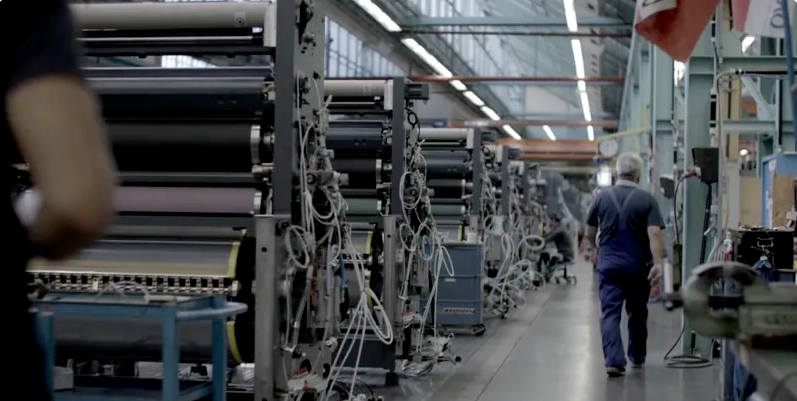
Spanning 72 acres with a state-of-the-art foundry and 114,000 square meters of production and assembly workshops, the site served as the core manufacturing hub for Manroland sheetfed presses. Industry players are currently grappling with low capacity utilization and operational pressures, leaving little incentive to take over large-scale traditional production facilities.
Full production of new sheetfed printing presses will be gradually halted starting this early summer, while existing customer orders will be fulfilled as promised. Among the 750 on-site employees, only 84 staff will be retained, focusing on after-sales services, technical support and essential administration to ensure a smooth transition.
The divestment of the global spare parts business is progressing steadily. Manroland will retain key manufacturing technologies for specialized components during the handover period, minimizing service disruptions for worldwide clients and enabling seamless integration by the future buyer.
Mounting financial losses pushed the business to the brink. The sheetfed division suffered monthly losses of over 3 million GBP, with annual deficits reaching 43.2 million EUR — an unsustainable operating model that forced drastic strategic adjustments.
01 Plunging Market Demand: The Core Catalyst
Shrinking global demand for conventional printing presses, especially in China, accelerated the downturn. The Chinese market once accounted for 40% of Manroland’s new sheetfed press sales. In recent years, annual installations of traditional offset presses in China have declined by 22% on average, triggering a sharp drop in corporate revenue.
Its flagship product lineup, including the Roland 700 Evolution B1 press and the ultra-large-format Roland 900 / 900 XXL series, once led the packaging printing sector, with a maximum sheet size of 130×187 cm. Nevertheless, the rapid rise of digital printing and shifting packaging demands have continuously eroded the competitiveness of conventional offset equipment.
02 Responses from Industry Leaders
Speculation surrounds potential buyers for the after-sales and spare parts business, with rival Koenig & Bauer emerging as the leading candidate. Active in the B1 and large-format press segments, Koenig & Bauer has previously expressed interest in Manroland assets. The company stated it will monitor industry trends and evaluate strategic opportunities, but declined to comment on acquisition rumors.
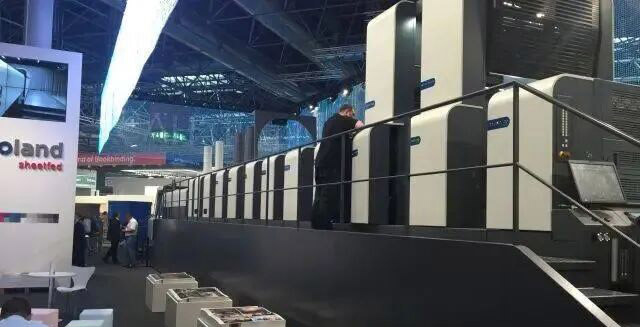
Manroland once formed a key partnership with Heidelberg, jointly launching the Cartonmaster CX 145 offset press based on Roland 900 Evolution technology. Following the factory closure announcement, Heidelberg remained silent on the future of their cooperation and whether it would absorb Manroland’s global customer service network.
03 Business Split and Future Transformation
Beyond the 750 Offenbach employees, Manroland Sheetfed employs an additional 600 staff worldwide. The shutdown is limited to sheetfed press manufacturing, with no impact on independent subsidiary operations.
Founded in 1844 and rooted in Offenbach since 1871, the historic facility faces an uncertain future. Local media reports suggest the industrial zone may be rebuilt into a modern data center capable of housing 3,000 server racks, marking a major shift from traditional manufacturing to digital infrastructure.
Notably, Langley’s printing chemical division DC Druck Chemie and its subsidiary BluePrint will remain fully operational. Acquired in 2014, the brand supplies advanced printing chemicals and consumables to over 6,000 global clients across Europe, Brazil and beyond, insulated from Manroland’s manufacturing crisis.
The demise of Manroland’s century-old factory reflects the universal transformation challenges facing the traditional printing equipment industry. As digitalization reshapes global production and packaging trends, legacy manufacturing giants are forced to downsize, restructure and embrace new industrial transitions.