
A pair of “Huaqiangbei siblings” have recently attracted widespread attention — starting from a 1-meter counter in Huaqiangbei, they have now built an industry giant with a market value exceeding 150 billion yuan, and their personal wealth has soared by more than 40 billion yuan in half a year, writing a legend of grassroots entrepreneurship.
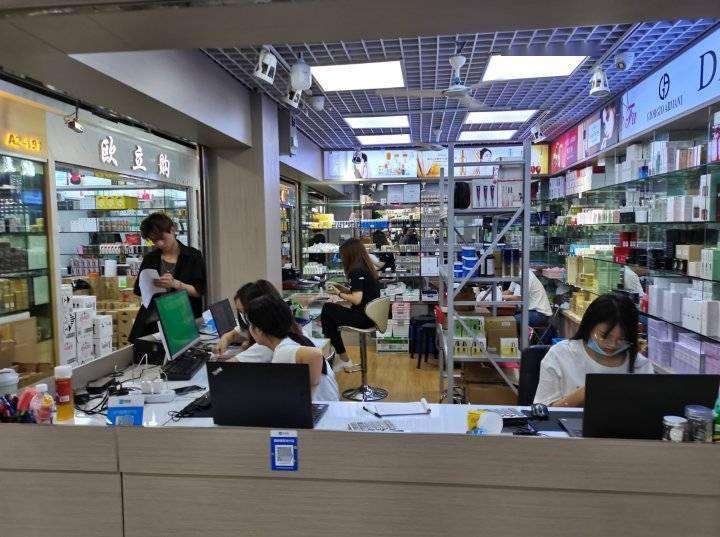
I. Huaqiangbei: Birthplace of a 150-Billion-Yuan Empire
In early 2026, the global storage market witnessed a “bull market” frenzy. The price of a 256G DDR5 memory module even exceeded 40,000 yuan, and the topic “A box of memory modules is equivalent to an apartment in Shanghai” went viral on multiple platforms. Driven by the explosion of AI demand, the entire storage chip market saw a sharp price surge, and Longsys, a Shenzhen-based company, emerged as one of the biggest winners in this price boom.
In 2025, Longsys’ stock price rose nearly 200% throughout the year; in March 2026, the company’s market value once exceeded 150 billion yuan, achieving a leapfrog growth compared with its market value of less than 40 billion yuan half a year ago. Behind all this are the company’s two founders — siblings Cai Huabo and Cai Lijiang. As the company’s market value soared, the siblings’ personal wealth increased by more than 40 billion yuan in over half a year.
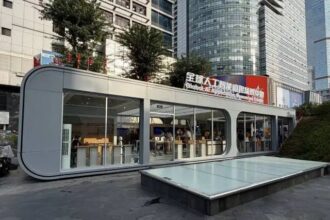
Their entrepreneurial journey began in Shenzhen’s Huaqiangbei, known as “China’s No.1 Electronic Street”. In the 1990s, Cai Huabo, a young man from Jiangxi who had just graduated from high school, came to Shenzhen and settled in Huaqiangbei. At that time, Huaqiangbei witnessed the myth of “a counter with a daily turnover of over one million yuan” every day. Cai Huabo became a top salesperson with his outstanding ability and also keenly captured the huge business opportunities in the storage industry.
In 1999, Cai Huabo joined hands with his twin sister Cai Lijiang to start a business. They took one character from each of their names and combined it with their zodiac sign “Long” (dragon) to register and establish “Shenzhen Longsys Electronics Co., Ltd.”. Longsys’ entrepreneurial path started with a 1-meter counter in Huaqiangbei, and its initial business was selling various storage products.
II. Four Strategic Transformations to Navigate Industry Cycles
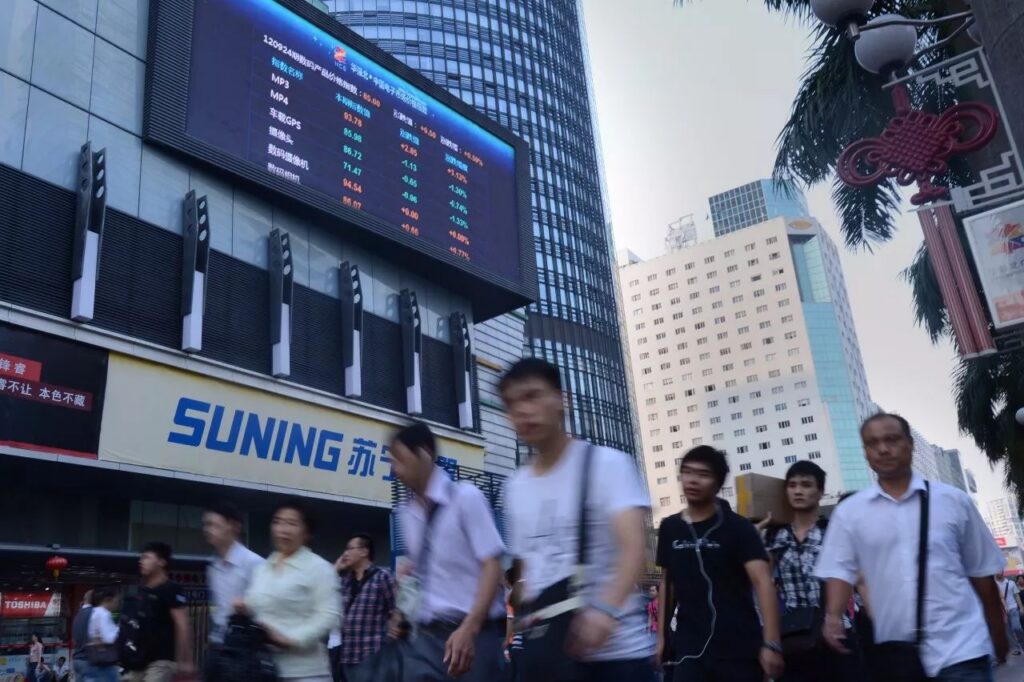
The storage industry is known for its “cycle curse” — demand is unpredictable, production capacity expansion is slow, and prices often fluctuate drastically like a roller coaster. The entrepreneurial history of siblings Cai Huabo and Cai Lijiang is a history of continuous adaptation to industry cycles and proactive change. Four key transformations allowed Longsys to steadily gain a foothold and achieve breakthrough development step by step.
The first transformation: from sales to OEM, putting on a “life jacket” for the enterprise. In 2002, Cai Huabo almost fell into a capital chain crisis due to hoarding unpopular flash memory. Coupled with the subsequent sharp drop in industry prices, he deeply realized that the pure trade model meant putting the company’s fate in the hands of the market. Therefore, before the 2008 financial crisis, Longsys resolutely shifted to OEM (Original Equipment Manufacturing). Stable orders enabled the company to successfully avoid the industry reshuffle caused by the financial crisis and tide over the difficulties smoothly.
The second transformation: from OEM to independent R&D, giving the enterprise its “own name”. Although the OEM business was stable, the profit margin was meager, and orders were dependent on customers, which could be lost at any time. In 2011, Longsys launched its independent industrial storage brand “FORESEE” and officially entered the enterprise-level market. To build core competitiveness, the company deployed a large number of R&D personnel and focused on technological research and development. Its products successfully passed the strict tests of major enterprises such as State Grid and BYD, and gained a firm foothold in the enterprise-level market.
The third transformation: a “snake swallows elephant” acquisition, exchanging capital for time and market expansion. The consumer market has great potential. To break through the bottleneck, in 2017, Longsys resolutely acquired Lexar, a high-end consumer brand under Micron, a global storage giant. At that time, Lexar’s annual sales were nearly three times that of Longsys. This “snake swallows elephant” acquisition made Longsys gain global popularity overnight and completed the key leap from an behind-the-scenes OEM to a front-end brand.
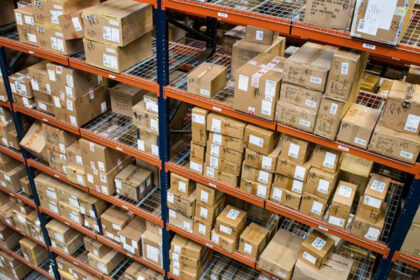
The fourth transformation: “building walls and accumulating grain” after listing to prepare for the industry’s major cycle. After Longsys was successfully listed in 2022, the company with sufficient funds took faster actions: on the one hand, it “built high walls” by continuously increasing R&D investment, independently developing main control chips, acquiring packaging and testing factories, and continuously extending to the upstream and downstream of the industrial chain to consolidate core advantages; on the other hand, it “accumulated grain extensively” by hoarding goods against the trend during the industry downturn. These low-cost hoarded inventories became the hardest competitive chips in the subsequent storage price surge.
III. The Real Winning Formula: Keeping Pace with the Times
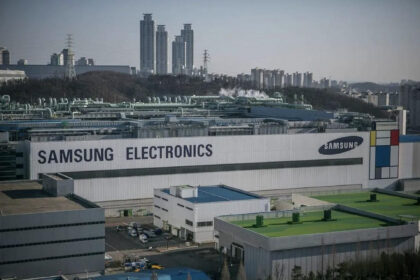
In 2025, the explosion of AI triggered an epic price surge in the memory industry. Faced with high profits, upstream giants such as Samsung and SK Hynix all shifted their production capacity, leading to tight supply of traditional memory and flash memory and a sharp rise in prices. Longsys’ years of layout were fully realized at this moment.
Its own core technologies ensured the competitiveness of its products, the improved industrial chain layout guaranteed stable supply, and the huge inventory hoarded at low prices made Longsys have an absolute advantage in the price surge. In 2025, the company’s net profit is expected to surge by more than 150%, successfully ranking among the world’s top independent memory manufacturers.
From a small counter in Huaqiangbei to a global storage industry giant, Longsys’ rise is inseparable from the foresight and perseverance of Cai Huabo and his sister, and more importantly, from their accurate grasp of the pulse of the times. Four key transformations allowed the company to successfully navigate the stormy waves of the industry; keeping up with the AI era wave allowed them to usher in their own “super cycle”.
The story of these “Huaqiangbei siblings” is not an exception — it is a microcosm of entrepreneurship that happens every day in Huaqiangbei, and a vivid testimony to “Made in China” evolving from simple trade to core technology, and from following and imitating to leading the industry.