On February 21st, the global technology sector witnessed intensive breakthroughs, focusing on four core directions: embodied intelligence, large models, new energy vehicles, and chip manufacturing. Among them, Google’s new-generation large model supports million-word long text processing, NVIDIA’s new-generation AI chip architecture was exposed, and Tencent and MIT’s robot projects achieved key technological breakthroughs, with innovations in multiple fields advancing in parallel.
Contents
I. Embodied Intelligence Enters a New Stage, Continuous Breakthroughs in Robot TechnologyII. Large Models Enter the Long Text Era, Breakthroughs in Multi-Scenario CapabilitiesIII. Three Major Players in New Energy Vehicles Make Efforts, Upgrading Endurance and Energy Supplement ExperienceIV. Fierce Competition in Chip Manufacturing, Multiple Enterprises Layout Advanced ProcessesV. Continuous Efforts in Cutting-Edge Exploration, Unlocking New Technological Possibilities
I. Embodied Intelligence Enters a New Stage, Continuous Breakthroughs in Robot Technology
- Tencent Robotics X Laboratory released its new quadruped robot “Max 2.0” today, equipped with a self-developed legged motion control algorithm. The autonomous pass rate in unstructured terrains such as gravel and slopes reached 94%, an increase of 26 percentage points compared with the previous generation, greatly enhancing its ability to adapt to complex scenarios.
- The Bionic Laboratory of the Massachusetts Institute of Technology (MIT) developed a millimeter-level soft gripper, which achieves 0.1-millimeter precision grasping through photosensitive materials. It has for the first time realized non-destructive operation on fragile objects such as butterfly wings and integrated circuit pins, filling the technical gap in the sub-field.
- The Stanford Mobile ALOHA team added a multi-modal perception module to household robots, which can simultaneously process visual, tactile and voiceprint information. It successfully completed the continuous task of “taking drinks from the refrigerator and pouring them into cups” in a simulated home environment, taking an important step towards practical household robots.
II. Large Models Enter the Long Text Era, Breakthroughs in Multi-Scenario Capabilities
- Google officially released Gemini 2.5 Pro, with the context window expanded to 1.28 million tokens, capable of processing about 950,000 English words at one time (equivalent to the entire volume of “War and Peace”). It demonstrates breakthrough application value in professional scenarios such as medical literature analysis and legal contract review.
- Zhipu AI open-sourced the GLM-4.5 series models. In authoritative benchmark tests such as MMLU and GSM8K, the reasoning accuracy is 30% higher than that of the 4.0 version. Its newly added mathematical derivation step visualization function has received focused attention and recognition from the developer community.
- Meta launched Code Llama 3 Professional Edition, which achieved a HumanEval score of 82.7% in Python code generation tasks. It added a “code style migration” function that can automatically convert Java/C++ code into Python implementation, greatly improving programmers’ development efficiency.
III. Three Major Players in New Energy Vehicles Make Efforts, Upgrading Endurance and Energy Supplement Experience
- BYD Seal 07 EV was officially launched, equipped with the second-generation Blade Battery, with a CLTC cruising range of 712 kilometers. It supports 800V high-voltage fast charging, capable of supplementing 400 kilometers of energy in 10 minutes, with a starting price of 229,800 yuan, balancing cruising range and cost performance.
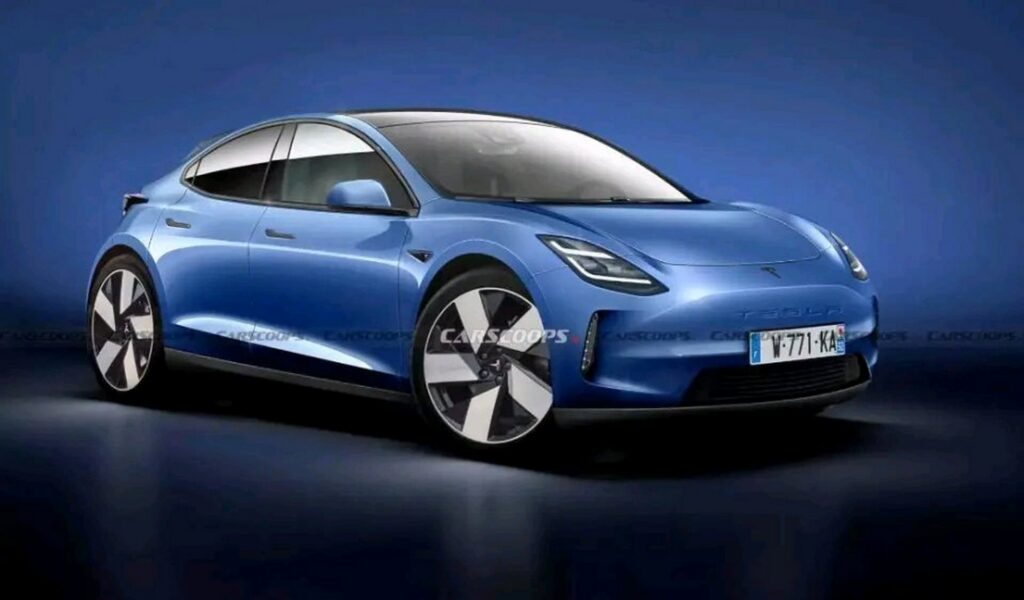
- Tesla Model 2 completed the declaration with the Ministry of Industry and Information Technology, with a body length of 4.52 meters. It adopts a new integrated die-casting chassis and is equipped with a lithium iron phosphate battery, with an estimated price of 180,000-200,000 yuan. It is expected to be officially delivered in the third quarter of 2026, which is expected to further lower the access threshold for new energy vehicles.
- NIO delivered the first batch of 150kWh ultra-long endurance batteries, adopting semi-solid electrolyte technology with an energy density of 360Wh/kg. At the same time, the replacement time at the battery swap station was shortened to 3 minutes and 15 seconds, greatly alleviating users’ range anxiety and energy supplement waiting pain points.
IV. Fierce Competition in Chip Manufacturing, Multiple Enterprises Layout Advanced Processes
- NVIDIA announced the roadmap for its next-generation Rubin architecture, adopting TSMC’s 3nm process, with FP8 precision computing power reaching 2000 TFLOPS, 2.3 times higher than the existing Blackwell architecture. It is expected to be mass-produced in 2027, which will further promote the upgrading of AI computing power.
- Samsung Electronics announced that the 2nm process has officially entered the mass production stage. The first product is an AI acceleration chip with a yield rate stable at around 75%, which has successfully obtained orders from Japanese AI startup Preferred Networks, seizing the opportunity in the advanced process market.
- The expansion of SMIC Tianjin Plant’s 28nm production line was completed, with the monthly production capacity increased to 100,000 wafers. It focuses on serving localized needs such as new energy vehicle power chips and industrial MCUs, helping the independent controllability of the domestic semiconductor industry chain.
V. Continuous Efforts in Cutting-Edge Exploration, Unlocking New Technological Possibilities
- The Shanghai Institute of Optics and Fine Mechanics of the Chinese Academy of Sciences developed a photonic matrix computing chip, which realizes matrix operations through the principle of optical interference. When processing neural network forward propagation tasks, its speed is 100 times higher than that of traditional GPUs, and its power consumption is reduced by 99%, providing a new path for high-performance computing.
- Delft University of Technology in the Netherlands demonstrated a new quantum computing chip architecture. Through the hybrid integration of superconducting circuits and photonic devices, the energy consumption for quantum bit manipulation is reduced to 50 nanowatts, laying a core foundation for the research and development of million-quantum-bit systems and promoting the practicalization of quantum computing.