Nestled in Futian District, Shenzhen, Huaqiangbei spans just 1.45 square kilometers. In industry articles and documentaries, it stands as the heart of China’s electronics industry, the cradle of the hardware sector, and a global hub for electronic markets. To every tech enthusiast, it was once a mythical place—where legends said you could grab a flagship iPhone for 3,000 yuan, buy chips by the kilogram, and find second-hand phones, electronic components, and trendy digital accessories everywhere. It was a dream treasure trove for DIY enthusiasts, repair technicians, and factory buyers.
Filled with the excitement of a “pilgrimage,” I traveled to Shenzhen last weekend and took Metro Line 8 to this legendary market. Yet what began as a highly anticipated visit soon turned into the collapse of my long-held faith.
Severe Product Homogenization; Hardcore Tech a Distant Dream
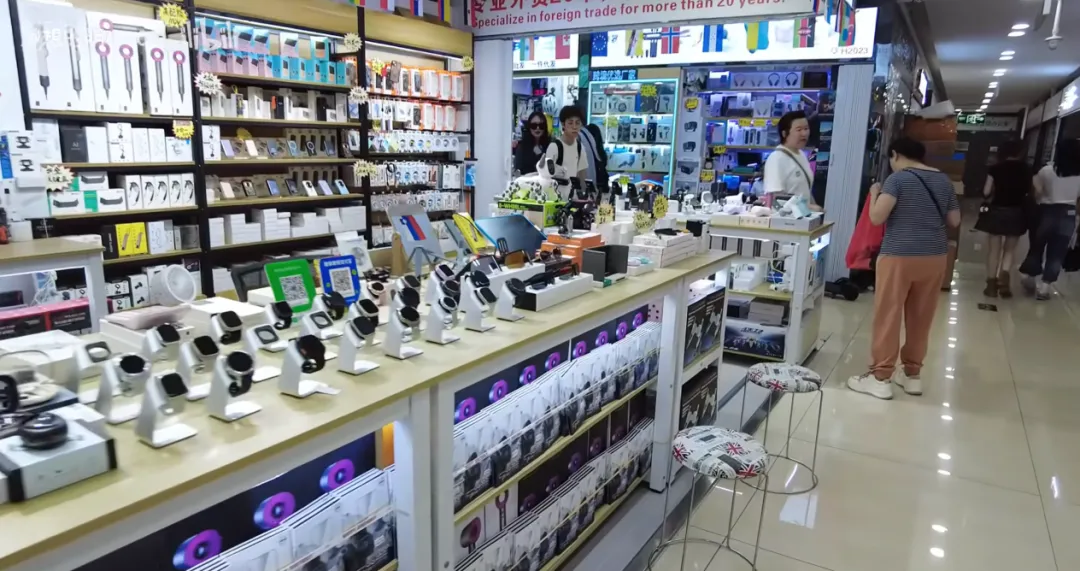
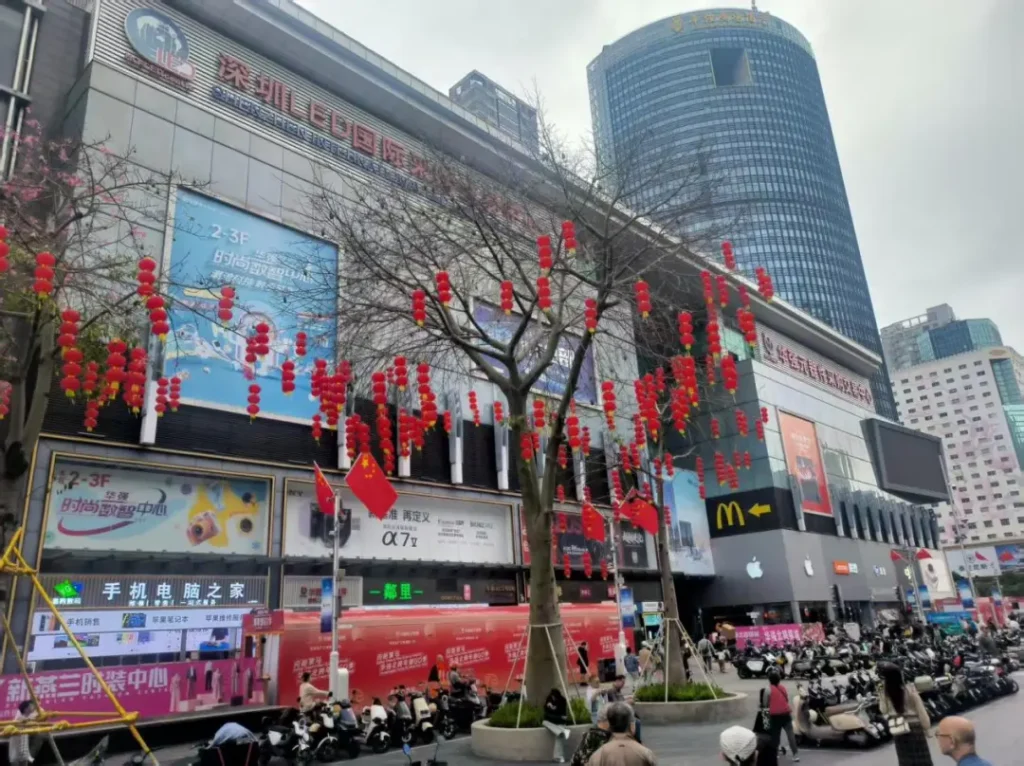
The moment I stepped out of the subway station, Huaqiangbei’s bustle hit me: large shopping malls stood row upon row, streams of customers and staff moved busily, and everything brimmed with vitality. Inside the markets, second-hand phones neatly lined glass display cabinets, and digital stalls stretched endlessly along the corridors—enough to dazzle at first glance.
But this novelty faded fast, replaced by endless repetition. After browsing dozens of shops across three floors, I saw only identical products: fake smartwatches, phone cases, chargers, data cables, and wireless earphones, just rearranged in different combinations. The unique, hardcore components I’d dreamed of were nowhere to be found. Most goods were low-tech, small items profitable only through bulk wholesale. For ordinary consumers, these were easily available online; for tech lovers, they offered zero exploratory joy.
Admittedly, the market does hide professional components like LED beads, diodes, and industrial power supplies—but these are far beyond the reach of average shoppers. I picked up a fake Apple Watch priced at 160 yuan, nearly identical to the real thing in appearance. The seller claimed it tracked heart rate, connected to phones, and performed just like the genuine article. But in use, its cheapness was obvious: the screen scrolled at only 20–30 FPS, nowhere near as smooth as the real one; checking the settings revealed “Android Version: 4.1.2.” The seller’s habitual smile betrayed a hint of embarrassment.
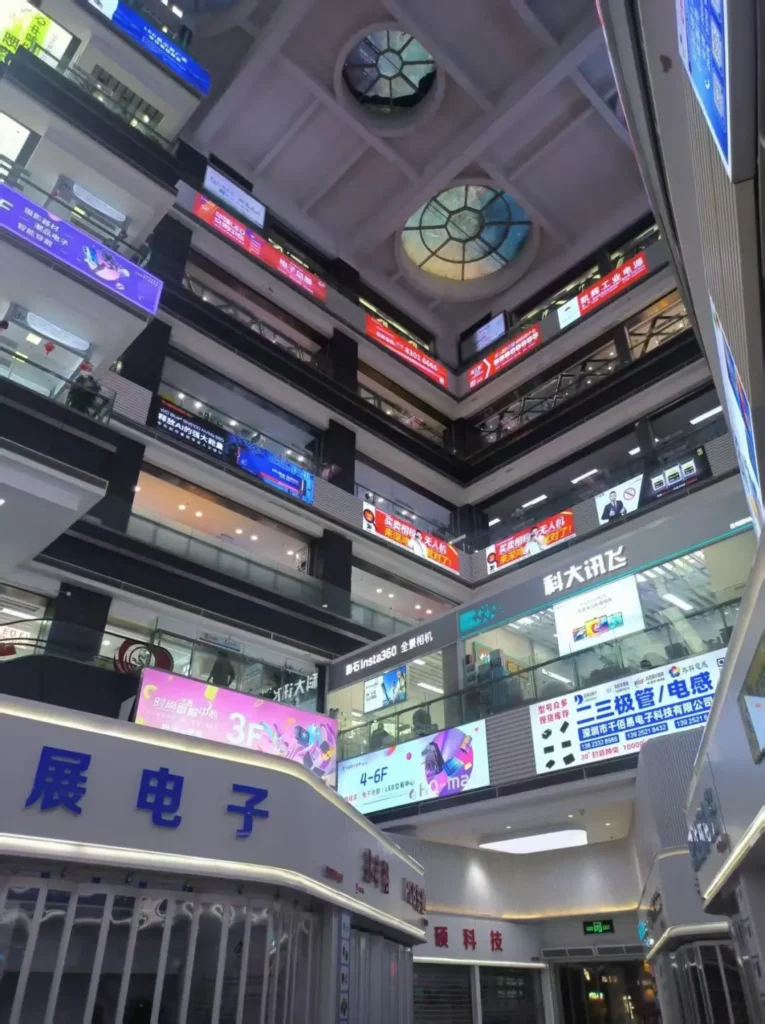
Meanwhile, brand flagship stores for Xiaomi, Huawei, DJI, and others here were no different from those nationwide—same products, same prices. Visitors couldn’t help but wonder: why make a special trip here?
Inflated Prices with No Advantage; “Price by the Person” an Unspoken Rule
As a famous second-hand phone hub, Huaqiangbei had been my go-to imagined spot for budget devices. But real quotes only deepened my disappointment.
Many second-hand products were not just uncompetitive—they were more expensive than online platforms. A two-year-old Redmi K70 (12+512GB) was quoted 1400 yuan, while the 16+512GB version on Xianyu and other second-hand sites cost just 900 yuan. A seven-year-old iPad mini 5 was tagged a shocking 1150 yuan, nearly double the 500–600 yuan average online. Many of these devices bore stickers from recycling platforms or private sellers, making their history untraceable.
Even more uncomfortable was how sellers quoted prices: typing numbers silently on calculators and showing them to customers, hiding quotes from nearby stalls to preserve information gaps. Worse still was the unspoken rule of “pricing by the person.” Sellers judged your expertise within seconds—whether you knew specs, how to inspect devices, or understood market prices. This invisible “information game” directly determined the price.
My friend and I ran a small test: I went in first, named the exact model, checked the body, camera, battery cycle count, and purchase history before leaving. Moments later, my friend asked about the same phone, only swiped it to say “it’s smooth” and admitted “I’m new to second-hand phones, don’t know specs.” The quote my friend got was 800 yuan higher than mine.
Retail Consumers Overlooked; Service Hits Rock Bottom
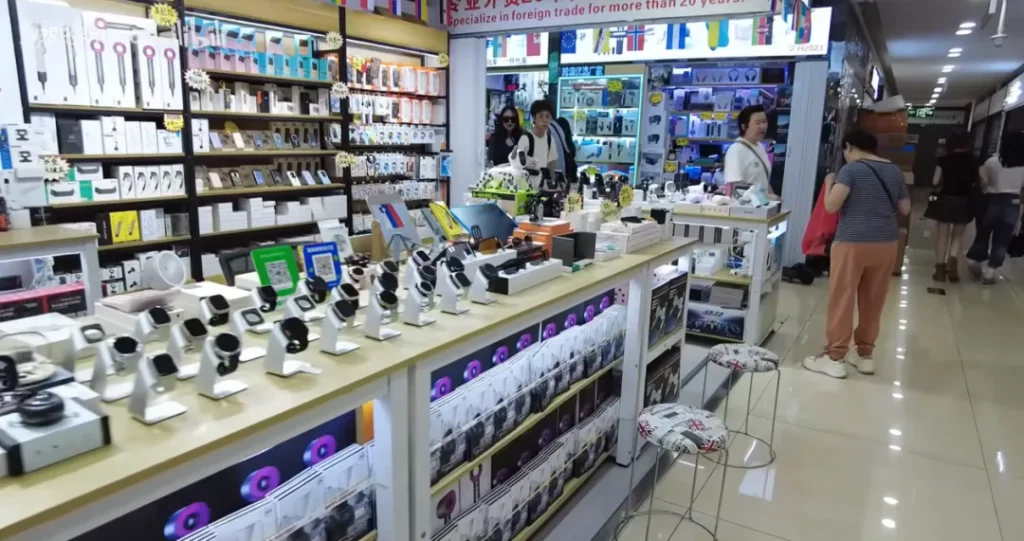
If disappointing products and prices were regrettable, seller attitudes pushed my frustration to the limit.
The second-hand phone and fake watch stalls I visited were among the few that still respected retail customers. Most Huaqiangbei stalls operate as wholesalers—especially for phone cases and cables. When you ask the price, the first question is always: “How many are you buying?” At “just one,” their tone turns icy. Some even post signs: “Trade Only / Wholesale, For Display Only, No Retail.”
Worse, some export-focused stalls prioritize foreign customers, ignoring domestic retail buyers. This obvious discrimination ruins the experience for ordinary shoppers.
The Myth Fades: Huaqiangbei Has Long Changed Its Track
After so many letdowns, I realized a hard truth: Huaqiangbei was never a “digital playground” for regular consumers. It has long outgrown its legendary retail era, transforming into a supply chain node and wholesale marketplace—a business platform for entrepreneurs, repair shops, and distributors.
For industry insiders, it remains invaluable: a complete supply chain and abundant stock are the backbone of their business. But for average consumers, it offers no price advantage, no rare products, and no service guarantee. Online platforms are far better for new phones, second-hand gadgets, or accessories.
Admittedly, Huaqiangbei’s retail sector once shone brightly. Before the internet boom, when feature phones and knockoffs dominated, it was China’s most vibrant electronics hub—where many domestic digital giants began. Today, with mature e-commerce and transparent pricing, Huaqiangbei’s core value has shifted from “retail market” to “industrial hub.” Its role in the electronics industry remains irreplaceable.
If you still plan to visit Huaqiangbei, let go of the “digital treasure hunt” fantasy. It is no longer a shopping paradise, but a perfect window to witness China’s electronics industry evolution. The trendy pedestrian street with cosplay, singing, and street dance performances, the Shanghai Hotel—a symbol of Shenzhen’s origins, and the Tencent Origin Museum marking the company’s early days—all are worth a visit.
There, you can truly trace the 40-year journey of China’s electronics industry, from sprouting to rise. That, ultimately, is Huaqiangbei’s most precious value today.