I. Growing Demand for Cross-Language Communication Expands the Machine Translation Market

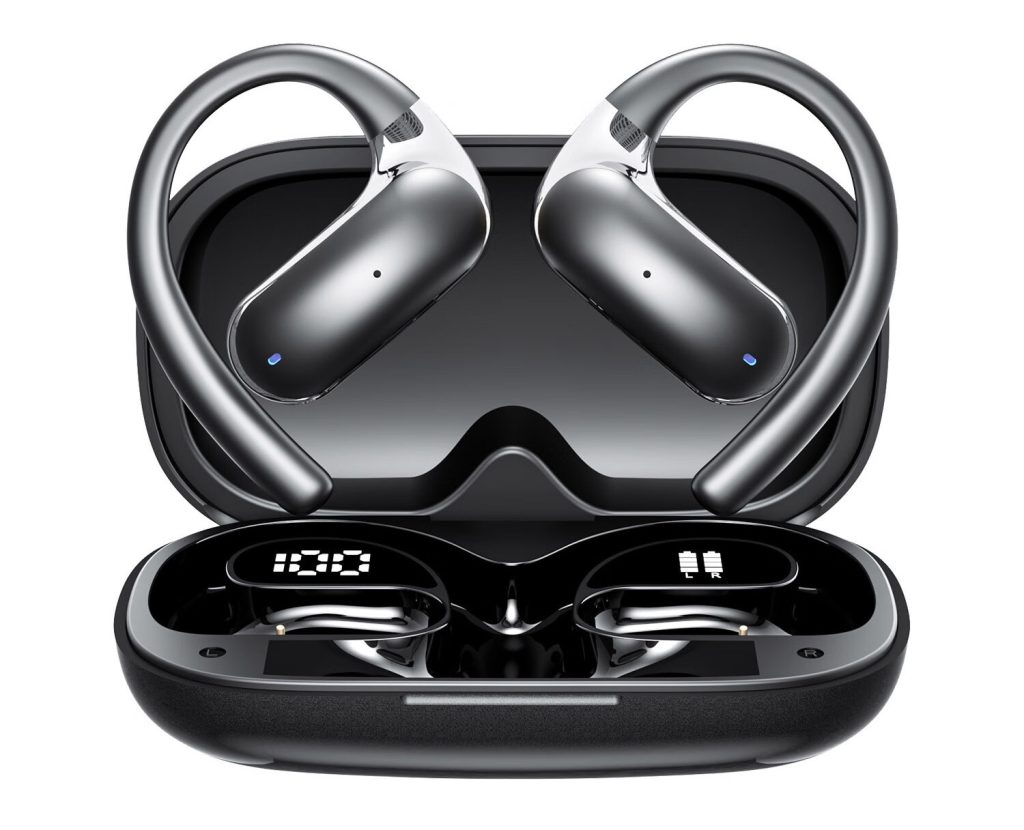
In the process of globalization, the accelerated overseas expansion of enterprises, the growing scale of international immigration, and the development of the outbound tourism market have driven the explosive growth of demand for cross-language communication, boosting the growth of the machine translation market.
Data from QYResearch shows that the global machine translation market size reached 610 million US dollars in 2024, and is expected to grow to 1.207 billion US dollars by 2030, with a compound annual growth rate (CAGR) of 12.03%.
II. Product Structure of Machine Translation: Traditional Devices Dominated the Past Market
Machine translation products mainly include three categories: translation pens, translation machines, and Bluetooth translation headphones.
In 2023, the size of China’s machine translation market was 15.77 billion yuan. Among them, translation pens contributed 9.68 billion yuan, and translation machines contributed 5.47 billion yuan. The two together accounted for 96% of the market, making them the mainstream choice for cross-language communication in the past.


III. Core Disadvantages of Traditional Bluetooth Translation Headphones
Traditional Bluetooth translation headphones have the following problems: simple translation engines and language models, insufficient accuracy in translating complex sentences; lack of noise reduction capabilities, limited speech recognition ability in noisy environments; weak speech data processing capacity, obvious translation delay; poor battery life; single function, focusing only on translation. These disadvantages have led to their failure to be widely used.
IV. AI Technology Solves Pain Points, Triggering a Market Boom for Translation Headphones
4.1 AI Technology Addresses Core Issues of Traditional Products
The application of generative AI technology and large AI models has solved the core pain points of traditional Bluetooth translation headphones, such as inaccurate translation, high latency, insufficient coverage of small languages, and rigid professional terminology, changing their backward position in the market.
After accessing large AI models, Bluetooth translation headphones can apply technologies such as speech recognition, image recognition, natural language processing (NLP), and deep learning. The specific optimization directions include:
- Enhancing NLP capabilities: Relying on AI deep learning algorithms and large-scale corpus training models to understand the grammar, semantics, and context of different languages. For example, after accessing a large AI model, Timekettle W4Pro translation headphones can accurately translate “hand-brewed” into “pour-over coffee” in the coffee context.
- Improving speech recognition accuracy: Adopting AI speech recognition algorithms such as deep neural networks to improve the recognition accuracy of different accents, speech rates, and intonations; combining with AI language models for speech correction to reduce recognition errors and support dialect translation. For example, after accessing a large AI model, FIIL GS Links headphones increased their dialect recognition accuracy to 92%.
- Multimodal semantic understanding improves translation accuracy: Integrating multimodal inputs of speech, text, and images, which can translate menu pictures and overseas video subtitles; in noisy environments, combining lip recognition with speech recognition to improve accuracy significantly; equipped with AI intelligent noise reduction function, the translation accuracy is generally increased to over 90%, narrowing the gap with translation pens and translation machines.
- Reducing translation latency: Adopting efficient neural network architectures and optimization algorithms such as Transformer to process data in parallel; migrating some computing tasks to the headphone end for edge computing, reducing data transmission time between the headphone and the cloud, and significantly reducing translation latency.
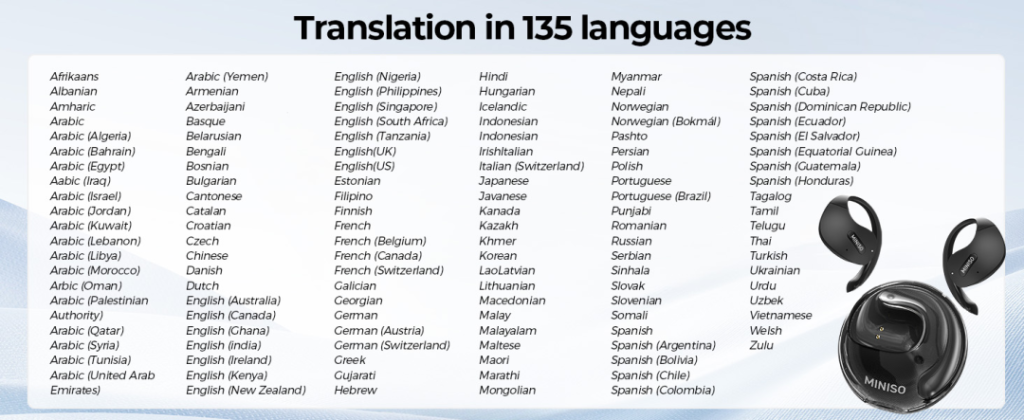
- Expanding language coverage: Relying on the small language training data of large AI models, sharing knowledge and features when learning multiple languages through multi-task learning and transfer learning technologies, increasing the number of supported languages to over 100, and some products reaching over 140.
- Optimizing professional terminology translation: Through domain adaptation algorithms, pre-training and fine-tuning professional domain texts to learn the language style and terminology expression of professional fields, adapting to professional fields with many technical terms such as medical care and law.

4.2 AI Technology Expands the Functional Boundaries of Products
AI technology has added intelligent interaction capabilities to Bluetooth translation headphones: through AI voice assistants, users can realize voice commands to play music, query weather and scenic spot information; some products have health management functions such as heart rate monitoring and real-time recording of sports data.
4.3 Explosive Growth in Market Sales
AI translation headphones are favored by consumers, with sales growing significantly. Data from Lotu Tech shows that the sales volume of AI headphones on e-commerce platforms reached 315,000 units in 2024, a year-on-year increase of 260.9%; in the first quarter of 2025, the online sales volume of AI headphones surged by 960% year-on-year, and the annual sales volume is predicted to exceed 1.5 million units. Among them, AI translation headphones are the main driving force for sales, showing an explosive growth trend.


V. Industry Competition and Development Directions
After the explosion of the AI translation headphone market, mobile phone manufacturers and audio brands have intensively launched new products to seize the market, and accessing large AI models such as ChatGPT and Deepseek has become the mainstream industry trend. Enterprises need to independently develop AI technology to achieve breakthroughs in functions and performance.
There are still shortcomings in the current industry: the offline translation function of AI translation headphones is relatively weak, and the number of supported languages and translation accuracy need to be improved.
Future research directions include: realizing self-awareness of AI translation, enhancing learning and self-evolution capabilities, and simulating human cognitive processes. Timekettle has announced the launch of the world’s first self-aware AI translation system, achieving a breakthrough in this field.
VI. Opportunities and Challenges for Upstream Industrial Chain Enterprises
Upstream industrial chain enterprises such as main control chip and power management chip enterprises are expected to benefit from the upsurge of the AI translation headphone market. Enterprises need to make rational layouts and avoid aggressive expansion; main control chip enterprises need to further innovate to create differentiated AI translation headphone products.