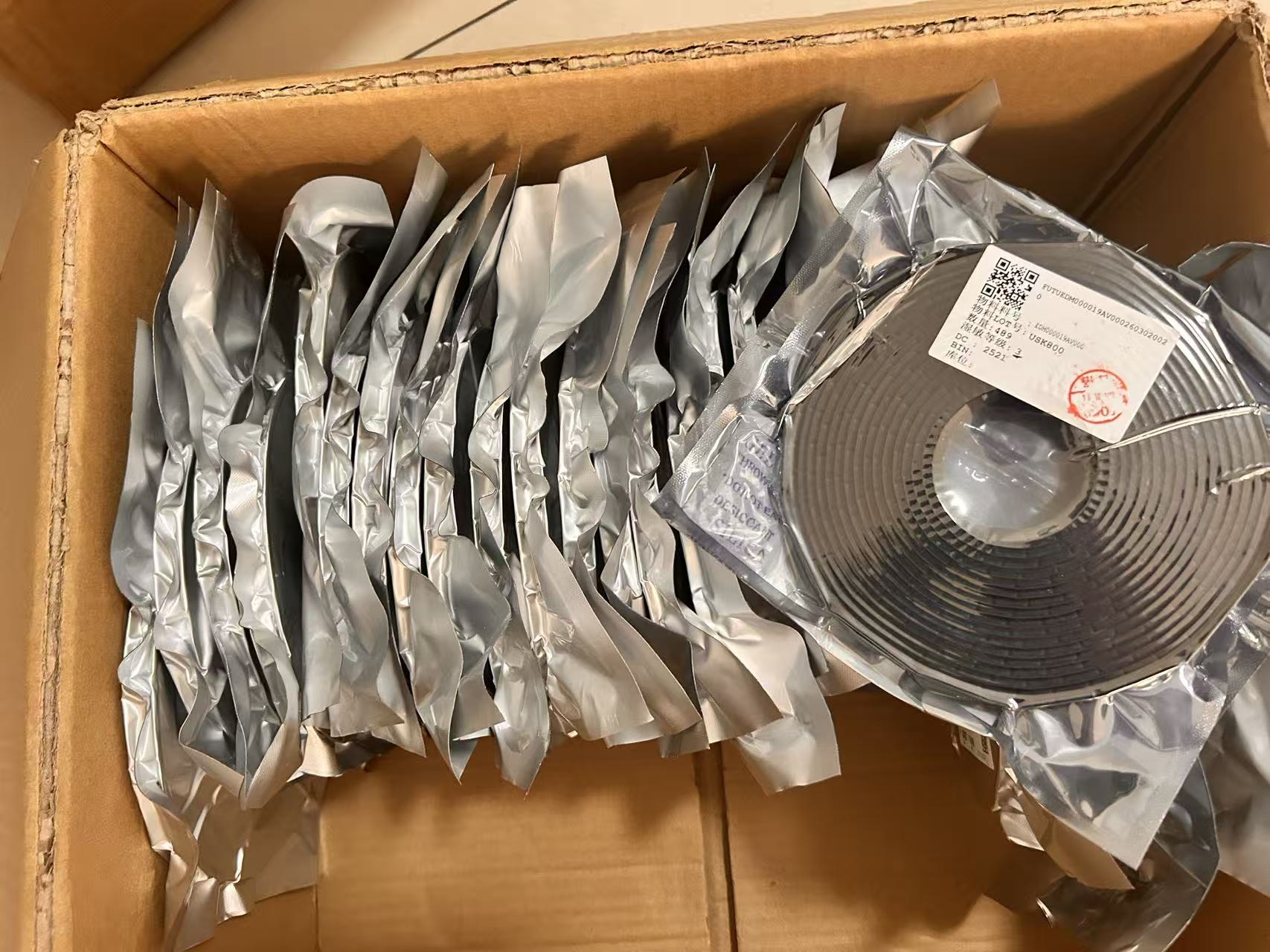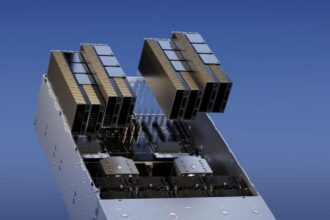
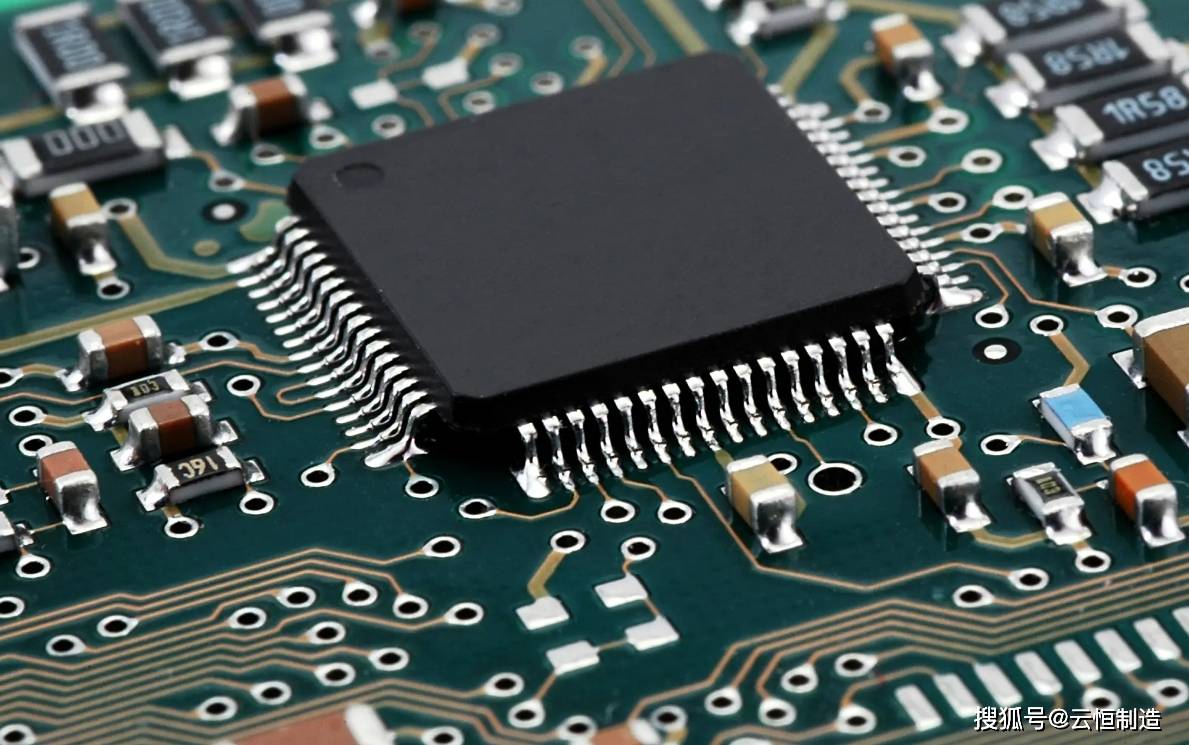
Electronic components are the fundamental functional physical units that constitute electronic circuits, serving as the physical foundation for all electronic equipment and systems. Featuring electrical properties including resistance, capacitance, inductance, amplification and switching, they control, process and transmit electric power and signals.
They are generally categorized into active components, passive components and electromechanical components by operating principles and functions. Evolving from vacuum tubes and discrete transistors to integrated circuits and system-in-package devices, electronic components have developed toward miniaturization, integration and intelligence. Their performance and reliability directly determine core competitiveness of products in consumer electronics, communication, automotive electronics and industrial control sectors.
Basic Information
Chinese Name: Electronic Components
English Name: Electronic Components
Discipline: Electronic Science and Technology
Application Fields: Electronics, communication, computer, automobile, aerospace and more
Development History
The advancement of electronic components underpins technological progress, going through three major developmental stages.
Vacuum Tube Era
Early electronic technology relied heavily on vacuum tubes. In 1904, John Ambrose Fleming invented the vacuum diode, realizing AC-DC conversion via thermionic emission. Lee De Forest created the vacuum triode in 1906, enabling signal amplification and ushering in the vacuum tube age. Vacuum tubes were applied in early radio communication, radar and the first generation computers, yet drawbacks like bulky size, high power consumption, short service life and fragility restricted further downsizing.
Transistor and Integrated Circuit Era
Invented at Bell Labs in 1947, transistors utilized PN junction characteristics to amplify signals, overcoming defects of vacuum tubes and facilitating miniaturization of electronic devices. Silicon gradually replaced germanium as mainstream material, fueling the booming semiconductor industry.
Jack Kilby and Robert Noyce independently developed integrated circuits in 1958, integrating multiple discrete components onto a single chip. This milestone kicked off the microelectronics era and brought substantial performance improvement to electronic devices.
Miniaturization and Integration
Integrated circuits advanced rapidly following Moore’s Law, evolving from small-scale to ultra-large-scale chips. The emergence of microprocessors sparked the personal computer revolution.
In the 21st century, chip fabrication enters nanometer scale. Traditional Moore’s Law hits physical limits, and the industry shifts focus to 3D integration and system-level packaging technologies to achieve higher performance density and energy efficiency.
Classification
Active Components
Active components require external power supply to operate, capable of amplifying, controlling, oscillating and converting electrical signals with power gain capability.
Typical products include diodes, bipolar junction transistors, field-effect transistors and thyristors. Integrated circuits covering analog, digital and mixed-signal types, as well as DC-DC converters and linear regulators also fall into this category.
Passive Components
Passive components work without external power, functioning for signal transmission, distribution, energy storage and power dissipation with linear or energy storage characteristics.
Basic types contain resistors, capacitors and inductors. Transformers, magnetic beads and crystal oscillators are also common passive parts.
Electromechanical Components
Combining mechanical movement and electrical functions, these components realize circuit connection, disconnection and physical signal detection. Main varieties include relays, switches, connectors, various sensors and display devices.
Core Components
Resistor
As the most widely used component, resistors limit current and adjust voltage. Classified by material into carbon film, metal film and wirewound resistors, they also have through-hole and surface-mount packaging forms. Key parameters include resistance value, tolerance, rated power and temperature coefficient.
Capacitor
Capacitors store electric charge and block direct current while allowing alternating current to pass, widely used for filtering, coupling and energy storage. Common types are electrolytic capacitor, multilayer ceramic capacitor, tantalum capacitor and film capacitor. Major parameters cover capacitance, rated voltage, equivalent series resistance and temperature stability.
Inductor
Inductors store magnetic energy through electromagnetic induction, blocking alternating current and conducting direct current. Common styles include wire-wound, multilayer inductors and ferrite beads. Critical parameters involve inductance value, saturation current, direct current resistance and self-resonant frequency.
Semiconductor Device
Semiconductors are core parts of modern electronics. Diodes conduct electricity in a single direction for rectification and voltage stabilization. BJT and MOSFET transistors are essential for signal amplification and digital switching circuits.
Integrated Circuit
Massive transistors, resistors and capacitors are integrated on tiny chips to execute complex calculation and control tasks. Classified into analog, digital and mixed-signal ICs, they act as the core control unit of intelligent electronic devices.
Application Scenarios
Consumer Electronics
High integration and miniaturization are mainstream demands for smartphones, tablets and televisions. Multilayer ceramic capacitors and system-level packaging technologies are extensively adopted to achieve powerful functions within compact space.
Communication & Networking
Communication facilities such as 5G base stations demand high-performance radio frequency components and high-speed chips. 3D packaging and photonic integration technologies are developed to satisfy high-speed data transmission and low latency requirements.
Automotive Electronics & Industrial Control
Vehicle electrification and autonomous driving drive demands for automotive-grade chips, high-precision sensors and high-power power management components. Industrial electronic components need stable performance under harsh working conditions with excellent temperature resistance and anti-interference capacity.