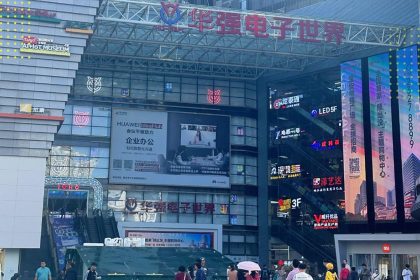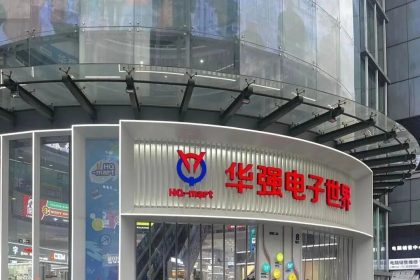
Shenzhen’s Huaqiangbei, known as “China’s No. 1 Electronics Street,” has never been an ordinary digital marketplace.
My trip to Shenzhen last week was completely different from my visit in 2017. Back then, as a regular tourist, I visited classic landmarks like Window of the World. This time, I wanted to explore the city’s unique fabric, so I focused on Huaqiangbei—a place I’d long heard about but never delved into deeply.
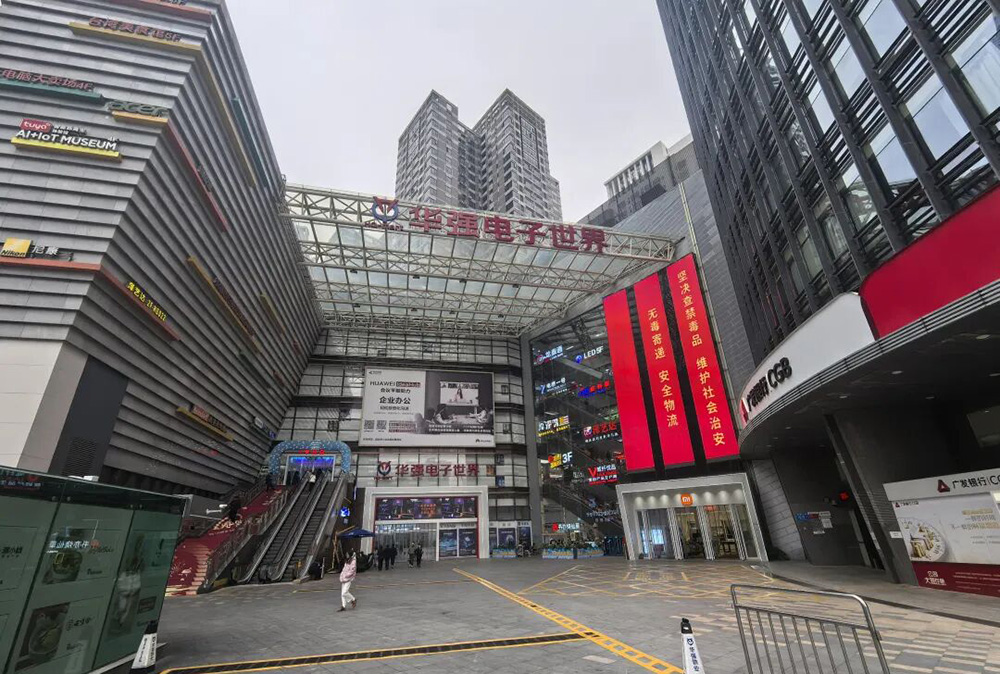
Digital streets aren’t rare in China; Beijing’s Zhongguancun and Tianjin’s Anshan West Road are well-known examples. However, the scale of Huaqiangbei is immediately striking—dozens of five- or six-story electronics malls line the street, with a density of businesses far surpassing similar districts.
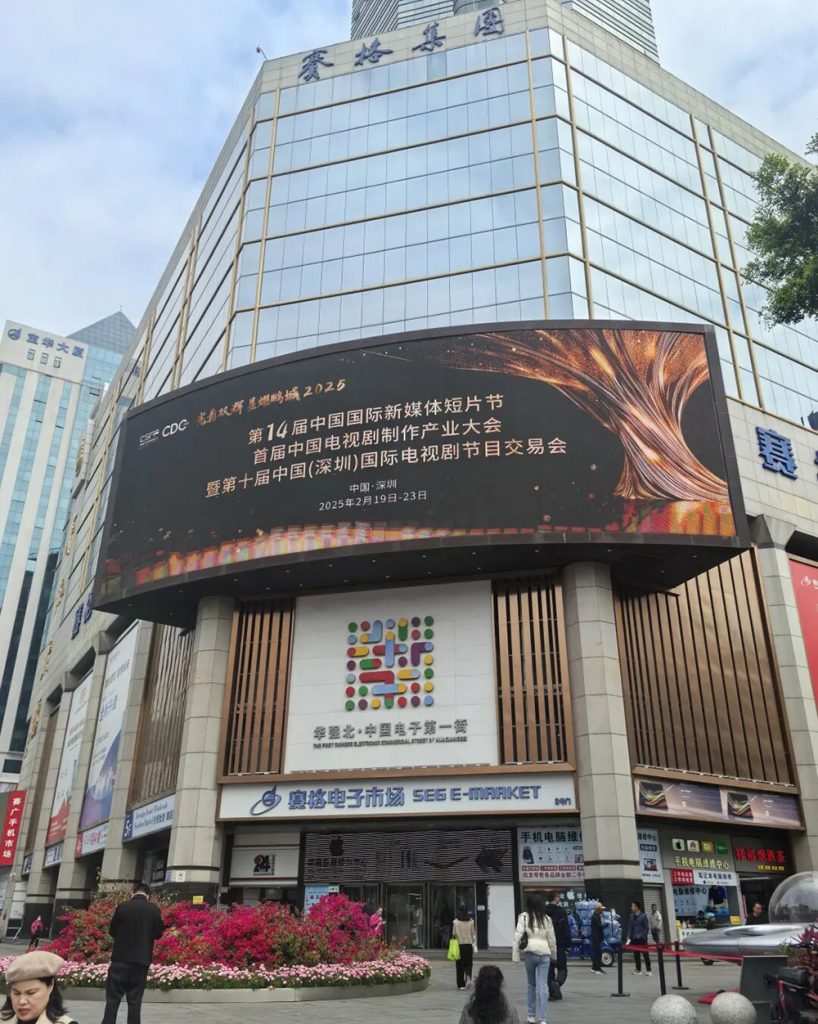
What’s even more surprising is its popularity. Despite the impact of e-commerce, the general consumer areas here are still bustling with activity. The tangible vitality makes one curious.
From a tourist’s perspective, two experiences stood out:
1. “Huaqiangbei Manufacturing”: Unbelievably Low Prices with Surprising Value for Money
While wandering around, I discovered that the “Huaqiangbei-made” products offer incredible value for money. For example, a pair of Bluetooth earphones marketed as having “Apple quality” cost only 100 yuan. Though their noise-canceling performance is weaker than AirPods Pro 2, the bass and reverberation tuning are cleverly done, and many ordinary users find the sound more exciting.
Similar low-priced gems are everywhere: a 230-yuan hairdryer with “Dyson quality,” an 188-yuan drone, and a 320-yuan iPad Magic Keyboard, all with room for bargaining. For those with immediate needs, shopping here feels like striking gold.
2. Endless Novelty Gadgets, Like a Large Electronics Trade Show
The joy of offline shopping lies in the “unexpected finds,” and Huaqiangbei’s product variety far exceeds that of ordinary digital streets. You’re always in for a surprise.
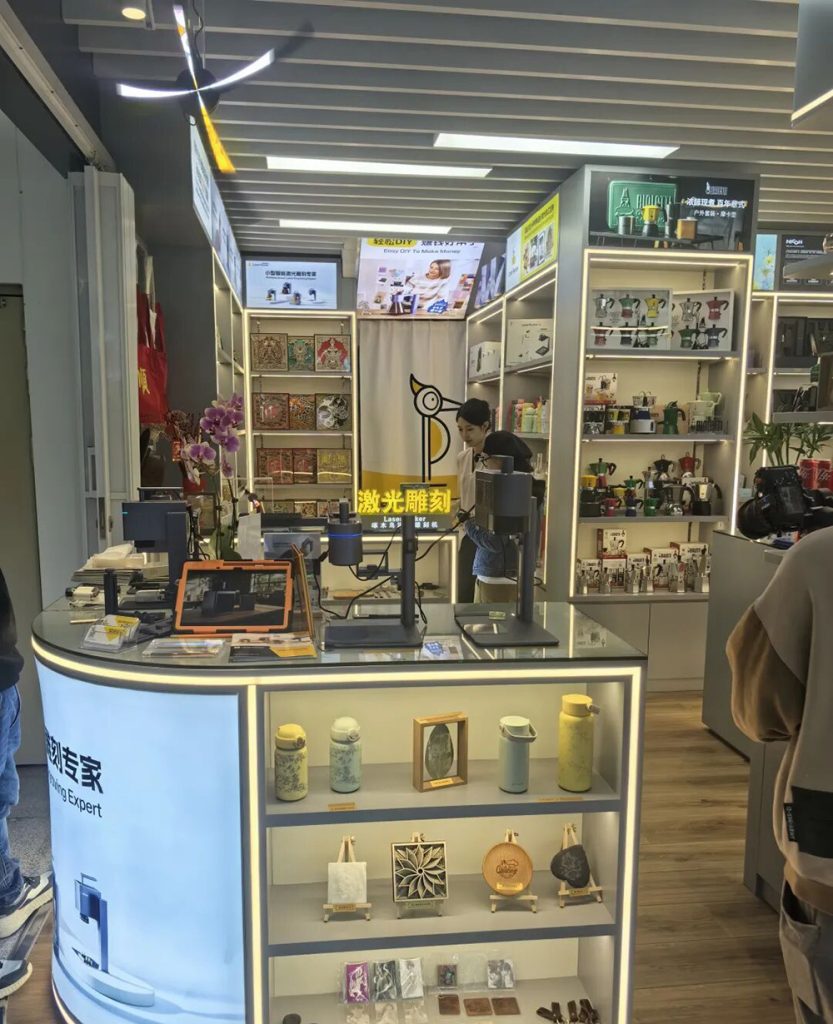
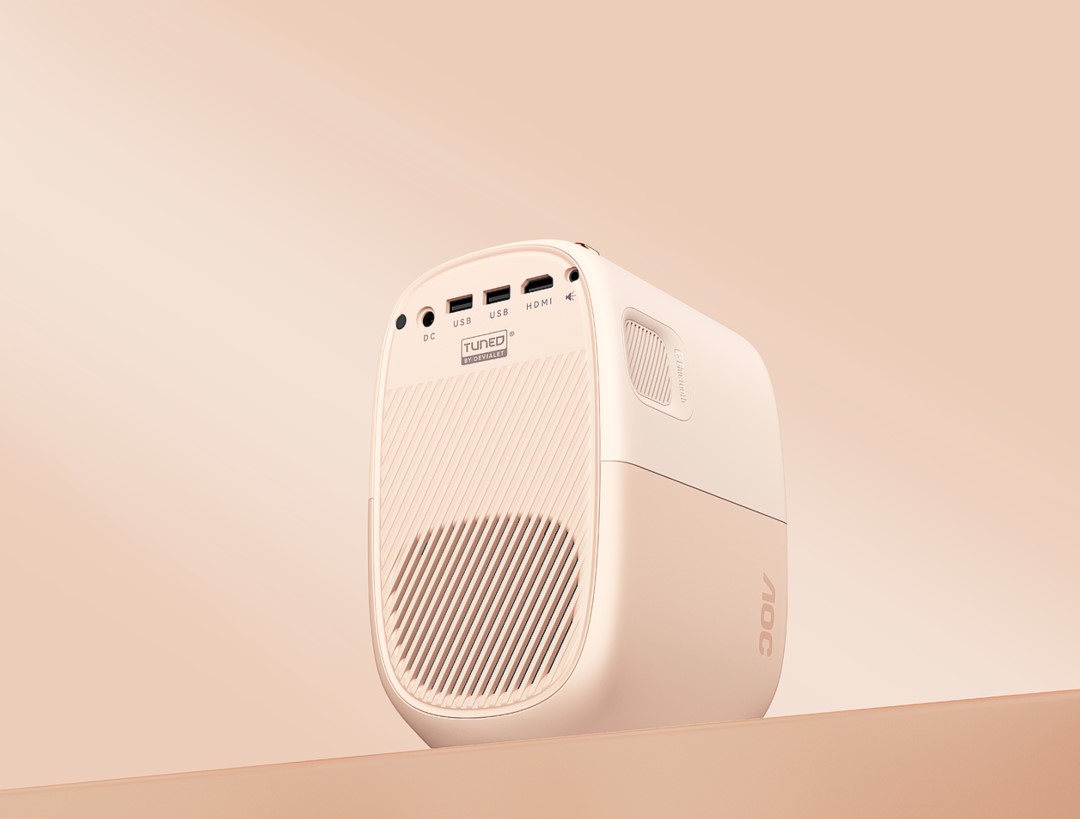
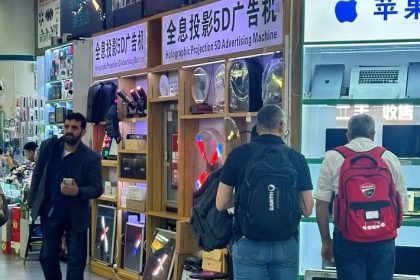
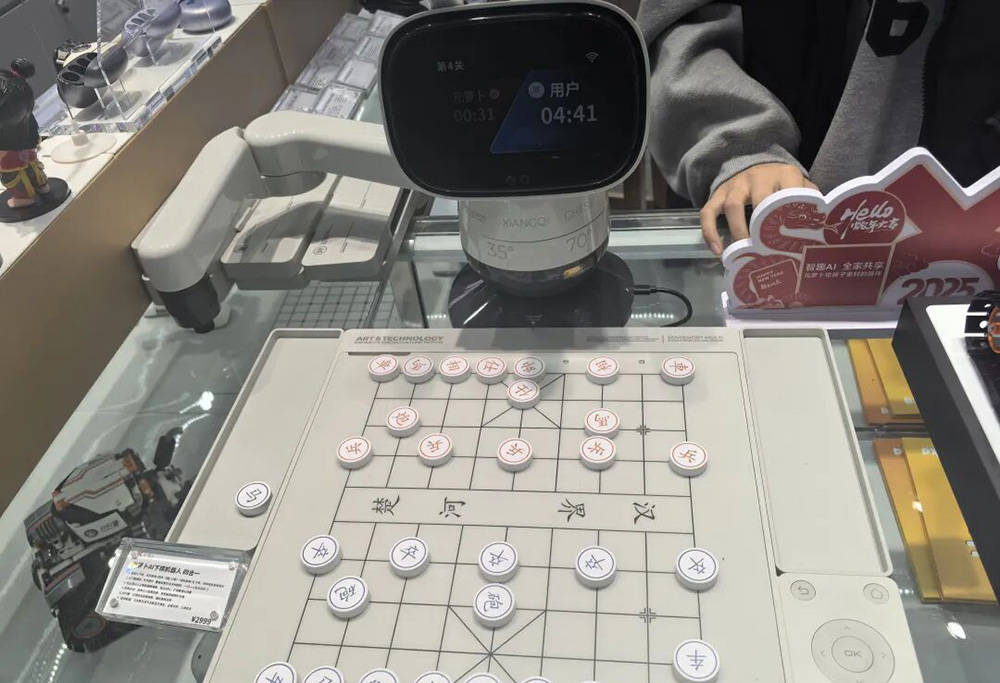
For instance, smart rings that measure blood sugar and blood pressure, chess-playing robots, fidget spinner earphones, projectors that can stream YouTube, and even small laser engraving machines—all these novel items are commonplace here.
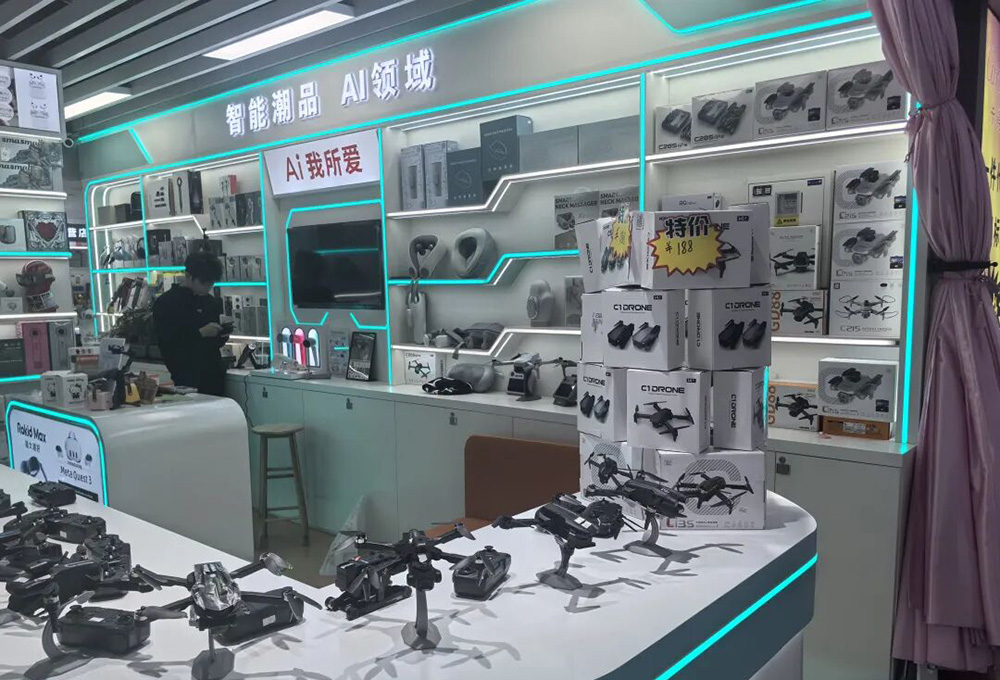
However, merely exploring Huaqiangbei as a tourist inevitably misses its depth. To truly understand its unique charm, one must view it as a complete economic entity.
I. Its Core Competitiveness: Extreme Supply Chain Efficiency
The online saying “prototypes in three days, mass production in seven” is no exaggeration. In Huaqiangbei, there are more merchants selling electronic components than finished products, with entire floors or upper levels of many malls dedicated to the component trade.
Even during the era of “shanzhai phones,” Huaqiangbei had a “one-hour procurement circle”: within a few kilometers, one could find almost all mobile phone components at low prices, allowing manufacturers to complete material procurement within 24 hours.
This supply chain advantage persists today: while sourcing components for a Silicon Valley product might take three months, Huaqiangbei can get it done in a day. DJI’s development is a testament to this.
According to records from “Get Toutiao,” Silicon Valley entrepreneur Chris Anderson’s company, 3D Robotics, raised hundreds of millions in funding and boasted about “taking down DJI.” After refusing DJI’s acquisition offer, it exited the hardware market in less than two years.
The core gap lay in the supply chain: DJI, backed by Huaqiangbei, could gather suppliers in a day for flight control technology improvements, produce prototypes within days, and iterate on a weekly basis. In contrast, 3D Robotics, far from the supply chain, iterated on a monthly basis, sealing its fate long before.
For engineers, Huaqiangbei is a “land of dreams”: within one kilometer, they can source most components, test them, and quickly move to mold-making and mass production in Shenzhen or nearby areas. This speed of turning ideas into reality is rare nationwide.
II. As an “Economic Organism”: A Robust Ecosystem of Fragile Individuals with Self-Evolution Capabilities
Looking deeper, Huaqiangbei resembles a vibrant “economic organism.”
Fifteen years ago, it was famous for “shanzhai phones,” but today, it’s hard to find phone stalls. In the feature phone era, MediaTek chips simplified phone manufacturing, and Huaqiangbei thrived by selling low-cost, diverse feature phones domestically and internationally.
In the smartphone era, the operating system became the core, leaving small enterprises unable to compete, as the low-price market was taken over by branded phones. Normally, Huaqiangbei should have declined, much like Zhongguancun faded as assembled PCs were replaced. Yet, it remains bustling.
The key lies in Huaqiangbei being composed of countless fragile small enterprises (the average lifespan of Chinese SMEs is only two and a half years), but the whole exhibits strong vitality. This is because it consistently interacts efficiently with the outside world: serving as a “testing ground” for smart hardware manufacturers to procure components while leveraging its geographical advantage to connect with international markets.
Through this interaction, outdated enterprises are eliminated, and new ones continually emerge, enabling self-evolution. In contrast, Zhongguancun resembles a single-product-line enterprise, its lifecycle tied to its core product, leading to decline once that product is replaced.
This is precisely why Huaqiangbei has evolved from a “shanzhai phone distribution hub” into a “tech-fashion-cultural characteristic district” and even an AAA-rated tourist attraction.
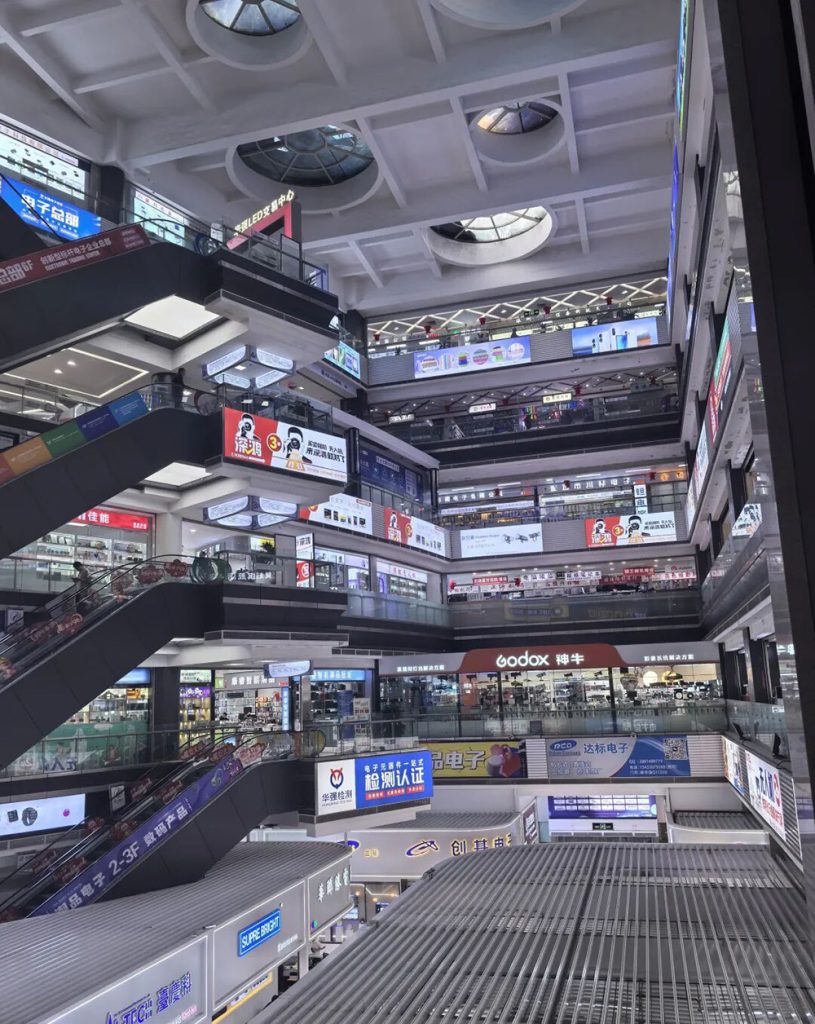
This trip to Huaqiangbei was far more rewarding than expected. It is no longer just an ordinary digital street but a resilient, evolving economic ecosystem. Here, one can witness the vitality of China’s electronics industry and understand the business logic of “survival of the fittest.”