
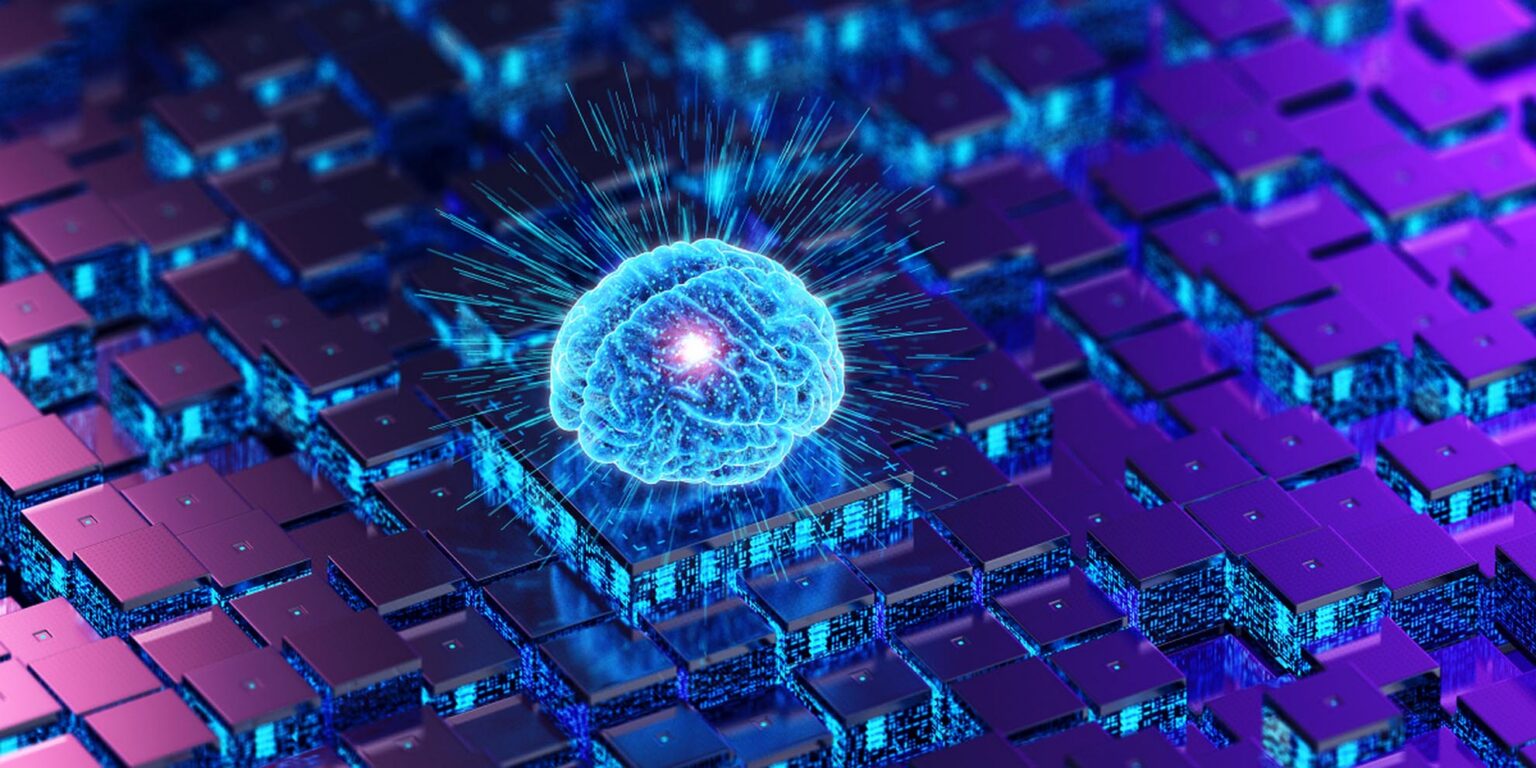
The global technological field is blooming in multiple areas with frequent good news, covering five core directions: artificial intelligence, quantum and chips, life medicine, astronomy and cosmology, and brain science. A number of landmark scientific research achievements have been successively launched, continuously promoting basic research to develop in depth, accelerating the implementation of industrial applications, and leading the progress of human technological civilization to a new height.

I. Artificial Intelligence: Stepping into the Field of Advanced Scientific Research
1. DeepMind AI Wins Gold Medal at the International Mathematical Olympiad The AI model developed by Google DeepMind successfully won the gold medal at the International Mathematical Olympiad, and its mathematical reasoning and logical proof capabilities have ranked among the top human players. This breakthrough achievement marks that the application boundary of AI has broken through traditional data fitting and pattern recognition, and officially entered the field of advanced theoretical scientific research. In the future, this technology can provide efficient reasoning assistance for basic disciplines such as mathematics, physics, and computer science, greatly shorten the research cycle of complex problems, and help humans explore more unknown scientific theories.
II. Quantum and Chips: Restructuring the Boundaries of Computing and Material Cognition
2. Advent of Electron-Photon-Quantum Integrated Chip The world’s first integrated chip integrating three major functions—electronics, photonics, and quantum—was officially born, realizing the collaborative linkage of classical computing, optical interconnection, and quantum computing on a single chip. The chip has greatly improved computing density and energy efficiency ratio, while significantly reducing the volume and power consumption of quantum systems, laying a solid core hardware foundation for the next generation of supercomputers, quantum communication, and high-performance computing equipment, and promoting the iterative evolution of global computing architecture towards a more efficient and energy-saving direction.
3. First Realization of Naked-Eye Visible Time Crystals A research team successfully prepared time crystals visible to the naked eye, breaking the traditional human understanding of thermodynamics and space-time laws of conventional substances. As a new type of quantum state of matter, time crystals exhibit a stable periodic structure in the time dimension and do not require energy consumption to maintain. They provide a new platform for basic quantum physics research, precision measurement, and quantum information storage, further expanding the boundaries of human cognition of material forms and quantum laws.
III. Life Medicine: Solving Health and Survival Challenges
4. Transgenic Pig Organ Transplant Survives in Human Body for Nearly 9 Months Major breakthroughs have been made in clinical trials of transplanting gene-edited transgenic pig hearts and kidneys into humans. The transplanted organs have functioned normally in the recipient’s body with a survival time of nearly 9 months, setting the world’s longest survival record in the field of xenotransplantation. This technology has effectively overcome two core problems—organ rejection and cross-species infection—and is expected to greatly alleviate the global shortage of donor organs, bringing new hope for long-term survival to patients with end-stage organ failure.
5. Brain-Computer Interface Enables Aphasic Patients to Speak Emotional Speech in Real Time A major breakthrough has been achieved in the new generation of invasive brain-computer interface systems, which can accurately decode language and emotional signals in the brain, and convert the thinking activities of aphasic patients into fluent, naturally emotional speech in real time, supporting diverse communication scenarios such as normal conversations and singing. This technology has built a communication bridge for people with neurological disorders such as amyotrophic lateral sclerosis (ALS) and post-stroke aphasia, marking that brain-computer interface technology has officially entered a new stage of inclusive application.
IV. Astronomy and Cosmology: Unlocking the Unknown Mysteries of the Deep Universe
6. Detection of the Largest Black Hole Merger Event in History Gravitational wave observatories successfully captured signals of the largest black hole merger event ever recorded. The mass of the black hole formed after the merger far exceeded existing theoretical expectations, completely subverting the traditional human understanding of the formation and evolution of stellar-mass black holes. This discovery has prompted astrophysicists to re-examine the origin and growth mechanism of massive black holes, as well as the evolution process of black holes at the center of galaxies, further deepening human understanding of extreme gravitational environments and the early structure of the universe.
7. Capture of Early Cosmic Signals from 13 Billion Years Ago With the help of a high-sensitivity radio telescope, a research team successfully captured primitive signals from the cosmic reionization epoch 13 billion years ago, accurately tracing the key stage of galaxy formation and evolution after the Big Bang. These precious primitive signals provide direct observational evidence for solving the mystery of the origin of the first generation of stars and galaxies in the universe, helping researchers improve the standard model of cosmic evolution.
8. Mapping the Largest 3D Cosmic Map to Date An international scientific research cooperation team has completed the mapping of the largest and most accurate 3D cosmic map to date, covering millions of galaxies and large-scale cosmic structures, and accurately reconstructing the spatial distribution of the universe and the evolutionary path of matter. This map provides core data support for the detection of dark matter and dark energy, the measurement of cosmic expansion rate, and the verification of theories on the formation of large-scale cosmic structures, promoting cosmology research to officially enter the era of high-precision observation.
9. Observation of the Highest-Energy Cosmic Neutrinos Underground neutrino detectors have captured ultra-high-energy cosmic neutrinos with energy 20 times higher than the previous record, opening a new window for human observation of extreme astrophysical phenomena in the universe. As highly penetrating “cosmic messengers”, neutrinos can carry primitive information about extreme cosmic events such as black hole and neutron star mergers, helping humans explore the deep mysteries of the universe that are inaccessible to traditional electromagnetic waves.

V. Brain Science: Decoding the Complex Neural Networks of the Brain
10. Release of the Most Detailed Whole-Brain Connectome Map to Date The world’s first whole-brain connectome map with neuron-level precision was officially released, completely decoding the connection paths, signal transmission rules, and functional divisions of the brain’s neural networks. This map provides underlying data support for the research on neural development mechanisms, the etiology of brain diseases, as well as neuromorphic computing and the optimization of artificial intelligence architectures, promoting collaborative breakthroughs in the interdisciplinary fields of brain science and artificial intelligence, and laying a solid foundation for solving the mysteries of the brain.