The frenzy in the robot track is evident from a set of data. According to the 2025 White Paper released by the High-Tech Robot Industry Research Institute (GGII), the number of domestic humanoid robot enterprises surged from more than 120 to over 320 between 2023 and 2025, with the total industry financing exceeding 58 billion yuan, of which 38 billion yuan was raised in 2025 alone. Entering 2026, the enthusiasm has not abated, with financing volume reaching as high as 16 billion yuan in January alone. Roughly calculated, between the last Spring Festival Gala and this year’s, the industry has raised a total of 54 billion yuan, meaning that on average, one enterprise receives at least 150 million yuan in investment every day.
With the support of capital, the “hundred-robot battle” has fully unfolded, and the division of camps has become increasingly obvious: among professional robot enterprises, leading players such as Unitree Technology and DeepRobotics have established a firm foothold, while emerging stars like Galaxy General, Magic Atom, and UniX AI have developed rapidly. Founded in 2024, UniX AI has completed five rounds of financing totaling 500 million yuan in just two years, and its self-developed robot Wanda 2.0 has achieved mass production; Internet giants and tech behemoths have successively entered the market, with Tencent, Baidu, and JD.com laying out their tracks through investment or independent research and development; cross-border players are also coming strong—Dreame has incubated Magic Atom, BAIC has invested in Songyan Power, talents from Xiaomi’s ecosystem have joined robot R&D, and even Jia Yueting, who “will return to China next week”, has announced his entry into robot manufacturing, making the track competition completely fierce.
In 2025, the global shipment of humanoid robots reached 18,000 units, a year-on-year surge of 508%. Among them, Unitree Technology shipped more than 5,500 units, and DeepRobotics exceeded 5,000 units, with the two companies accounting for nearly 60% of the global market share. The continuous expansion of leading players’ advantages means that time is running out for small and medium-sized players. The Beijing Academy of Artificial Intelligence (BAAI) clearly predicted in the “Top 10 AI Technology Trends in 2026” that the “shakeout” in the embodied intelligence industry will accelerate in 2026, and more than 230 domestic enterprises will shrink significantly. The “hundred-robot battle” has bid farewell to barbaric growth and entered a stage of survival of the fittest. The “battle royale” rule of “whoever is fast first will stay fast; whoever lags behind will keep lagging” has officially taken effect in the robot track.
Camp Division: Attention-Grabbing VS Real Work—Who Will Have the Last Laugh?
After the knockout round began, the development paths of robot enterprises have gradually divided into two camps—on one side are the “attention-grabbing” traffic-oriented players, and on the other are the “down-to-earth” practical players. Behind these two gameplay styles lies a different understanding of the “survival code”.
The core logic of traffic-oriented players is to leverage high visibility to drive capital market value. Unitree Technology is a typical example. With its cool performances such as “cyber warriors” doing backflips, swinging sticks and swords on the Spring Festival Gala stage, it has continuously become a traffic leader and further consolidated its industry popularity; although DeepRobotics did not appear on the CCTV Spring Festival Gala, it held its own robot Spring Festival Gala to showcase its skills, refusing to miss any exposure opportunity. For these enterprises, spending money to gain visibility is to quickly seize users’ minds, obtain recognition from capital and the market, and gain more buffer space for subsequent scenario-based implementation.
Practical players are completely different. They are not obsessed with the spotlight but focus more on scenario-based landing, firmly believing that “real work” can win the future. Galaxy General is a leader in this field. Even though it appeared on the CCTV Spring Festival Gala, it did not showcase cool stunts, but rather the precise operation of its wheeled-arm robot G1 folding clothes—this robot has long been “on the job” in leading factories such as CATL and Bosch, undertaking repetitive tasks such as material handling and parts assembly, and has won enterprise recognition with its efficient and stable performance.
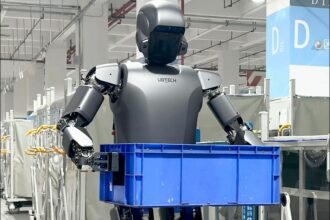
More practical enterprises are pushing robots into real life and work scenarios: Magic Atom’s robots appeared at the Yibin branch venue of the Spring Festival Gala and the Spring Festival Gala microfilm, skillfully completing actions such as noodle fishing, food delivery, and wine pouring; UniX AI’s robots performed with children playing the yangqin at the Jiangsu Children’s Spring Festival Gala, and behind this, they have achieved a breakthrough of over 100 units in monthly sales and shipments. Their products are widely used in elderly care hotel services, park security inspections, commercial exhibition stands and other scenarios, truly realizing “creating value upon landing”; UBTech Walker S1 robots have been mass-produced and entered Geely Zeekr factories, participating in automotive parts assembly, quality inspection and other links.
Capital’s attitude has already given the answer. According to the “Hard Technology Track Investment and Financing Report” released by China Venture Capital Research Institute in January 2026, the investment and financing logic of the domestic embodied intelligence track underwent a fundamental reversal in the second half of 2025: the number of financing events decreased by 31.7% year-on-year, but the average single financing amount increased by 46.8% year-on-year. This means that capital no longer adopts a “broad net” strategy, but concentrates on leading practical enterprises with clear landing scenarios and mass production capabilities. “Money should be spent wisely”—what scenarios robots can be used in and what work they can do have become the core criteria for capital consideration.
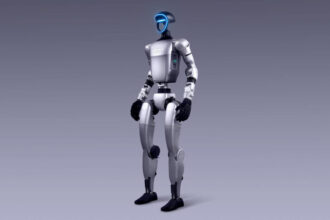
UniX AI’s layout is precisely in line with this trend. Its recently released third-generation robot “Wanda Panther” has undergone scenario-based systematic reconstruction—48V high-voltage driven robotic arm, 20cm/s high-speed lifting system, four-rotation and four-drive omnidirectional chassis, and 8-degree-of-freedom force-controlled robotic arm. All technological innovations are centered around “working better”, only to make robots more advantageous in scenarios such as heavy-load operations, movement in narrow spaces, and precision operations. According to Boston Consulting Group (BCG) forecasts, the global humanoid robot market size will exceed 15 trillion yuan by 2035, of which service scenarios will account for more than 60%. The persistence of practical players is precisely to seize the core right to speak in the future track.
Industrial Chain Empowerment + Technological Breakthroughs: Crossing the Key Hurdle of Landing
“Real work” is the trend, but to achieve the leap from “being able to work” to “being truly usable” for robots, there is still a key hurdle to cross—cost. Currently, the unit price of domestic humanoid robots generally ranges from 300,000 to 800,000 yuan. The unit price of Galaxy General’s GALBOT general-purpose robot G1 is nearly 630,000 yuan, and the price of Unitree Technology’s advanced products is as high as 209,000 yuan. Such prices not only make ordinary families hesitate, but even commercial scenarios such as factories and hotels are difficult to deploy on a large scale.
Fortunately, China’s improved industrial chain provides a solid foundation for cost reduction. The robot supply chain has a high degree of commonality with industries such as intelligent automobiles and home appliances, and China has a world-leading supply chain system in these fields. From motors and reducers to chips and sensors, all have achieved or have the ability to achieve independent R&D and production. This advantage is continuously reducing the cost of core robot components: the cost of robot joint motors has dropped from 50,000 to 60,000 yuan in 2018 to 500 to 600 yuan in 2025; the price of high-precision tactile sensors has dropped from the 100,000-yuan level to the 1,000-yuan or even 100-yuan level.
More and more manufacturing enterprises are entering the market across borders, further strengthening the advantages of the industrial chain. Automobile enterprises such as BAIC, BYD, and SAIC have transformed their technological accumulation in motors, chassis, electronic control and other fields into core component support for robots; home appliance enterprises such as Midea have applied technologies such as intelligent control and sensors to robot R&D, improving product practicality and cost performance.
This industrial chain advantage has also empowered emerging enterprises like UniX AI. Its self-developed lightweight high-torque joint module highly integrates drive, electronic control and multi-modal sensing, with a single module weight of only 500g and a peak torque of up to 60Nm, which not only improves the dynamic control capability of robots but also reduces the cost of core components; at the same time, relying on China’s manufacturing system, UniX AI has quickly formed a multi-base manufacturing layout centered on Suzhou and Mianyang in Jiangsu Province, with independent control of key links, achieving a monthly production capacity of over 100 units, and further diluting manufacturing costs through large-scale production—this advantage is even difficult for Tesla Optimus to replicate. Its target cost of 20,000 US dollars can only rely on its own R&D breakthroughs, rather than relying on a complete industrial chain environment. The industry generally predicts that in the next two to three years, the price of domestic humanoid robots is expected to drop to several ten thousand yuan, and by then, large-scale popularization in both family and commercial scenarios will be realized.
Of course, challenges still remain. A common problem facing the global robot industry is the scarcity of real-scenario data and high collection costs, which are as high as 180 US dollars per hour, making it difficult to achieve rapid growth in the short term. In response, domestic enterprises are also actively seeking solutions: UniX AI has built an algorithm architecture composed of three modules—UniFlex, UniTouch, and UniCortex. Roughly speaking, UniFlex solves the problem of scarce operation data, allowing robots to learn complex tasks with a small amount of teaching and maintain strong generalization capabilities in new scenarios; UniTouch integrates tactile sense into a unified perception framework, enabling robots to achieve more precise operations through “visual generation of tactile sense”; UniCortex is responsible for the decomposition and scheduling of long-term tasks, allowing robots to complete a full set of complex tasks stably and efficiently.
Some make up for it through collaboration. For example, Unitree Technology has learned from and practiced ideas similar to SimHum, adopting a multi-path collaboration strategy to efficiently utilize limited real data, that is, extensively using simulation data (computers generate massive and accurate robot motion trajectories), complementarily using human demonstration data, and relying on a small amount of real robot data to ultimately meet the training needs of the robot’s “brain”.
Conclusion: Behind the 54 Billion Yuan Gamble, the Real Takeoff of the Robot Industry
The carnival of 54 billion yuan in financing and the highlight moment on the Spring Festival Gala stage are essentially growing pains of the robot industry’s transformation. This “battle royale” game may be cruel, and elimination is inevitable, but it is forcing the industry to return to rationality, shifting from “competing for concepts and grabbing attention” to “valuing landing and creating value”.
When capital no longer follows blindly, when enterprises no longer indulge in showing off skills, when the advantages of the industrial chain are continuously released, and when technological breakthroughs constantly solve landing problems, the future of the robot industry is clear. Those enterprises that adhere to “real work” and deepen their roots in scenarios will eventually stand out in this knockout round; and this multi-billion-yuan gamble will eventually be transformed into tangible industrial value.
Burning money is not the goal; landing is the destination. With the arrival of the turning point, China’s robot industry is bidding farewell to barbaric growth, accumulating strength in pragmatism, and ushering in a real takeoff moment in breakthroughs.