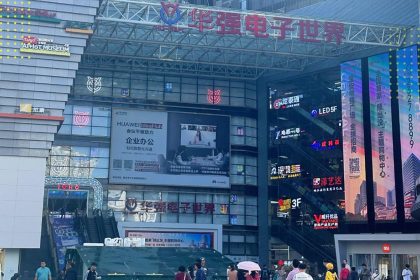
Back in 2007, Huaqiangbei was in the golden age of shanzhai phones, with booths in SEG Plaza and Yuanwang Digital City bustling with crowds. However, the launch of the iPhone completely transformed the local industrial ecosystem. Its multi-touch technology and iOS system drastically increased the imitation costs for traditional shanzhai phones, leaving many manufacturers struggling to survive and forcing numerous booths to shut down overnight. In response, Huaqiangbei quickly pivoted, experiencing an explosive growth in 3C accessories such as phone cases, headphones, and data cables, ultimately establishing itself as the “Global 3C Accessories Hub.” Now, the advent of the AI wave has brought an even more profound transformation to Huaqiangbei.


At the Smart Hardware Expo held at the Shenzhen Maritime Art Center, the venue was thronged with visitors. It showcased over 76 product categories, more than 200 brands, and in excess of 1,000 AI hardware exhibits—including the world’s first real-time pet translator for cats and dogs, smartwatches capable of Traditional Chinese Medicine consultations, and the global debut of an AI tennis machine that supports head-to-head matches. The specially designated Huaqiangbei Zone within the venue vividly demonstrated AI’s full-scale sweep across the area: ordinary hardware products have been upgraded into AI-enabled smart devices, with AI models serving as the core backbone behind these innovative products.

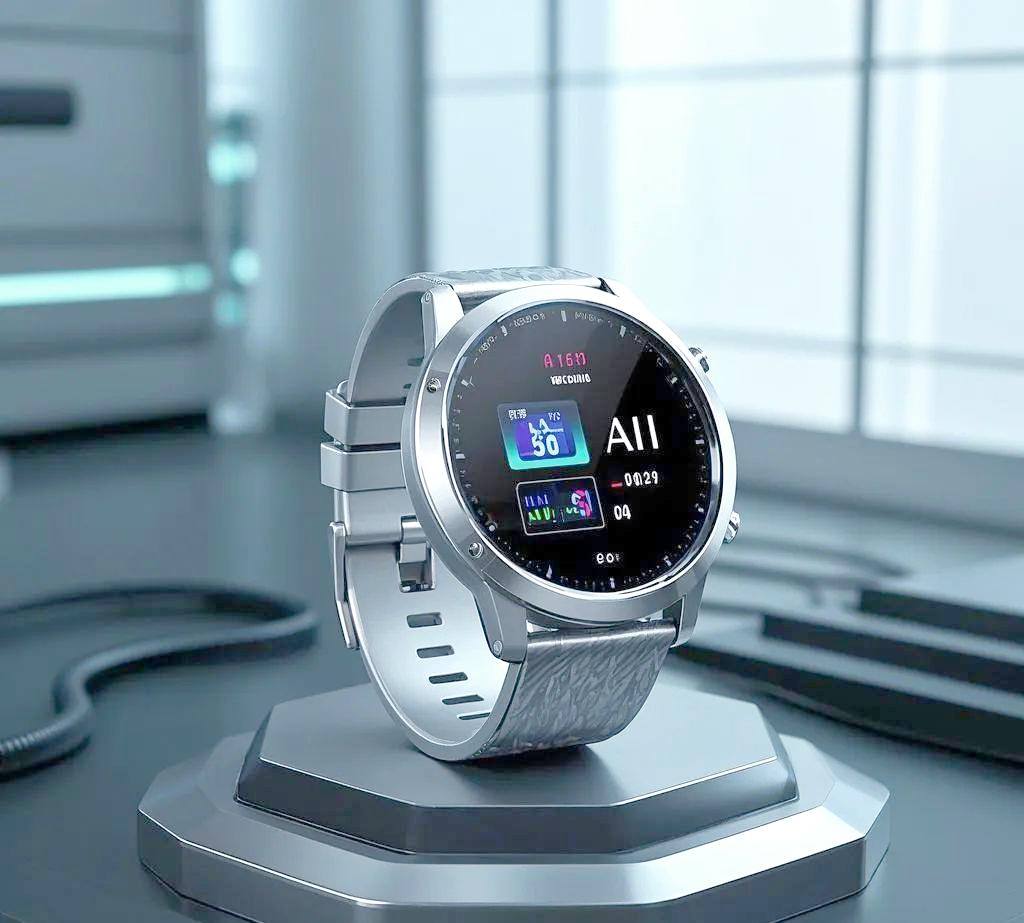
Among the highlights in the Huaqiangbei Zone was a blood pressure smartwatch. Equipped with an AI model, this watch not only tracks data such as blood pressure, heart rate, and blood oxygen levels but also generates daily and weekly health reports with personalized recommendations, functioning like a private nurse. It is particularly useful for families with elderly members—seniors no longer need to manually record their health data, as the AI model automatically compiles scattered data into comprehensive reports and suggestions, making it easy for them to adjust their daily routines. Adjacent to it was an AI translator developed by Shenzhen Yangzhisheng. Built on the same AI model, it offers professional translation and dialogue transcription capabilities, meeting the needs of cross-border business and various other scenarios. The AI model has been optimized for professional terminology in industries such as electronics, machinery, and chemical engineering, ensuring accurate alignment with industry-standard translations, eliminating ambiguities, and helping overseas businesses showcase their professionalism.
Beyond small and medium-sized manufacturers from Huaqiangbei, the expo also featured numerous well-known brands integrating the AI model into their products, including OPPO’s ColorOS 16 system, Honor Magic V5, Fangcheng Leopard Tai 7, Insta360’s first drone Yingling A1, and Li Auto’s AI glasses Livis. Additionally, the Pettichat pet translator garnered significant attention. Leveraging over 1 million pet sound samples and the AI model, it accurately captures and interprets sound signals from cats and dogs, while also converting human language into signals understandable by pets, enabling real-time two-way communication with a translation accuracy rate of 94.6%. Beyond providing emotional value to pet owners, it also helps them quickly identify abnormal signals in their pets, preventing delays in medical treatment due to misjudgment.
The AI model has become the preferred choice for numerous manufacturers for several key reasons. Firstly, its robust technical capabilities: it is the world’s first and only open-source large model that simultaneously covers full-scale model sizes and can directly process text, images, voice, and video. Its model family comprises over 200 variants, ranging from lightweight versions with 0.5B parameters to heavyweight models with 110B parameters, catering to the needs of different hardware and scenarios such as children’s toys, headphones, smartwatches, AI glasses, smart cockpits, and industrial manufacturing. Secondly, its flexible and user-friendly pricing model: abandoning the traditional Token-based charging method, it adopts a fixed annual fee per hardware terminal. Regardless of how users utilize the product, costs remain controllable for businesses, eliminating the need to invest in additional systems for Token statistics and simplifying profit calculations. Thirdly, its high market recognition: according to data from Hugging Face, the world’s largest AI open-source community, the AI model’s monthly downloads in December 2025 exceeded the combined downloads of the 2nd to 9th ranked models (including those from Meta, DeepSeek, OpenAI, etc.). With cumulative downloads surpassing 700 million times, it has become the most widely used open-source model among global developers.

More importantly, the AI model is backed by a comprehensive solution supported by Alibaba Cloud’s nearly 20 years of technological accumulation. The multi-modal interaction development kit integrates three basic large models—language, vision, and voice—enabling full-process capabilities including “listening, seeing, thinking, and interacting” without the need for businesses to piece together third-party tools. Compatible with over 30 mainstream terminal chip architectures such as ARM, RISC-V, and MIPS, the kit allows for one-time development with full chip adaptation, meeting the integration needs of most hardware devices on the market. It also comes pre-installed with more than a dozen Agents and MCP tools in areas such as daily leisure and work efficiency. With its user-friendly drag-and-drop functionality, even Huaqiangbei bosses with only a junior high school education and no coding experience can quickly integrate the AI model into their hardware products. Previously, developing an AI tool was time-consuming and often prone to overcharging, especially when requirements changed—leaving non-technical business owners at the mercy of external vendors. Now, businesses can handle integration independently with ease, using ready-to-use, one-click activation features. Furthermore, the kit is integrated into Alibaba Cloud’s BaiLian Platform ecosystem, allowing businesses to directly utilize pre-built tool templates and connect with third-party functions to enrich their product offerings. For businesses seeking optimized performance, Alibaba Cloud has developed specialized interaction models tailored to actual hardware usage scenarios, supporting video, image-text, and other interaction methods with voice response times as fast as 1 second and video interaction latency of only 1.5 seconds, resulting in a nearly seamless user experience.
“AI’s greatest potential lies not on smartphone screens, but in taking over the digital world and transforming the physical world.” This is precisely the core value of the AI model. It breaks down the technical barriers of large models, converting once unattainable cutting-edge capabilities into inclusive tools that empower countless hardware devices. By driving AI’s deep integration from virtual screens into tangible, perceptible physical life, small and medium-sized businesses like those in Huaqiangbei can leverage their supply chain advantages to upgrade ordinary hardware into intelligent terminals with understanding and decision-making capabilities. This technological inclusivity democratizes innovation, no longer limiting it to large corporations, and fosters a dynamic AI hardware ecosystem.

Additionally, the AI model reshapes the relationships between humans and hardware, as well as between technology and life. The interaction between humans and hardware has evolved beyond the one-way command model of “humans using hardware” to a two-way empathetic relationship of “hardware understanding humans.” Whether AI glasses describing the world for the visually impaired, smart devices safeguarding the safety of workers in high-risk industries, or health watches acting as personal stewards for ordinary people, AI technology is stripping away the coldness of technology and infusing it with humanistic warmth. The AI model’s rooting in Huaqiangbei also signifies an upgrade in the underlying logic of China’s intelligent manufacturing—shifting from simple large-scale replication to empowering industrial innovation through technological infrastructure and activating global development potential through the vitality of small and medium-sized enterprises. Looking ahead, as the ecosystem continues to improve, Huaqiangbei may give birth to more industry-transforming intelligent products. Behind this lies the most touching value of technological inclusivity: providing fertile ground for every small innovation to thrive and allowing the light of technology to illuminate broader aspects of daily life.