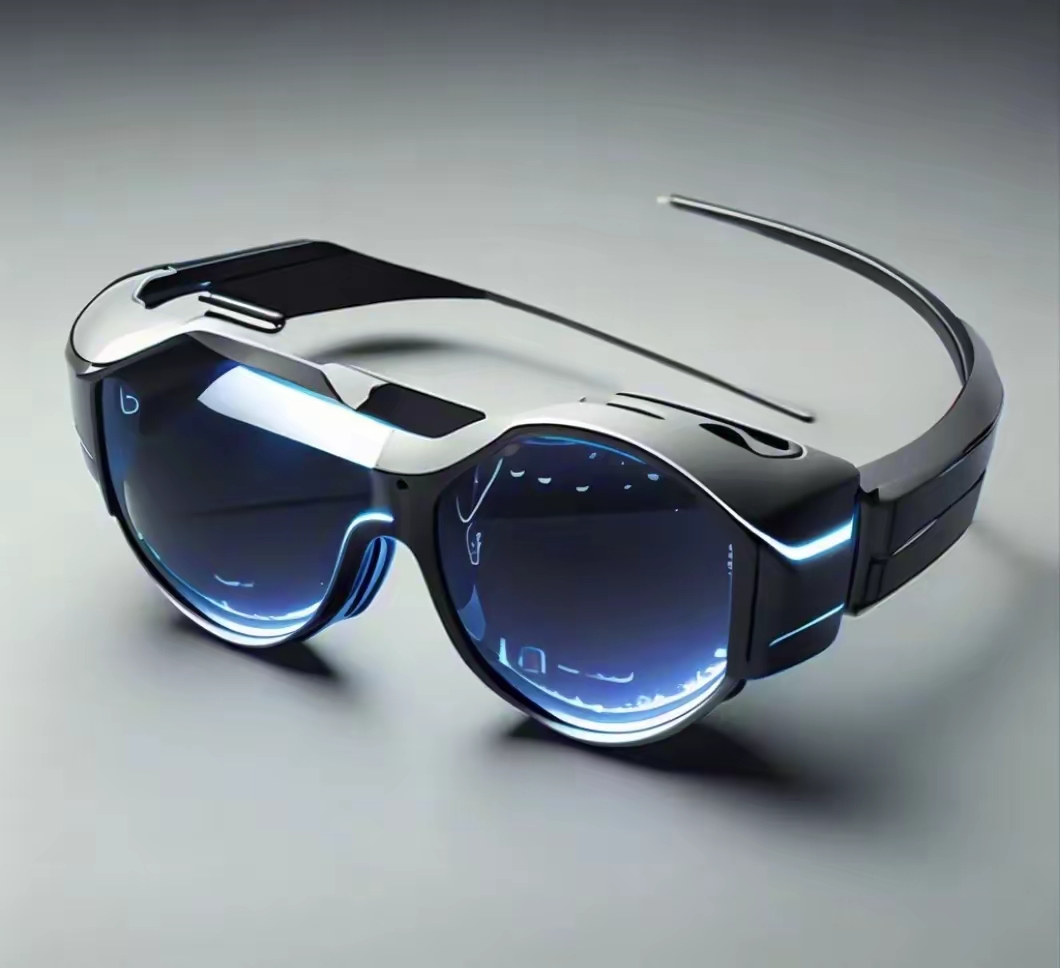
AI glasses sales have surged by 70%–80%, making them the fastest‑growing category, with overall revenue up 35% year‑on‑year.
With more brands entering the market, improved practicality, and falling prices, domestic AI glasses in China are experiencing explosive growth.
But what about the US market?
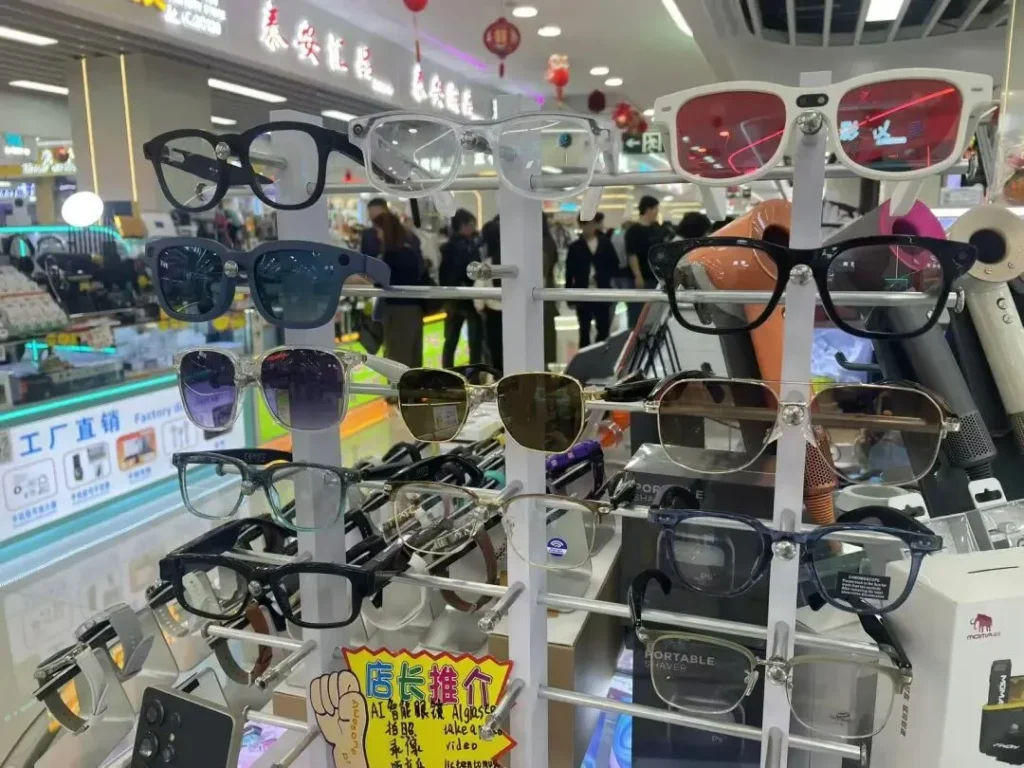
How are Huaqiang Bei’s AI glasses performing overseas?
Using real Amazon data, we break down the current state of the overseas AI glasses market.
I. Bestseller Rankings: Meta Dominates, Followed by Low‑Cost Products
The US is currently the world’s largest consumer market for AI glasses, and Amazon accounts for nearly 40% of US e‑commerce.
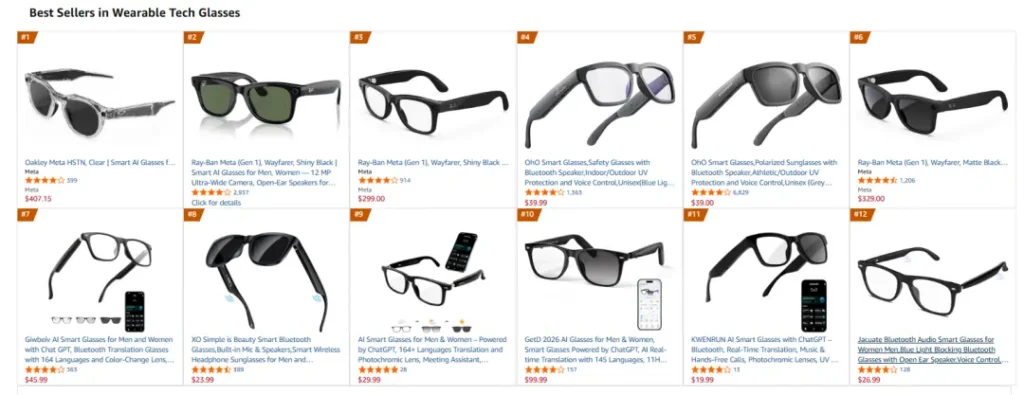
Based on Amazon’s Best Sellers list for smart glasses (February 2026 data), the market structure is clear‑cut.
1. Meta Series Tops the Charts
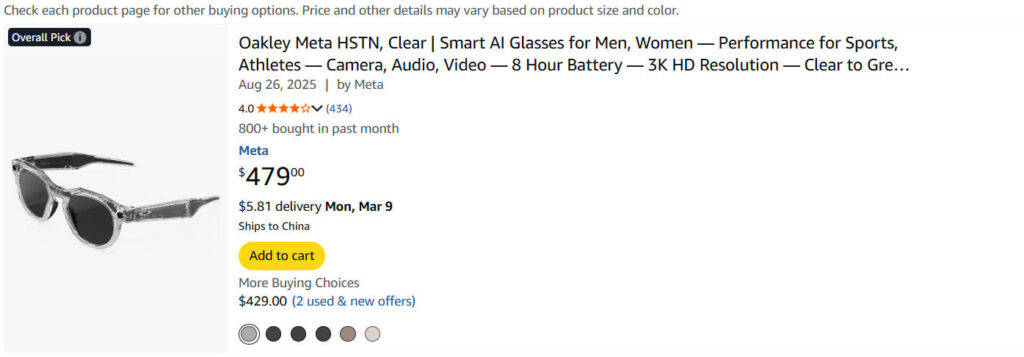
Of the top 12 spots, 4 are Meta co‑branded models:
- 1st place: Oakley Meta HSTN, boosted by a 15% promotion
- 2nd, 3rd, 6th places: various Ray‑Ban Meta Generation 1 models
Priced at $339–$407, with ratings around 4.0, they sell hundreds to thousands of units per month.
Amazon BSR rankings depend not only on total sales but also heavily on recent performance, so rankings shift dynamically.
2. Huaqiang Bei White‑Label Low‑Cost Models Capture Market Share
Beyond Meta, the list is dominated by low‑cost smart glasses under $100:
- Prices start as low as $20
- Two ohO smart glasses models rank 4th and 5th, starting at $39, featuring sunglasses + Bluetooth audio
- Some $20 products even claim support for ChatGPT, real‑time translation, and photochromic lenses
The high‑end market is firmly controlled by Meta, while the mid‑to‑low end is heavily occupied by Huaqiang Bei‑style products.
II. New Releases: Explosion of Affordable AI Glasses, Led by Huaqiang Bei
Amazon’s smart glasses new releases list (featuring products launched in the past 30–90 days) tells a straightforward story:
The US has become the main overseas market for Huaqiang Bei’s affordable AI glasses.
1. Flood of White‑Label Products, Extreme Price Competition
- Numerous unknown brands with highly homogeneous products
- Many items lack a brand name, listed only as “Bluetooth camera glasses”
Among the top 100 new products:
- Average price: ~$105
- Under $50: 30 models
- $50–$150: 51 models
- Over $150: only 16 models
Mid‑to‑low‑end products account for 81% of the list.
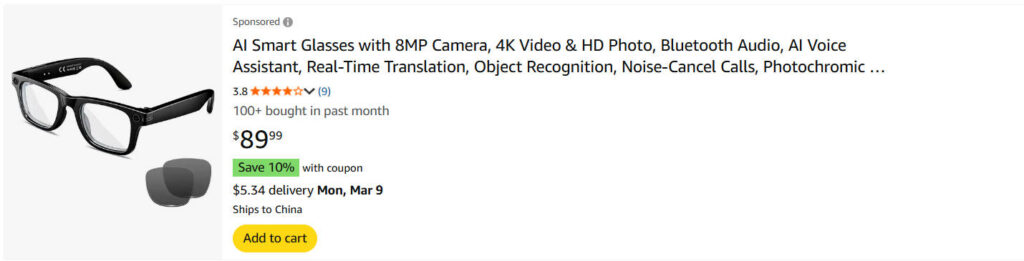
2. Three Clear Product Segments
- Audio glasses (≈30%)Mostly under $50, starting at **$9.99**, focused on music and calls.
- Camera glasses (≈65%)Mainstream 8MP cameras, priced at $50–$150.Some support memory cards, person detection, and EIS stabilization.
- AR glasses (≈2%)High cost due to displays, typically $399+, with low market penetration and weak user adoption.
3. Chinese Brands Also Target the High End
Beyond cheap white‑label goods, several Chinese brands are pursuing the mid‑to‑high market:
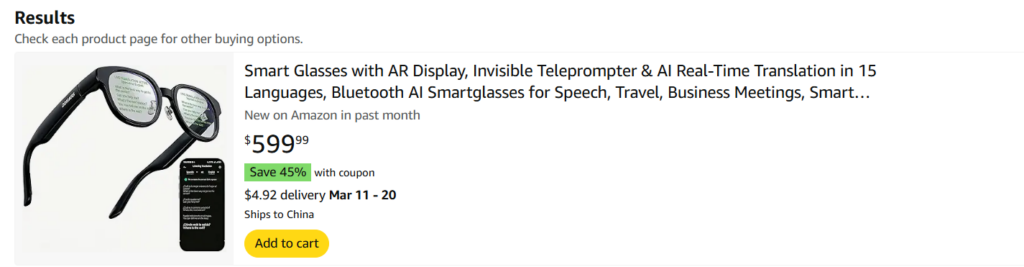
- Rokid Style: $299, display‑free AI glasses
- Domars (Shadow Go2): $599, binocular display + translation
- ZENITH Display: starting at $399, sports AR glasses with navigation and heart rate monitoring
4. Mature Accessory Market Emerging
AI glasses accessories are also gaining traction:
- Ray‑Ban Meta charging docks and portable batteries
- XREAL AR glasses carrying cases
One Meta glasses battery sells for $70—more expensive than many white‑label glasses—yet still moves over 200 units monthly.
Strong accessory sales confirm high volumes for flagship models.
III. Summary: US AI Glasses Market Shows Polarization
Amazon’s two lists reveal a sharply divided US AI glasses market:
- High end: Near‑total monopoly by MetaRay‑Ban Meta maintains steady sales; Oakley Meta climbs via promotions.
- Mid‑to‑low end: Cutthroat “Huaqiang Bei‑style” competitionA flood of $10–$150 low‑cost devices, with similar features and brutal price wars.
While short‑term holiday demand drives sales, the sector risks repeating the fate of early VR headsets: cheap, homogeneous, and short product lifecycles.
The boom and intense competition in China’s AI glasses industry have fully spread to Amazon US.