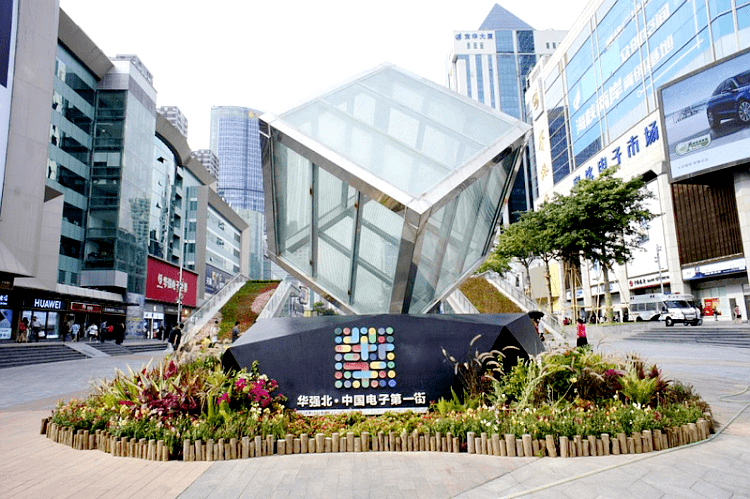
Once famous for churning out Apple-like knockoffs, Huaqiangbei has undergone a dramatic transformation.

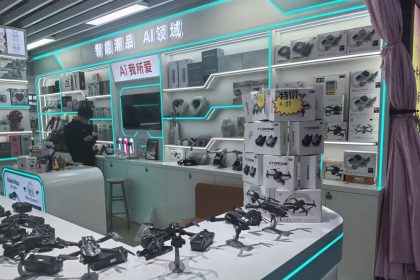
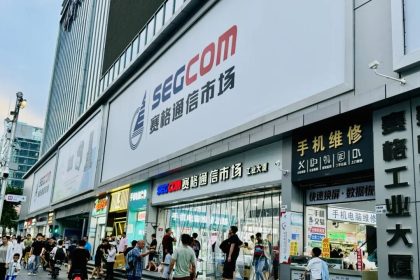
Recently, we spent several days exploring iconic electronics markets here, including Huaqiang Electronics World, SEG Plaza, Longsheng Accessories Mall and Feiyang Building. Beyond the usual array of electronic components, iPhones and smartwatches, a host of new gadgets have popped up—AI translators, AI guitars, AI phone cases, AI rings and even humanoid robots. Before we knew it, AI had become the buzzword of the town.
As the saying goes, “The world’s electronics manufacturing looks to China; China’s electronics manufacturing looks to Huaqiangbei.” For entrepreneurs aiming to build hardware products, this is the ultimate first stop. On one hand, they dig into Huaqiangbei’s mature supply chain, figuring out how to assemble products at the lowest cost. On the other hand, they approach this hub with a mix of awe and caution, racking their brains to build brand and technological barriers. The fear of being copied or overtaken is real—so much so that they dare not hype up their products too early.
On the surface, Huaqiangbei is the sales front of the Pearl River Delta’s electronics supply chain, a bustling marketplace of gadgets. Behind the scenes, countless entrepreneurs come and go in a hurry, all hoping to turn this land into the next hotbed for AI-powered hardware innovation.
1. Everything Can Be “AI”: Stick the Label First, Ask Questions Later
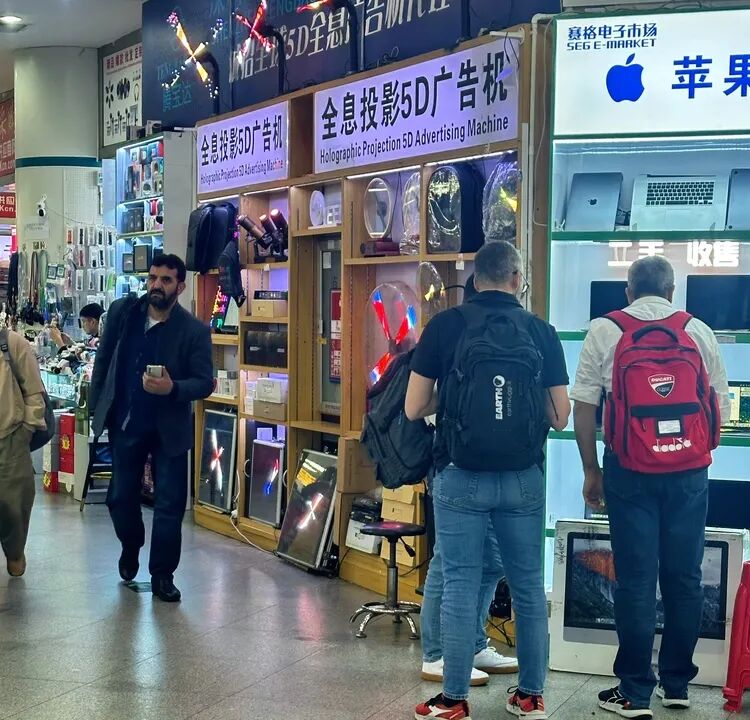
The broader Huaqiangbei area spans nearly 1.45 square kilometers across dozens of buildings—that’s roughly the size of 200 football fields. A single building alone houses thousands of counters, packed so tightly that you could wander around for hours on end.
Here, besides smartphones with AI noise-canceling features, the hottest AI products are AI translators.
Step into SEG Communication Building, and you’ll notice that almost every counter on the first floor displays a sign that reads “AI Translator”. But if you press the salespeople to explain what kind of AI powers these devices, most will give you a vague answer.
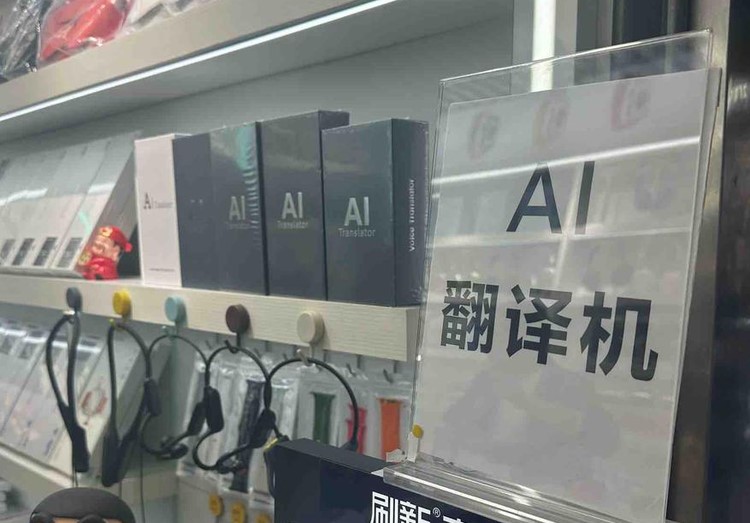
The so-called “AI” has little to do with translation itself. It’s mostly an add-on AI chat assistant that can tell stories, help with homework or even role-play—giving off a distinct vibe of being a make-do extra feature.
Of course, there are some professional-grade options too. One standout is a sleek magnetic metal disc that attaches to the back of a phone to capture audio. With a Bluetooth connection, it can translate all text and voice on the phone—including real-time WeChat conversations—making it a must-have for foreign traders.
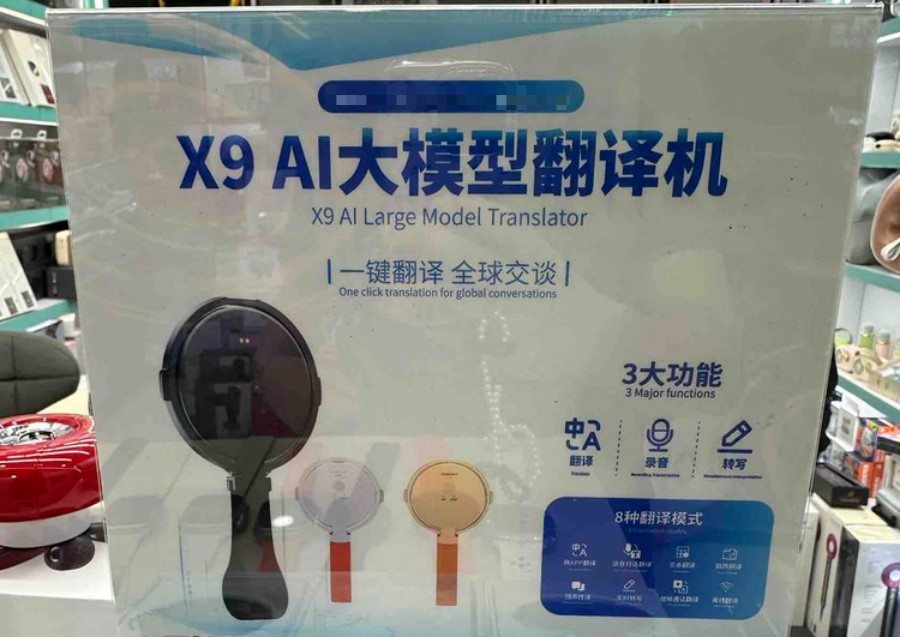
After all, export makes up a huge chunk of Huaqiangbei’s business, with foreign buyers of all nationalities flocking here. During the short ten minutes we lingered at a translator counter, three groups of foreigners came over to ask about prices—proof of just how popular these devices are.
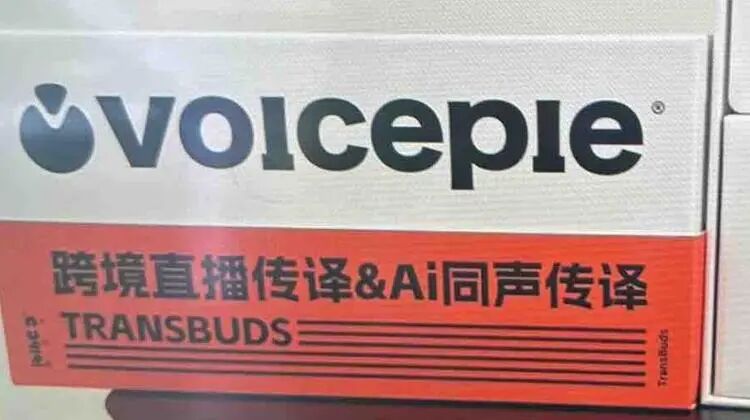
If translators seem too outdated for you, Huaqiangbei has plenty of other novel gadgets to offer.
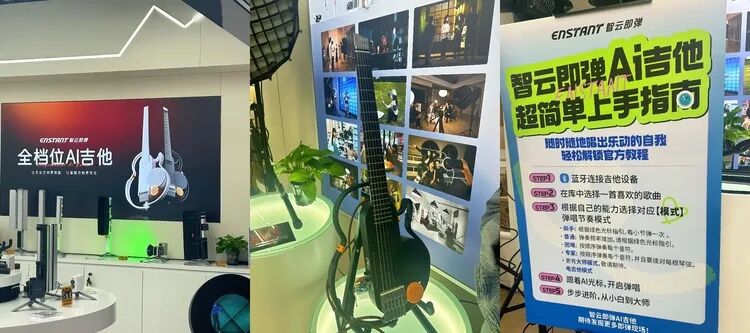
AI guitars are tailored for beginners: pair the guitar with an app, play just one correct note, and the guitar will automatically fill in the rest of the melody. As the difficulty level goes up, the guitar plays less and you play more, with the app scoring your performance in real time.
AI phone cases combine an e-ink screen with NFC technology. Their AI capabilities lie entirely in the supporting app—either generating AIGC wallpapers or directly integrating large language models for text-to-image generation. Currently priced between 120 to 180 yuan, they cost ten times as much as regular phone cases.
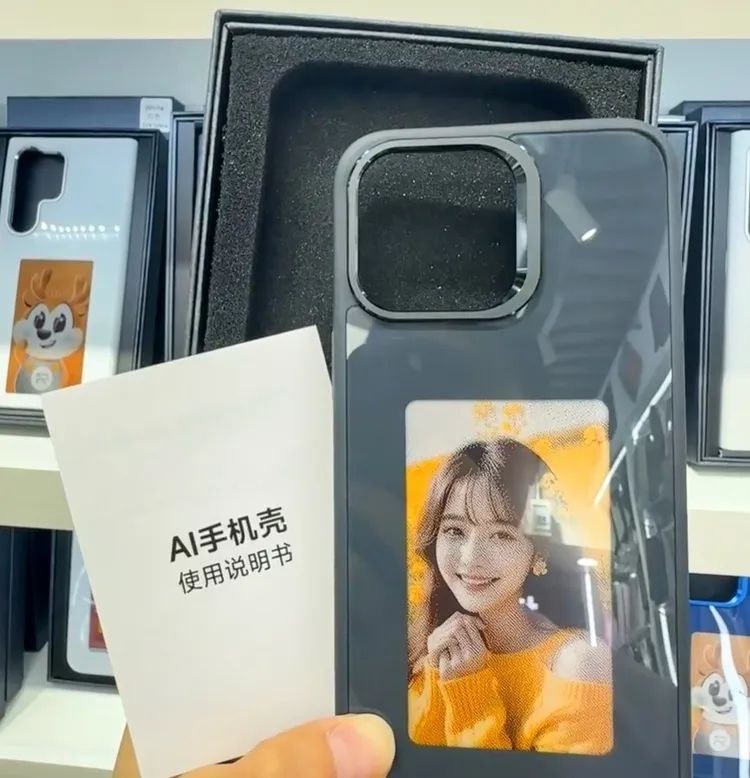
We visited every phone case shop across the four floors of SEG Communication Building, and found only one store selling these AI cases in large quantities. But another shop owner confidently assured us: “Mark my words—in a month, every store on this street will have them, and the price will drop to 30 yuan.”

That’s the speed of Huaqiangbei for you. Once one seller takes the plunge, the whole market will be flooded with the product within 30 days, driving prices down to rock bottom.
Beyond these small gadgets, robot products that are making waves in the tech world have also appeared on store counters.
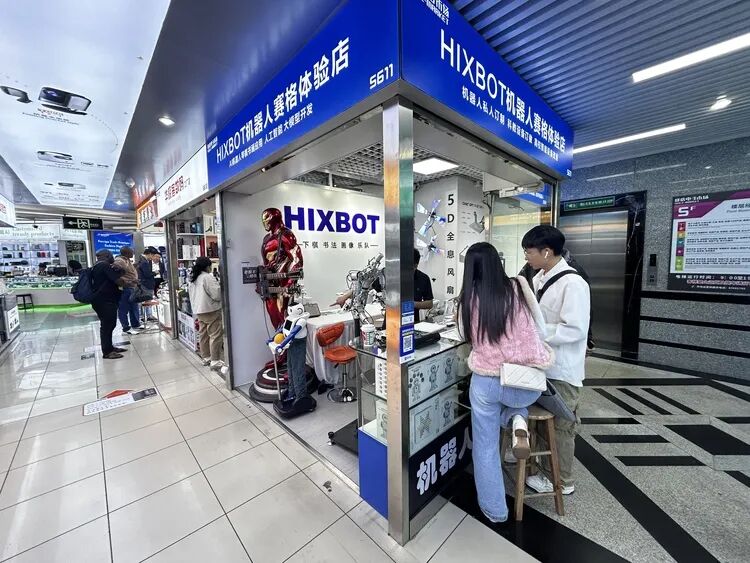
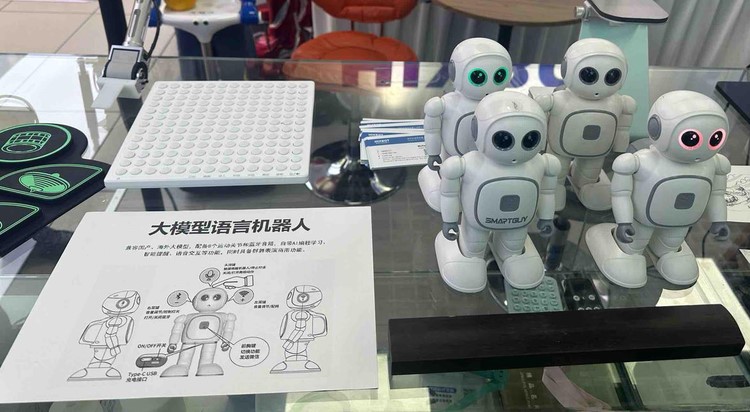
One desktop robot is integrated with both domestic and international voice-enabled large models. With eight flexible joints, it can be activated by voice commands to chat, sing, move forward or backward. It’s mainly sold to schools and for home education purposes. According to the founder of the brand HIXBOT, who occasionally mans the counter, his team is only ten people strong. They operate on a project basis and can even customize the robot’s design for clients.
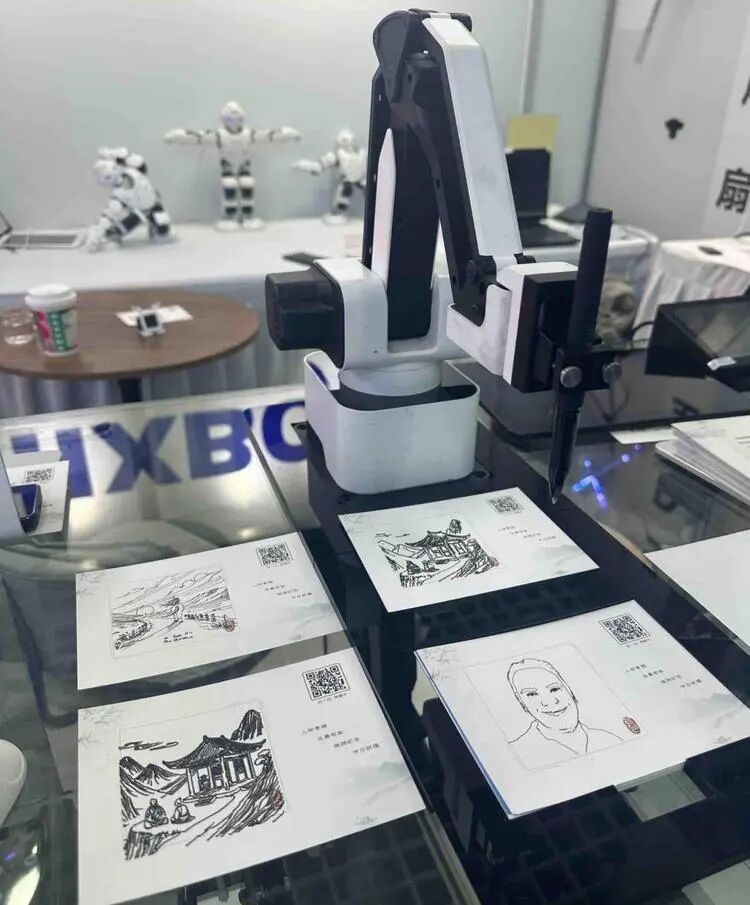
Another standout is an AI drawing machine that integrates ChatGPT-4o. Type in a sentence or a few keywords, and the robot will generate and draw a picture automatically. You can also take a photo, which the machine’s custom-trained facial recognition model converts into a line drawing, then prints it on a card or name tag. Priced at 20,000 yuan a piece, it’s not cheap—but it still sells around 2,000 units a year, with strong demand in European and American markets.
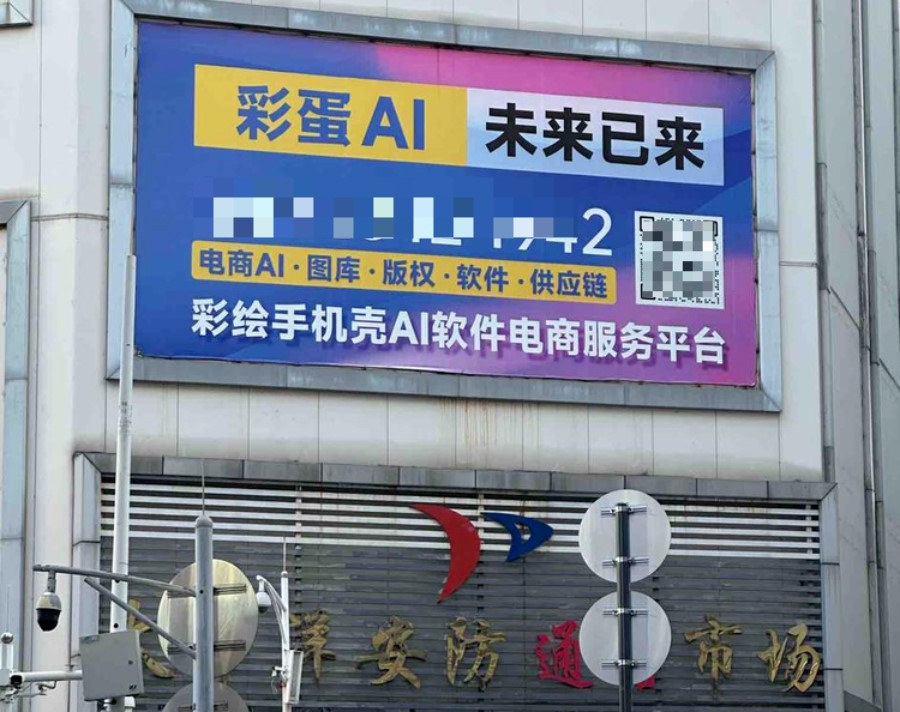
More interestingly, even the billboards between buildings have undergone a makeover. The old ads for phones and accessories have quietly been replaced with ads for AI software. One particularly fitting example is an ad for an AI phone case app, which faces directly toward a building full of phone case shops—as if announcing that even Huaqiangbei’s vibrant “world of phone cases” is about to get an AI upgrade.
2. “AI Glasses” for 250 Yuan: Huaqiangbei’s Copycat Culture and Waiting Game
Huaqiangbei never misses out on popular tech products—but most of them are stripped-down knockoffs.
Take Bluetooth glasses and camera-equipped glasses, for example. They can be found on almost every floor of every major building, looking identical to Meta’s trending AI glasses and AR glasses. Priced at 250 yuan, you can even haggle the price down to 150 yuan—leaving you to guess just how low the production cost really is.
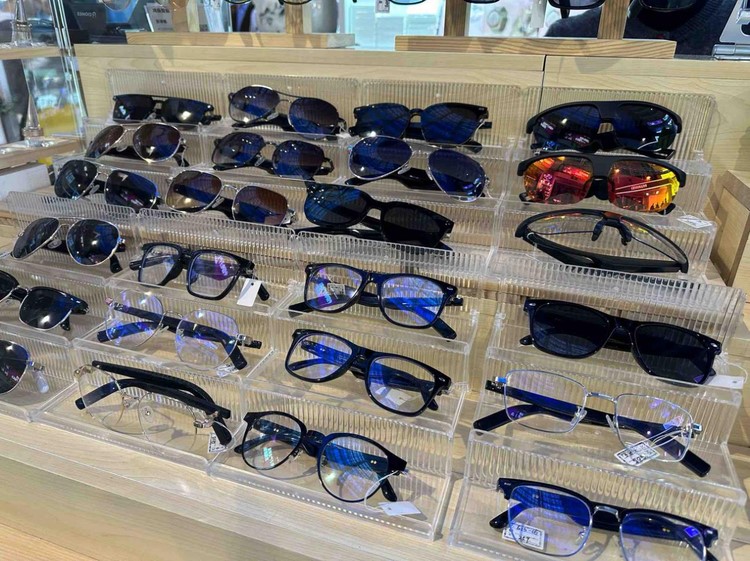
A seller told us that these products hit the shelves as early as last year, with “a huge portion of sales going overseas”. After all, when converted to US dollars, they cost less than 20 dollars—offering unbeatable value for money. It even makes you wonder: did Meta’s AI glasses boom take inspiration from these Huaqiangbei Bluetooth glasses?
As soon as Meta’s smart glasses became a hit, Huaqiangbei’s sellers sprang into action: they bought the real product, took it apart, studied it thoroughly, and then figured out how to replicate it.
“We can’t match Meta’s cutting-edge technology. But AI glasses? We’ll have them out soon, for around 300 yuan.” There’s an unmistakable confidence in that statement—classic Huaqiangbei swagger.
An unwritten rule in Huaqiangbei goes like this: Once a product hits a shipment volume of 10,000 units, the supply chain here will jump on the bandwagon immediately.
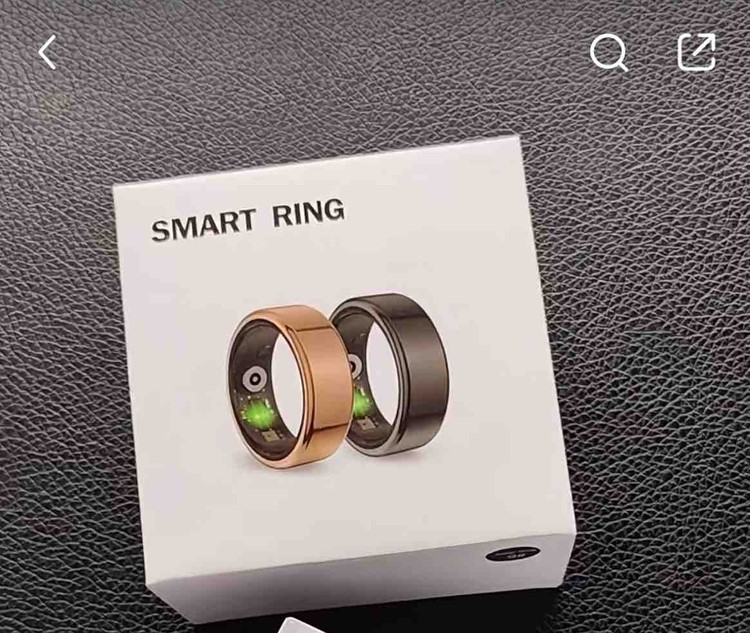
But when it comes to innovative hardware that hasn’t yet been proven in the market, store owners turn surprisingly cautious. One owner showed us a smart ring he was testing out: “There are so many smart ring brands out there. I picked this one because it has simple functions and is cheap—only 100 yuan. I’m testing it for a week before deciding whether to stock it. After all, it comes in three colors, and each color has a minimum order quantity—too much risk of overstocking.”
Wander through the dozens of buildings in Huaqiangbei, and you might feel a little disappointed. There are no groundbreaking AI hardware hits that you imagined, let alone affordable alternatives to big-brand AR glasses or AI glasses. Traditional electronic components, phone accessories and smartwatches still dominate the market.
But this is precisely the essence of Huaqiangbei: it’s never been a marketplace for finished products, but rather a “component bank” waiting to be reassembled. From basic chips, circuit boards and cameras to various sensors, displays and casings—this place has all the building blocks needed for the future explosion of AI hardware.
The true value of Huaqiangbei does not lie in making complete AI products, but in providing a vast pool of hardware components. Thanks to its well-established supply chain, its assembly capabilities are nothing short of amazing. This drive to assemble and replicate, however, only applies to products that have captured absolute market attention and high demand—like the Vision Pro, for which a rough knockoff appeared in Huaqiangbei as soon as product images were released.
But this current wave of AI hardware competition is different from before. It’s no longer led by hardware, but by software algorithms—and that’s exactly where Huaqiangbei falls short.
Yet Huaqiangbei is already making room for AI.
“As long as you have a solid AI solution, we can integrate it into every product in our store.” This is a phrase you’ll hear time and time again from sellers here.
Looking at it from another angle, Huaqiangbei could be a paradise for AI software developers. Those seemingly ordinary cameras, speakers and fitness trackers on the counters are all waiting for the right software to breathe life into them. In some corners of the market, you’ll spot modified camera-equipped toy dogs or earphone cases with built-in screens—these rough prototypes are exploring the endless possibilities of hardware. When AI developers get their hands on these semi-finished products, new product forms could be born at any moment.
Some dealers are even proactively seeking partnerships with AI development teams, hoping to use algorithms to unlock the potential of these hardware devices.
“There’s an American guy living next door to me. He came all the way to Shenzhen just to work on AI hardware. Whenever he has an idea, he orders a 3D print right away and gets the prototype the next day. He approached me about a collaboration a few days ago—details are still under wraps, though.” shared one shop owner.
3. Grassroots AI: Holding the Promise of the Future
After three days of immersive exploration in Huaqiangbei, you’ll notice a fascinating contrast:
On one side, the tech world gushes over cutting-edge model upgrades, debating over parameters, computing power and algorithms. On the other side, Huaqiangbei has its own brand of grassroots AI—stick the AI label on everything first, then use the supply chain to drive costs down to the lowest possible level.
Everyone here is breaking down today’s AI in the most down-to-earth way imaginable. These products may not be the most sophisticated or cutting-edge—they might even have a hint of “knockoff” about them—but it’s this wild, unpolished spirit of innovation that holds the most authentic promise for the mass adoption of AI hardware.
After all, no matter how advanced a technology is, it ultimately has to enter the market and reach ordinary consumers. And Huaqiangbei is the most direct bridge between technology and the market.
Today, anyone who truly cares about the real-world application of AI hardware owes it to themselves to take a trip to Huaqiangbei.