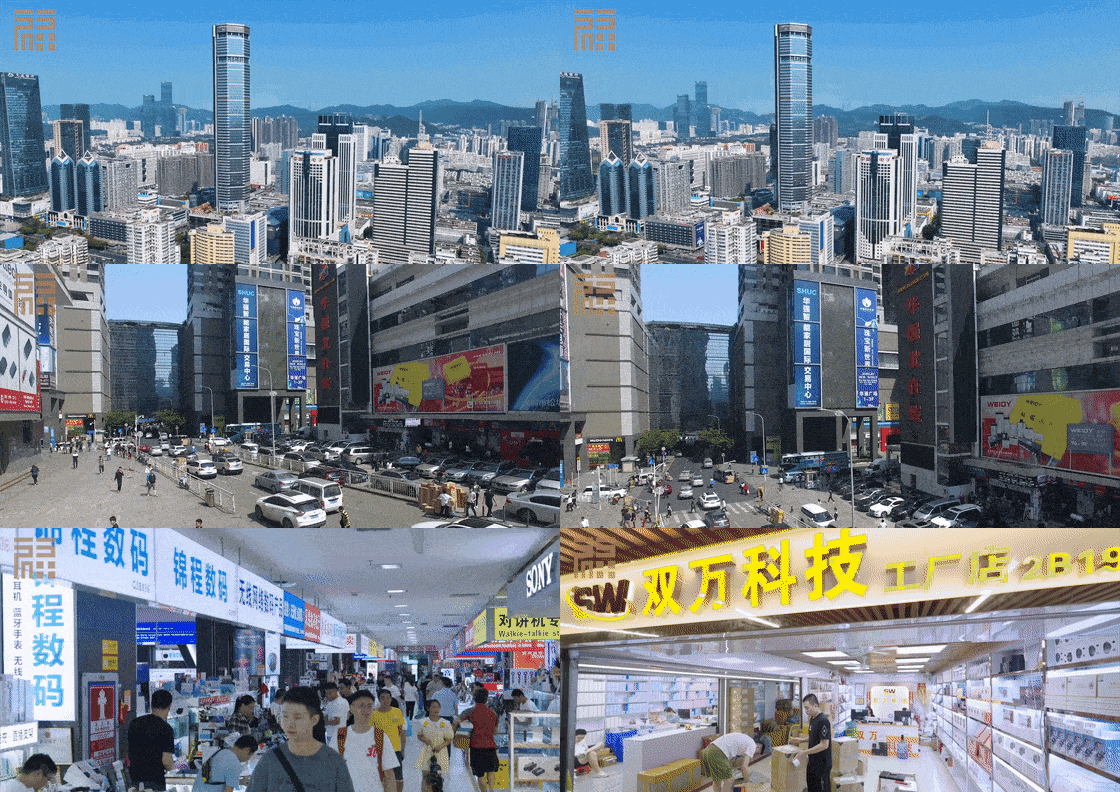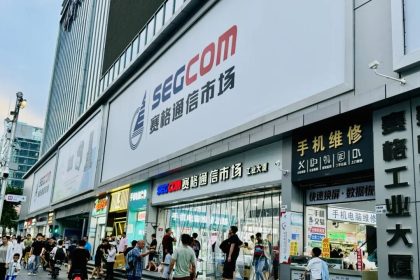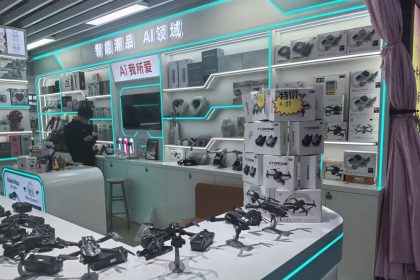
The legend of Huaqiangbei lives on, driven by its extraordinary resilience. Known as China’s No.1 Electronics Street, Huaqiangbei stayed in the eye of the market storm throughout 2025—every ripple in the global tech and economic landscape was amplified here. From the skyrocketing robot rental prices at the start of the year, spurred by the viral popularity of humanoid robots, to export headwinds from U.S. tariff hikes; from memory chips becoming “black gold” amid surging prices, to the cutthroat “white-label war” ignited by AI glasses…
At the end of 2025, we revisited this less-than-3-square-kilometer street to trace the trials and tribulations it overcame in the past year. Its remarkable agility to respond and adapt under mounting internal and external pressures is truly astounding. Through the microcosm of Huaqiangbei, we can clearly see the resilient DNA of China’s supply chain.
I. Extreme Ups and Downs: Humanoid Robots Plunge from “¥20,000 a Day” to Obscurity
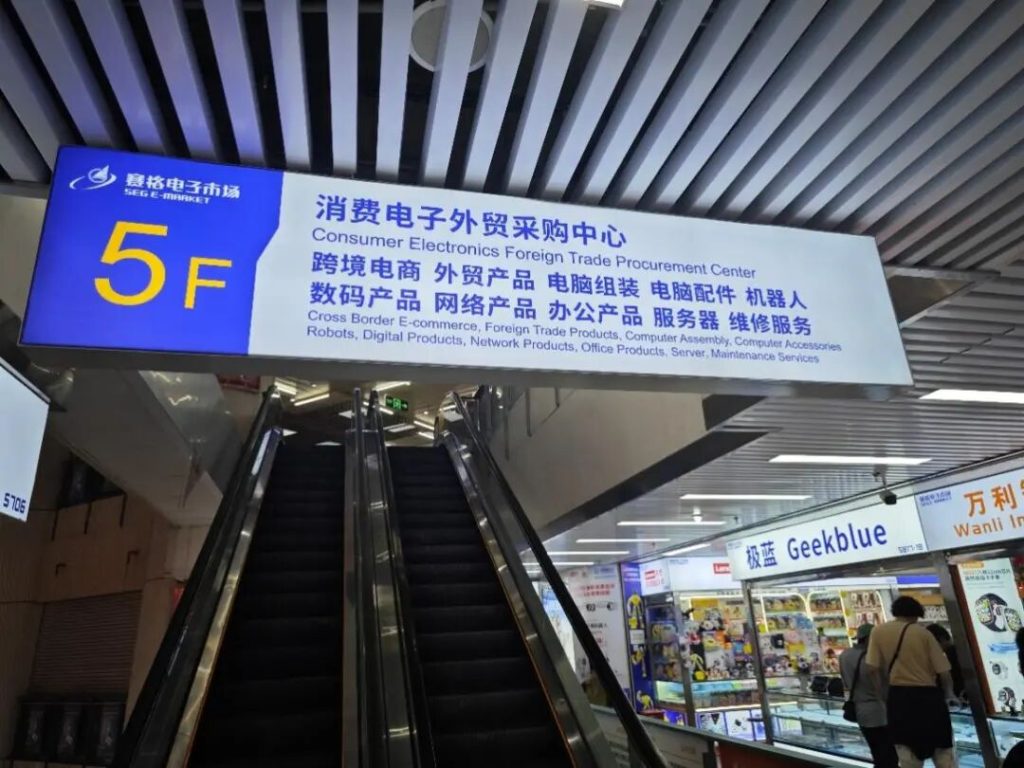
The year 2025 kicked off with a bang when Unitree Robotics’ humanoid robots, dressed in colorful padded jackets, stole the show with a yangko dance performance at the Spring Festival Gala. This instantly set off a frenzy in Huaqiangbei’s robot rental business. When we visited the 5th floor of SEG Electronics Market in February, robot rental shops were occupying prime locations, with top-tier humanoid robots fetching as much as ¥20,000 per day in rent.
But a dramatic shift unfolded just over ten months later. On December 31, we wandered the 5th floor of SEG—though the floor sign still read “Robots”, all the rental shops that once lined the area were gone, not a single one left in sight.
A neighboring merchant told us, “They moved out months ago; now the space is taken by AI product stores. It was just a hype cycle, really. At the peak, people queued up even for rentals priced over ¥10,000 a day. Later, we dropped the price to ¥3,000, but business still tanked, so the owners pulled out.” A quick check on Xianyu (China’s leading second-hand platform) also showed that rental prices for some humanoid robots had plummeted by over 70% from their early-year highs.
Such volatility in the robot rental market is par for the course—it reflects the natural progression of new technologies from “conceptual hype” to “practical application”. As the initial buzz fades and the market stabilizes, it will weed out unsustainable players and identify genuine use cases for robots. Going forward, the rental business is likely to pivot toward niche segments instead of blind expansion.
Fundamentally, the disconnect between lofty technological expectations and real-world commercial viability triggered the crash. Sky-high rental prices in the early days stemmed from over-optimism about technological breakthroughs, but the reality is that viable application scenarios remain scarce, and consumers are highly price-sensitive—so the bubble burst quickly. The future of the humanoid robot market will split into two camps: one focusing on professional sectors like industry and healthcare, leveraging rentals to lower customer adoption costs; the other developing affordable entertainment-grade models targeting consumer scenarios such as cultural tourism and education.
II. Graceful Pivot: Navigating Tariff Pressures to Go Global
In April 2025, the U.S. announced tariff hikes on Chinese imports. During our interviews in Huaqiangbei back then, many merchants acknowledged feeling some impact, but most remained calm—they had long diversified their customer base across multiple countries to mitigate risks from overreliance on a single market.
“Huaqiangbei’s edge isn’t just low prices; it’s having a fully integrated electronics supply chain where you can find anything you need, in any quantity. There’s no other place like it in the world.”
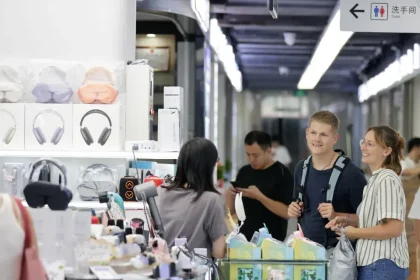
Now that the U.S.-China tariff dispute has paused, are there any lingering aftershocks? Our visit to Huaqiangbei found overseas customers flocking to the iconic “one-meter counters” to browse products, some even bringing their entire families along.
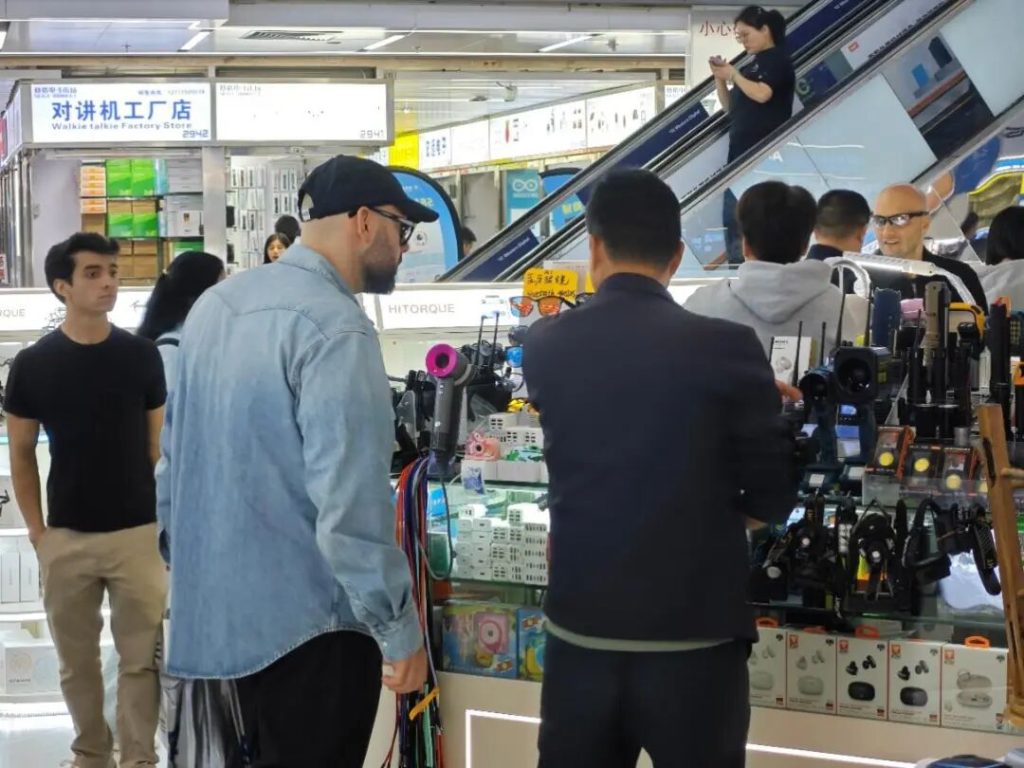
At a counter selling keyboards and mice, an American customer named Davis held up a translator and told the clerk, “This is unbelievably cheap—keyboards cost at least twice as much back in the U.S.” As it turned out, the translator in his hand was also a Huaqiangbei purchase.
Merchants unanimously shared that they were no longer caught off guard like they were during the sudden tariff hikes in 2018—they have already broadened their export channels significantly.
He Youfang, an AI glasses seller in Huaqiangbei, said, “We don’t put all our eggs in one basket; we do business globally.” His company exports 70% of its products to destinations including the U.S., France, Hungary, and Dubai. Emerging markets in the Middle East and Latin America have also become key focus areas for many Huaqiangbei merchants.
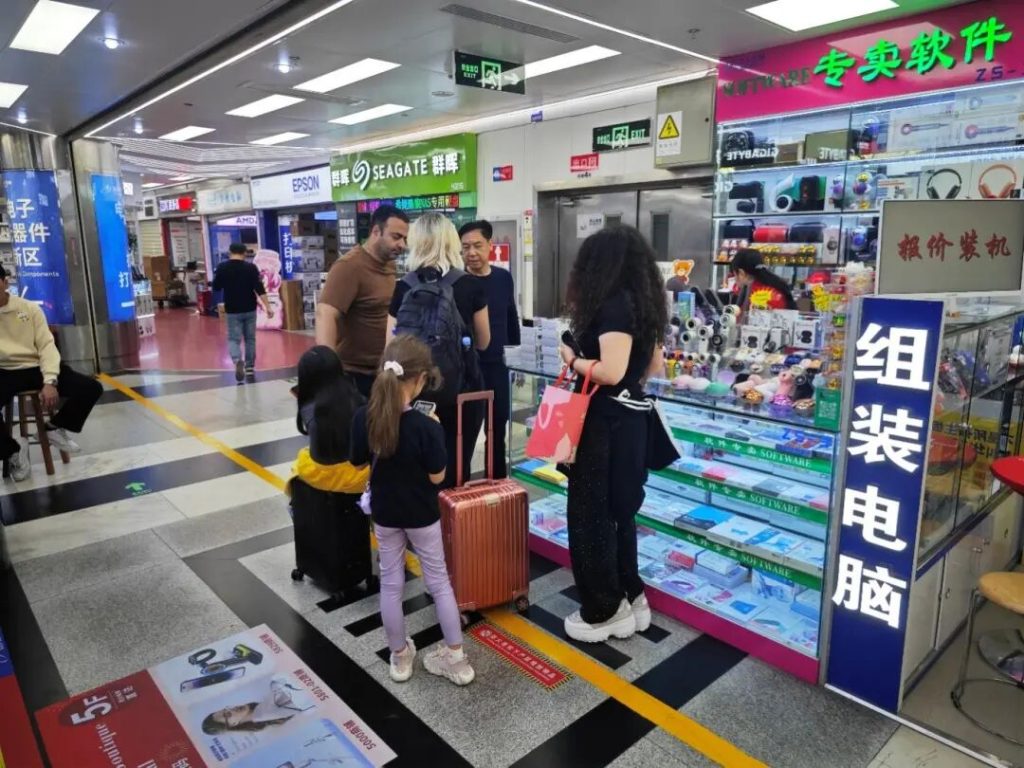
By reducing dependence on the U.S. market and shifting focus to emerging economies, Huaqiangbei merchants are embodying the diversification trend of China’s foreign trade. This ability to pivot swiftly stems from Huaqiangbei’s long-standing sensitivity to global market dynamics and the supply chain’s rapid responsiveness. It also signals that China’s manufacturing sector is proactively building a more balanced international market layout.
III. Regulatory Upgrades: No 3C Certification, No Power Bank Sales—A New Competitive Edge Emerges
In early July 2025, the Shenzhen Market Supervision Administration launched a “Thunder Operation” targeting Huaqiangbei’s power bank market, issuing a clear mandate: no power bank shall be sold without 3C certification (China’s compulsory product certification for safety).
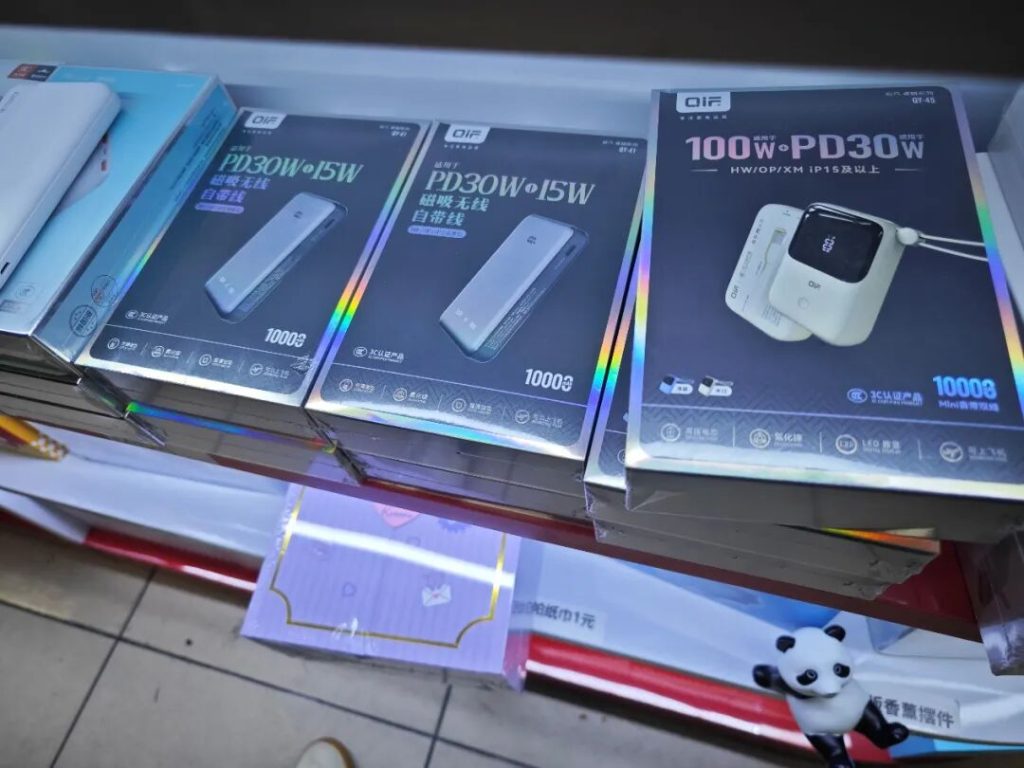
Six months on, Huaqiangbei’s power bank market has been completely transformed. A visit to SEG Electronics Market revealed that uncertified power banks have vanished entirely. Pricing has also shifted—cheap knockoffs priced under ¥20 are mostly gone, replaced by mid-to-high-end products ranging from ¥50 to ¥100. One shop owner explained, “Certified products have higher costs, so we price them a bit higher. But it’s like paying for safety and peace of mind, and customers are willing to buy it.”
Cracking down on uncertified power banks is not just about safety—it’s also a way to streamline the industry. Low-quality white-label products priced under ¥20 have been eliminated, leaving behind only enterprises willing to invest in battery protection and flame-retardant materials.
“Compliance and safety have now become a unique selling point for Huaqiangbei’s power banks. Merchants even tell foreign customers that ‘only 3C-certified products are allowed on airplanes’—this regulatory threshold has actually helped us command better prices. Compliance is no longer a cost burden; it’s a testament to brand strength.”
IV. Frenzy Persists: Memory Chips Remain “Black Gold” with Prices Still Soaring
Driven by the “super cycle” in the global memory market, prices of all storage products have been skyrocketing since April 2025, with many doubling in value. When we visited in November, memory module prices were changing daily. Savvy merchants capitalized on the trend—some hoarded inventory to sell at higher prices later, while others dabbled in memory chip speculation. Many small counter owners specializing in memory modules at Huaqiang Electronics World saw their paper wealth surge by tens of millions of yuan within six months.
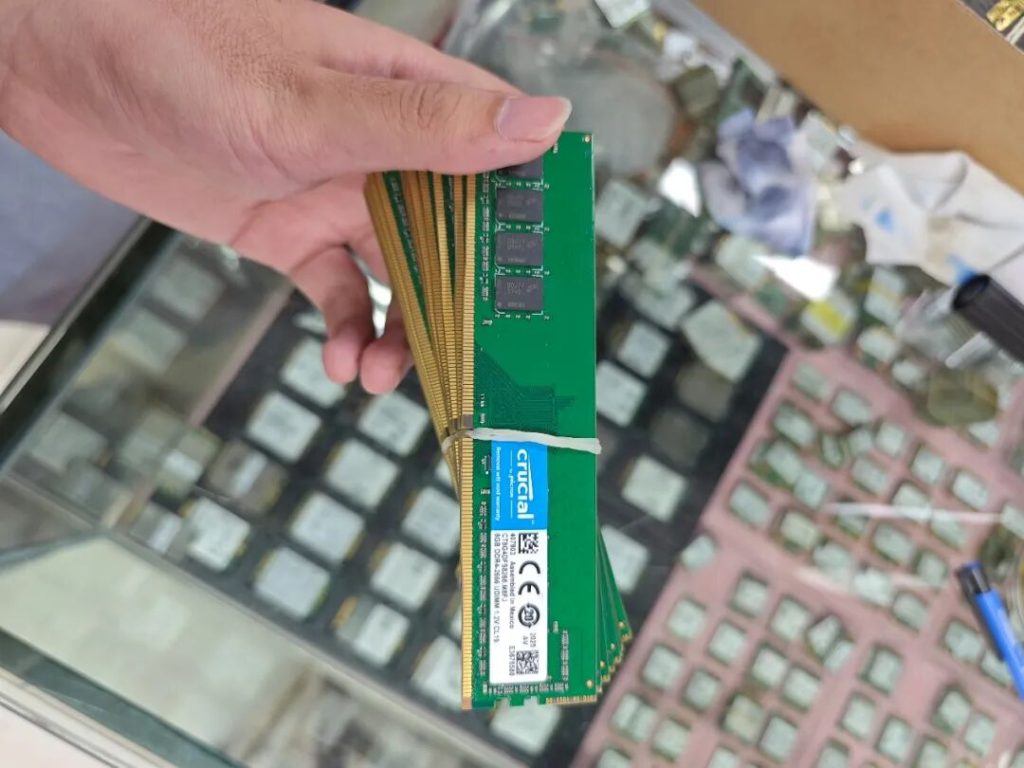
Today, memory prices remain at record highs, and supply is still tight. One merchant told us, “Even compared to September, spot prices of DRAM and NAND Flash have risen by an average of two to three times. A DDR4 memory module that cost around ¥100 in early September now typically sells for ¥300–400.” As for the future price trend, he predicted, “It’s unlikely to drop in 2026; in fact, prices will probably keep rising.”
The core driver behind the storage price surge is a severe supply-demand imbalance, primarily fueled by the massive demand for memory chips from AI data centers. In recent years, Chinese tech giants like Alibaba, Tencent, and ByteDance have ramped up investment in computing infrastructure. The explosive growth of AI computing has directly boosted demand for memory chips. Additionally, major manufacturers like SK Hynix, Samsung, and Micron are prioritizing production of high-end memory products for AI applications to maximize profits, scaling back on low-margin product lines. This has led to a shortage of DDR4 and other storage products for consumer electronics, pushing prices even higher.
If demand for AI servers remains strong, it will continue to underpin robust demand for storage products, extending this “super cycle” of price hikes. The ultimate resolution will depend on whether upstream manufacturers can ramp up production capacity quickly enough to ease supply constraints.
This price surge will only end when supply and demand are rebalanced. If new production capacity comes online smoothly, the tightness may ease within one to two years. But if AI demand stays red-hot, new capacity may fail to keep pace with growth, prolonging the cycle even further.
V. A Different Game Plan: Skipping the “Hundred-Glasses War” to Win at the “White-Label War”
2025 was a breakout year for AI glasses, sparking an industry-wide “Hundred-Glasses War”. Tech giants including Meta, Samsung, and Xiaomi; internet behemoths like Alibaba; startups such as RayNeo and Rokid; and even cross-industry players like Li Auto all jumped into the fray, competing for the title of “next-generation smart terminal gateway”.
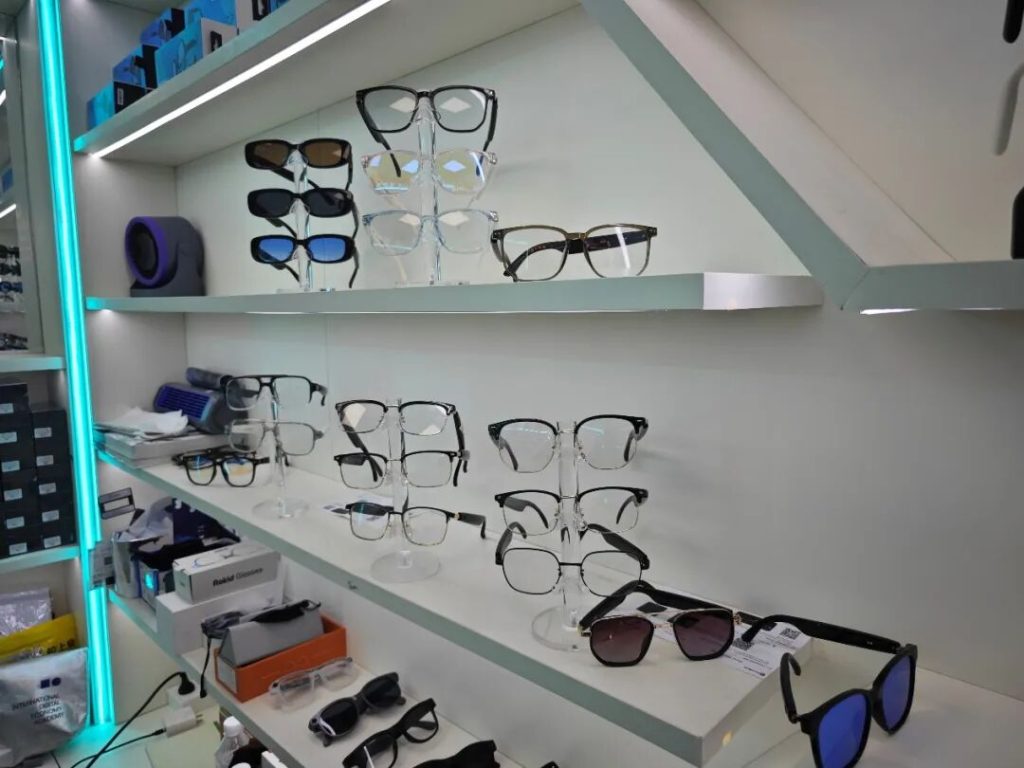
Yet in Huaqiangbei, there’s no sign of this giant showdown. Instead, a thriving “white-label war” has emerged—a flood of cost-effective white-label AI glasses now fills the market, with many shops specializing in this product category and expanding their business globally.
“We small and medium-sized manufacturers aren’t competing directly with the big players. Right now, the entire AI glasses market is still in the early adoption phase, with less than 1% penetration rate. We need the big brands to lead the way in market education.”
Most AI glasses sold in Huaqiangbei are priced at a few hundred yuan, offering basic functions like music playback, voice recording, photography, and translation—but they mostly lack projection capabilities. Compared to flagship models from major brands that cost ¥2,000–3,000, Huaqiangbei’s offerings gain an edge through unbeatable cost performance. Some merchants revealed that projection-enabled AI glasses are likely to hit Huaqiangbei’s market in 2026.
The popularity of white-label AI glasses in Huaqiangbei marks the “MP3 moment” for the industry—affordable pricing, combined with integrated features like cameras, microphones, and bone conduction technology, lowers the barrier for consumers to try new technology, paving the way for further application refinement.
Huaqiangbei’s white-label AI glasses have democratized access to this new technology, helping to popularize the market and cultivate user habits. While product quality may be inconsistent in the early stages, this is an inevitable phase of new technology adoption. In the future, the AI glasses market will gradually shift toward high-quality, differentiated products. Wang Peng, an industry insider, believes that once white-label products dominate the mass market, brand manufacturers can focus on the premium segment, creating a pyramid-shaped market structure that will drive the industry from the “early adoption phase” to the “mass adoption phase”.
VI. Calm Spectator: AI Phones Flipped for ¥36,000, But Huaqiangbei Sits Out the Frenzy
In December 2025, the Nubia M153 smartphone (dubbed the “Doubao AI Phone”), a collaboration between ByteDance’s Doubao and ZTE, became an overnight sensation. Thanks to its cutting-edge AI features, the phone was resold for as much as ¥36,000 on the second-hand market—until mainstream apps like WeChat and Alipay restricted its use over security concerns.
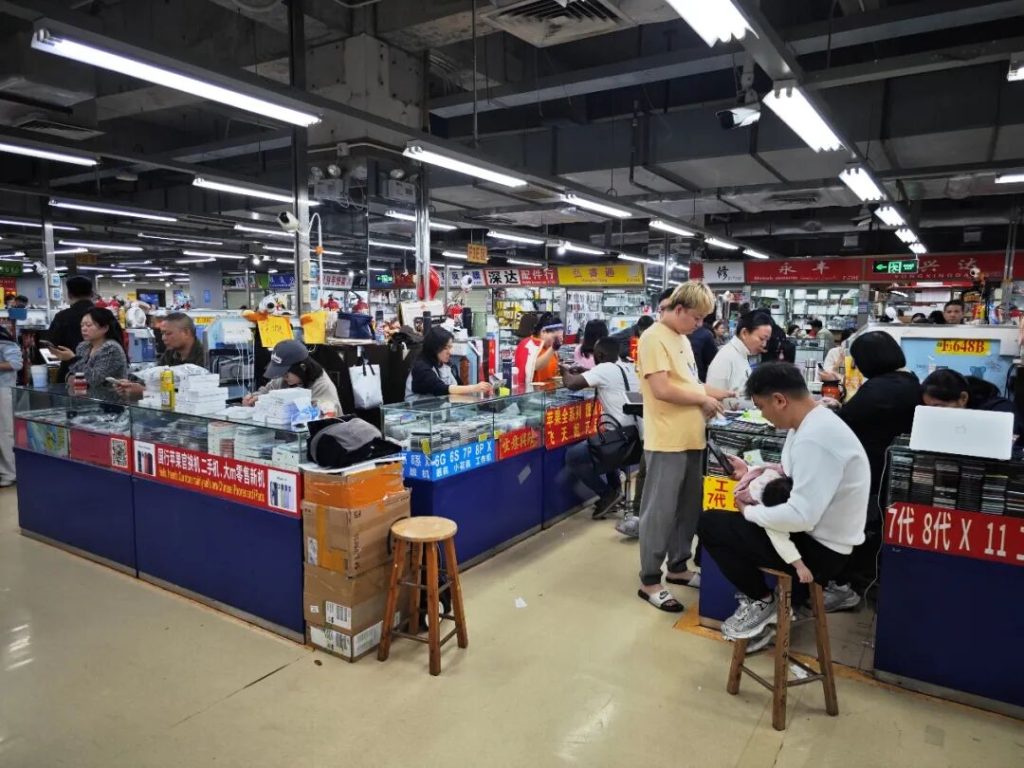
When we first visited Huaqiangbei’s second-hand phone market during the hype, most merchants said they “had never heard of it” or “didn’t have stock”. Only a handful knew about the skyrocketing resale prices, adding that “it’s only available online”. Has anything changed since then? A return trip to Tongtiandi Communication Market, known as the “hub of second-hand phones”, found no trace of the Doubao AI Phone on any counter—iPhones still dominate the second-hand market.
Huaqiangbei’s absence from the AI phone frenzy exposes the real predicament of these devices: as experimental products, their supply volume is extremely limited. This has poured cold water on the overheated hype surrounding AI phones.
AI phones are undoubtedly an important direction for the future, but they are not the only direction. Their core value lies in transforming human-phone interaction through AI, enhancing efficiency and user experience. However, user needs are diverse, and traditional smartphones still excel in many scenarios. For AI phones to achieve mass production, several key challenges must be addressed:
- Technological maturity: Improve stability, battery life, and hardware compatibility.
- App ecosystem integration: Establish collaboration mechanisms with mainstream apps and set industry standards.
- User trust: Clarify privacy policies, grant users control over data permissions, and demonstrate tangible value through practical features.
- Cost-effectiveness: Balance performance and pricing to ensure accessibility for mainstream consumers.
VII. The Resilient DNA: Huaqiangbei Always Keeps Up with Changing Tides
The stories of Huaqiangbei in 2025 go far beyond what we’ve covered here. From navigating tariff pressures with ease, to capitalizing on the memory chip price surge, to seizing the AI glasses opportunity—each chapter has reshaped this iconic street. While it still retains its knack for quick market following and hype, Huaqiangbei now also excels in supply chain deepening, regulatory compliance, and rational judgment on technological fundamentals.
Huaqiangbei’s performance in 2025 proves that the resilience of China’s manufacturing sector isn’t about sailing smoothly forever—it’s about adjusting course and standing stronger after every storm.
Huaqiangbei’s resilience stems from a “rapid response network”: tens of thousands of merchants form a tightly interconnected ecosystem. By sharing information in real time, reconfiguring materials quickly, and breaking down functions into modular components, they turn every external shock into an opportunity to enhance internal collaboration efficiency. This ecosystem doesn’t just adapt passively—it actively treats every crisis and change as a “stress test”, continuously optimizing the supply chain’s flexibility and risk resistance amid fluctuations. Ultimately, it has forged a survival strategy of “adapting to change with change”.
As a microcosm of China’s electronics industry, Huaqiangbei’s 2025 journey fully demonstrates the strong resilience of China’s supply chain in a complex environment. This resilience is rooted in years of building a complete industrial chain, rapid market responsiveness, and the flexible survival strategies of merchants. Faced with external pressures and changes, Huaqiangbei’s ability to pivot quickly not only showcases its own adaptability but also reflects the transformation and upgrading potential of China’s manufacturing sector.
New market booms—whether robots, memory chips, or AI glasses—will keep emerging, and old storms will fade away. But with resilience as its foundation, the legend of Huaqiangbei will continue to unfold.