In 2011, the iPhone 4 was released and became the most iconic trend of the year. With its slim glass body and sharp Retina display, lighting it up in a crowd could instantly draw all eyes. In an era when material wealth was still limited, owning an iPhone 4 was almost equal to having status, style, and a sense of existence, making it the object of desire for countless young people.
That year, Wang Yang, a 17-year-old boy from Hunan, was sensitive and eager to prove himself. Watching wealthy classmates laugh and chat with the latest iPhone 4, becoming the center of attention, he felt deep envy and hidden inferiority. He also longed to be noticed, to no longer feel out of place or ignored by his peers when taking out his phone.
But he was born into an ordinary working-class family. His parents struggled to make ends meet on a meager income. A phone worth thousands of yuan (about several hundred US dollars) was a heavy burden for the already poor family. He dared not ask his parents, so he wandered online desperately, looking for a quick way to make money—all to fulfill his “iPhone dream.”
Lost and anxious, a toxic message crept into his mind: *“Humans have two kidneys. Donating one is harmless, and you can get 20,000 yuan (about 3,073 US ) .”*
Those few words felt like a lifeline to the impatient boy. Twenty thousand yuan (about 3,073 US dollars) was enough to buy the iPhone 4 he craved and even an iPad 2. For a 17-year-old blinded by vanity, this temptation was almost impossible to resist.
At that moment, he completely ignored the risks behind “donating a kidney” and never thought about the cost of taking this shortcut. His heart was filled only with the joy and expectation of owning a new phone.
On April 28, 2011, Wang Yang secretly took a bus to Chenzhou, hiding the truth from his parents, teachers, and classmates. Naively, he believed he was going to a regular hospital for a safe “donation” surgery. He had no idea that he was walking into a cruel, illegal organ-trafficking ring.
The tricks of black brokers, the coldness of unethical doctors, the dirty hidden operating room—all those around him cared about was profiting from his young, healthy body. Lying on the cold operating table, he even comforted himself: Removing a kidney is like removing an appendix. The pain will pass in a few days, and when I wake up, I will have a brand-new iPhone 4 and be envied by everyone.
After hours of surgery, Wang Yang’s right kidney was removed. He received 22,000 yuan in cash (about 3,380 US ) . The first thing he did was rush to a store and buy the iPhone 4 and iPad 2 he had dreamed of. Holding the new devices, he felt satisfied, believing he had finally earned respect and stood on the “same level” as wealthier classmates.
Little did he know, this brief vanity was the last “normal” moment of his life. An irreversible nightmare had only just begun.
Soon, his body began to fail. At first, a dull pain in his waist, which he thought was normal after surgery. But the pain grew worse, turning into unbearable cramps, and he began to urinate blood. His face turned pale, and his body collapsed rapidly. The 1.9-meter-tall boy dropped from over 80 kilograms to just over 45 kilograms—skin and bones, too weak to stand.
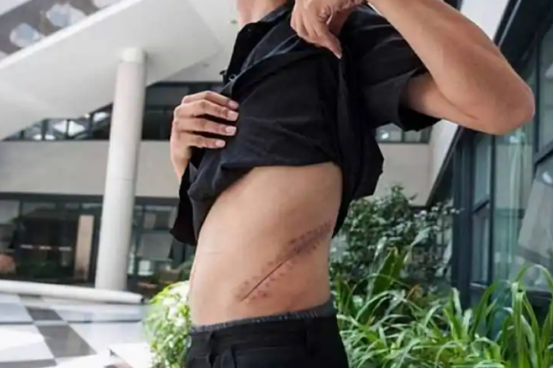
His mother accidentally discovered the hideous scar on his waist. Under repeated questioning, Wang Yang broke down crying and admitted the truth: he had sold his kidney for a phone.
The family rushed him to the hospital overnight. The diagnosis was a devastating blow: his remaining left kidney was severely damaged, he suffered from renal insufficiency, and he was classified as **Grade 5 disabled**—permanently unable to live a normal life.
Later, the illegal organ-trafficking ring that earned 220,000 yuan from selling Wang Yang’s kidney (about 33,803 US dollars) was busted. The ringleader and those involved were arrested and punished.
But for Wang Yang? He traded one kidney, a lifetime of health, for just 22,000 yuan (about 3,380 US dollars) and a phone that would soon become outdated. He lost his bright future forever.
Since then, Wang Yang’s life was completely destroyed. He could no longer study, run, or chase dreams like a normal teenager. He could not do heavy labor, could not get tired, could not even stand for long. The slightest activity put his body at risk.
He was bedridden year-round, relying on medicine to survive. His mother quit her job to take care of him full-time. An ordinary, happy family was dragged into an endless abyss of debt and despair—all because of a phone, all because of momentary vanity.
Later, a reporter visited Wang Yang and asked if he regretted his decision.
Lying in bed, he fell silent for a long time. His eyes were empty, his voice weak and powerless: *“At that time… I just wanted it so badly.”*
Those simple words held endless regret. What he wanted was never a kidney. He wanted a phone, temporary pride, the admiration of others. But he never imagined that for such worthless glory, he would pay with his lifelong health and destroy his entire life.
Over the years, China has intensified crackdowns on illegal organ trading, and the dark chain from back then has been destroyed. Yet the comparison and vanity hidden in people’s hearts have never disappeared.
From the iPhone 4 back then to limited-edition sneakers, luxury fashion, and expensive game consoles today—the forms of temptation keep changing, but they still lure immature young people eager to prove themselves.
In truth, Wang Yang was never a bad kid. He was just an ordinary, vain, confused 17-year-old who, at a young and ignorant age, failed to resist temptation and made a terrible choice.
But life has no second chances. Some mistakes, once made, can never be undone. Some costs, once paid, can never be recovered.